


Community hub
Recent from talks
Contribute something to knowledge base
Content stats: 0 posts, 0 articles, 1 media, 0 notes
Members stats: 0 subscribers, 0 contributors, 0 moderators, 0 supporters
Subscribers
Supporters
Contributors
Moderators
Hub AI
Full-rigged ship AI simulator
(@Full-rigged ship_simulator)
Hub AI
Full-rigged ship AI simulator
(@Full-rigged ship_simulator)
Full-rigged ship
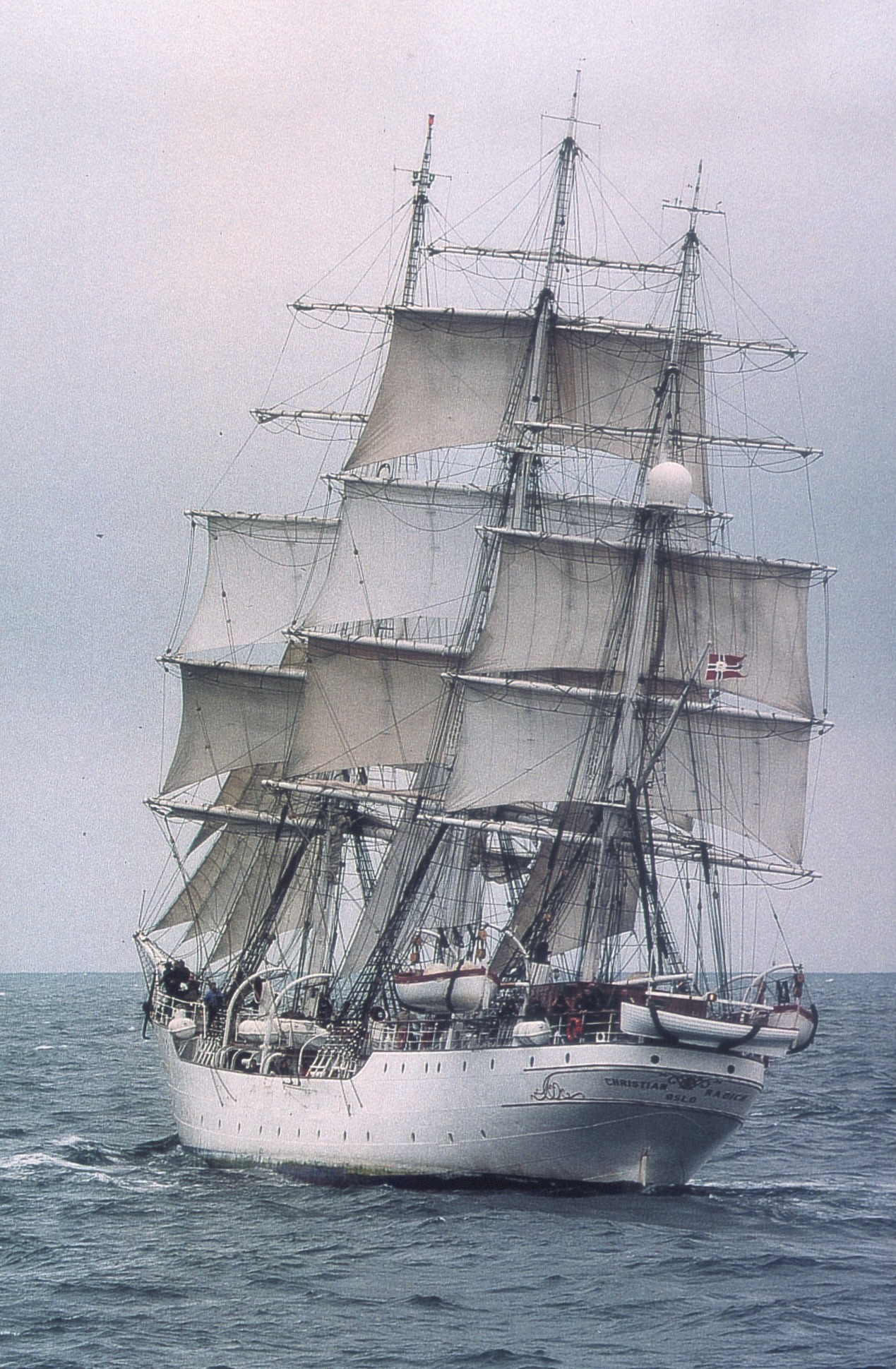
A full-rigged ship or fully rigged ship is a sailing vessel with a sail plan of three or more masts, all of them square-rigged. Such a vessel is said to have a ship rig or be ship-rigged, with each mast stepped in three segments: lower, top, and topgallant.
The masts of a full-rigged ship, from bow to stern, are:
If the masts are of wood, each mast is in three or more pieces. They are (in order, from bottom up):
On steel-masted vessels, the masts are not constructed in the same way, but the corresponding sections of the mast are still named after the traditional wooden sections.
The lowest and normally largest sail on a mast is the course sail of that mast, and is referred to simply by the mast name: Foresail, mainsail, mizzen sail, jigger sail or more commonly forecourse etc.
Even a full-rigged ship did not usually have a lateral (square) course on the mizzen mast below the mizzen topmast. Instead, the lowest sail on the mizzen was usually a fore/aft sail—originally a lateen sail, but later a gaff sail called a spanker or driver. The key distinction between a ship and a barque (in modern usage) is that a ship carries a square-rigged mizzen topsail (and therefore that its mizzen mast has a topsail yard and a cross-jack yard) whereas the mizzen mast of a barque has only fore-and-aft rigged sails. The cross-jack yard was the lowest yard on a ship's mizzen mast. Unlike the corresponding yards on the fore and main mast it did not usually have fittings to hang a sail from: its purpose was to control the lower edge of the topsail. In the rare case, the cross-jack yard did carry a square sail, that sail would be called the cross-jack rather than the mizzen course.
The full set of sails, in order from bottom to top, are:
The division of a sail into upper and lower sails was a matter of practicality, since undivided sails were larger and, consequently, more difficult to handle. Larger sails necessitated hiring, and paying, a larger crew. Additionally, the great size of some late-19th and 20th century vessels meant that their correspondingly large sails would have been impossible to handle had they not been divided.
Full-rigged ship
A full-rigged ship or fully rigged ship is a sailing vessel with a sail plan of three or more masts, all of them square-rigged. Such a vessel is said to have a ship rig or be ship-rigged, with each mast stepped in three segments: lower, top, and topgallant.
The masts of a full-rigged ship, from bow to stern, are:
If the masts are of wood, each mast is in three or more pieces. They are (in order, from bottom up):
On steel-masted vessels, the masts are not constructed in the same way, but the corresponding sections of the mast are still named after the traditional wooden sections.
The lowest and normally largest sail on a mast is the course sail of that mast, and is referred to simply by the mast name: Foresail, mainsail, mizzen sail, jigger sail or more commonly forecourse etc.
Even a full-rigged ship did not usually have a lateral (square) course on the mizzen mast below the mizzen topmast. Instead, the lowest sail on the mizzen was usually a fore/aft sail—originally a lateen sail, but later a gaff sail called a spanker or driver. The key distinction between a ship and a barque (in modern usage) is that a ship carries a square-rigged mizzen topsail (and therefore that its mizzen mast has a topsail yard and a cross-jack yard) whereas the mizzen mast of a barque has only fore-and-aft rigged sails. The cross-jack yard was the lowest yard on a ship's mizzen mast. Unlike the corresponding yards on the fore and main mast it did not usually have fittings to hang a sail from: its purpose was to control the lower edge of the topsail. In the rare case, the cross-jack yard did carry a square sail, that sail would be called the cross-jack rather than the mizzen course.
The full set of sails, in order from bottom to top, are:
The division of a sail into upper and lower sails was a matter of practicality, since undivided sails were larger and, consequently, more difficult to handle. Larger sails necessitated hiring, and paying, a larger crew. Additionally, the great size of some late-19th and 20th century vessels meant that their correspondingly large sails would have been impossible to handle had they not been divided.
Recent media
Recent media