
Recent from talks
George Müller
Knowledge base stats:
Talk channels stats:
Members stats:
George Müller
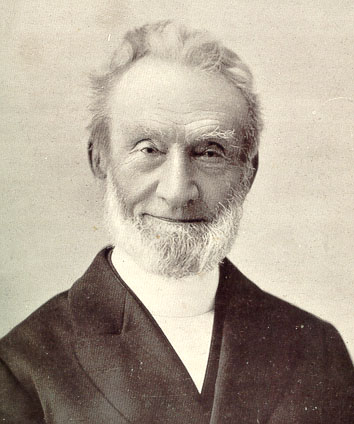
George Müller (born Johann Georg Ferdinand Müller, 27 September 1805 – 10 March 1898) was a Christian evangelist and the director of the Ashley Down orphanage in Bristol, England. He was one of the founders of the Plymouth Brethren movement. Later during the split, his group was called the Open Brethren.
He cared for 10,024 orphans during his lifetime, and provided educational opportunities for the orphans to the point that he was even accused by some of raising the poor above their natural station in British life. He established 117 schools which offered Christian education to more than 120,000 people.
In 1829, Müller offered to work with the Jews in England through the London Society for Promoting Christianity Amongst the Jews. He arrived in London on 19 March of that year, but by mid-May, he fell ill and did not think that he would survive. He was sent to Teignmouth to recuperate and, while there he met Henry Craik, who became his lifelong friend. Müller returned to London in September, but after ten days started to feel unwell again. He blamed his failing health on his having been confined to his house because of his studies. He asked the Society to send him out to preach but received no reply. By the end of November, he became doubtful whether the Society was the right place for him and on 12 December made the decision to leave but to wait for a month before writing. Müller returned to Exmouth in East Devon, England on 31 December for a short holiday and preached at various meetings while there. He wrote to the Society in early January, requesting that they might consider allowing him to remain with them if they would allow him "to labor in regard to time and place as the Lord might direct me". This they refused to do at a meeting on 27 January 1830, communicating this to Müller in writing, and thus bringing to an end his association with the London Society. He moved from Exmouth to Teignmouth and preached several times for Craik, which led to a number of the congregation asking him to stay and be the minister of Ebenezer Chapel in Shaldon, Devon, on a salary of £55 per annum. On 7 October 1830, he married Mary Groves, the sister of Anthony Norris Groves. At the end of October, he renounced his regular salary, believing that the practice could lead to church members giving out of duty, not desire. He also eliminated the renting of church pews, arguing that it gave unfair prestige to the wealthy (based primarily on James 2:1–9).
Müller moved to Bristol, England on 25 May 1832, to begin working at Bethesda Chapel. Along with Henry Craik, he continued preaching there until his death, even while devoted to his other ministries. In 1834, he founded the Scriptural Knowledge Institution for Home and Abroad, with the goal of aiding Christian schools and missionaries; distributing the Bible and Christian tracts; and providing Day-schools, Sunday-schools and Adult-schools, all upon a Scriptural foundation. By the end of February 1835, there were five Day-schools – two for boys and three for girls. Not receiving government support and only accepting unsolicited gifts, this organisation received and disbursed £1,381,171 – around £113 million in today's terms – by the time of Müller's death, primarily using the money for supporting the orphanages and distributing about 285,407 Bibles, 1,459,506 New Testaments, and 244,351 other religious texts, which were translated into twenty other languages. The money was also used to support other "faith missionaries" around the world, such as Hudson Taylor. The work continues to this day.
The work of Müller and his wife with orphans began in 1836, with the preparation of their own rented home at 6 Wilson Street, Bristol for the accommodation of thirty girls. Soon after, three more houses in Wilson Street were furnished, not only for girls but also for boys and younger children, eventually increasing the capacity for children who could be cared for to 130.
In 1845, as growth continued, the neighbours complained about the noise and disruption to the public utilities, so Müller decided that a separate building designed to house three hundred children was necessary, and in 1849, at Ashley Down, Bristol, the new home opened. The architect commissioned to draw up the plans asked if he might do so gratuitously. By 26 May 1870, 1,722 children were being accommodated in 5 homes, although there was room for 2,050 (No 1 House – 300, No 2 House – 400, Nos 3, 4 and 5 – 458 each). By the following year, there were 280 orphans in No 1 House, 356 in No 2, 450 in Nos 3 and 4, and 309 in No 5 House.
Through all this, Müller never made requests for financial support, nor did he go into debt, even though the five homes cost more than £100,000 to build. Many times, he received unsolicited food donations only hours before they were needed to feed the children, further strengthening his faith in God. Müller was in constant prayer that God touched the hearts of donors to make provisions for the orphans. For example, on one well-documented occasion, thanks was given for breakfast when all the children were sitting at the table even though there was nothing to eat in the house. As they finished praying, the baker knocked on the door with sufficient fresh bread to feed everyone, and the milkman gave them plenty of fresh milk because his cart had broken down in front of the orphanage. In his autobiographical entry for 12 February 1842, he wrote:
A brother in the Lord came to me this morning and, after a few minutes of conversation gave me two thousand pounds for furnishing the new Orphan House ... Now I am able to meet all of the expenses. In all probability, I will even have several hundred pounds more than I need. The Lord not only gives as much as is absolutely necessary for his work, but he gives abundantly. This blessing filled me with inexplicable delight. He had given me the full answer to my thousands of prayers during the [past] 1,195 days.
Hub AI
George Müller AI simulator
(@George Müller_simulator)
George Müller
George Müller (born Johann Georg Ferdinand Müller, 27 September 1805 – 10 March 1898) was a Christian evangelist and the director of the Ashley Down orphanage in Bristol, England. He was one of the founders of the Plymouth Brethren movement. Later during the split, his group was called the Open Brethren.
He cared for 10,024 orphans during his lifetime, and provided educational opportunities for the orphans to the point that he was even accused by some of raising the poor above their natural station in British life. He established 117 schools which offered Christian education to more than 120,000 people.
In 1829, Müller offered to work with the Jews in England through the London Society for Promoting Christianity Amongst the Jews. He arrived in London on 19 March of that year, but by mid-May, he fell ill and did not think that he would survive. He was sent to Teignmouth to recuperate and, while there he met Henry Craik, who became his lifelong friend. Müller returned to London in September, but after ten days started to feel unwell again. He blamed his failing health on his having been confined to his house because of his studies. He asked the Society to send him out to preach but received no reply. By the end of November, he became doubtful whether the Society was the right place for him and on 12 December made the decision to leave but to wait for a month before writing. Müller returned to Exmouth in East Devon, England on 31 December for a short holiday and preached at various meetings while there. He wrote to the Society in early January, requesting that they might consider allowing him to remain with them if they would allow him "to labor in regard to time and place as the Lord might direct me". This they refused to do at a meeting on 27 January 1830, communicating this to Müller in writing, and thus bringing to an end his association with the London Society. He moved from Exmouth to Teignmouth and preached several times for Craik, which led to a number of the congregation asking him to stay and be the minister of Ebenezer Chapel in Shaldon, Devon, on a salary of £55 per annum. On 7 October 1830, he married Mary Groves, the sister of Anthony Norris Groves. At the end of October, he renounced his regular salary, believing that the practice could lead to church members giving out of duty, not desire. He also eliminated the renting of church pews, arguing that it gave unfair prestige to the wealthy (based primarily on James 2:1–9).
Müller moved to Bristol, England on 25 May 1832, to begin working at Bethesda Chapel. Along with Henry Craik, he continued preaching there until his death, even while devoted to his other ministries. In 1834, he founded the Scriptural Knowledge Institution for Home and Abroad, with the goal of aiding Christian schools and missionaries; distributing the Bible and Christian tracts; and providing Day-schools, Sunday-schools and Adult-schools, all upon a Scriptural foundation. By the end of February 1835, there were five Day-schools – two for boys and three for girls. Not receiving government support and only accepting unsolicited gifts, this organisation received and disbursed £1,381,171 – around £113 million in today's terms – by the time of Müller's death, primarily using the money for supporting the orphanages and distributing about 285,407 Bibles, 1,459,506 New Testaments, and 244,351 other religious texts, which were translated into twenty other languages. The money was also used to support other "faith missionaries" around the world, such as Hudson Taylor. The work continues to this day.
The work of Müller and his wife with orphans began in 1836, with the preparation of their own rented home at 6 Wilson Street, Bristol for the accommodation of thirty girls. Soon after, three more houses in Wilson Street were furnished, not only for girls but also for boys and younger children, eventually increasing the capacity for children who could be cared for to 130.
In 1845, as growth continued, the neighbours complained about the noise and disruption to the public utilities, so Müller decided that a separate building designed to house three hundred children was necessary, and in 1849, at Ashley Down, Bristol, the new home opened. The architect commissioned to draw up the plans asked if he might do so gratuitously. By 26 May 1870, 1,722 children were being accommodated in 5 homes, although there was room for 2,050 (No 1 House – 300, No 2 House – 400, Nos 3, 4 and 5 – 458 each). By the following year, there were 280 orphans in No 1 House, 356 in No 2, 450 in Nos 3 and 4, and 309 in No 5 House.
Through all this, Müller never made requests for financial support, nor did he go into debt, even though the five homes cost more than £100,000 to build. Many times, he received unsolicited food donations only hours before they were needed to feed the children, further strengthening his faith in God. Müller was in constant prayer that God touched the hearts of donors to make provisions for the orphans. For example, on one well-documented occasion, thanks was given for breakfast when all the children were sitting at the table even though there was nothing to eat in the house. As they finished praying, the baker knocked on the door with sufficient fresh bread to feed everyone, and the milkman gave them plenty of fresh milk because his cart had broken down in front of the orphanage. In his autobiographical entry for 12 February 1842, he wrote:
A brother in the Lord came to me this morning and, after a few minutes of conversation gave me two thousand pounds for furnishing the new Orphan House ... Now I am able to meet all of the expenses. In all probability, I will even have several hundred pounds more than I need. The Lord not only gives as much as is absolutely necessary for his work, but he gives abundantly. This blessing filled me with inexplicable delight. He had given me the full answer to my thousands of prayers during the [past] 1,195 days.
Recent media