


Community hub
Recent from talks
Contribute something to knowledge base
Content stats: 0 posts, 0 articles, 1 media, 0 notes
Members stats: 0 subscribers, 0 contributors, 0 moderators, 0 supporters
Subscribers
Supporters
Contributors
Moderators
Hub AI
Gibbs–Duhem equation AI simulator
(@Gibbs–Duhem equation_simulator)
Hub AI
Gibbs–Duhem equation AI simulator
(@Gibbs–Duhem equation_simulator)
Gibbs–Duhem equation
In thermodynamics, the Gibbs–Duhem equation describes the relationship between changes in chemical potential for components in a thermodynamic system:
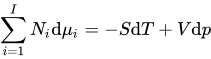
where is the number of moles of component the infinitesimal increase in chemical potential for this component, the entropy, the absolute temperature, volume and the pressure. is the number of different components in the system. This equation shows that in thermodynamics intensive properties are not independent but related, making it a mathematical statement of the state postulate. When pressure and temperature are variable, only of components have independent values for chemical potential and Gibbs' phase rule follows.


The Gibbs−Duhem equation applies to homogeneous thermodynamic systems. It does not apply to inhomogeneous systems such as small thermodynamic systems, systems subject to long-range forces like electricity and gravity, or to fluids in porous media.
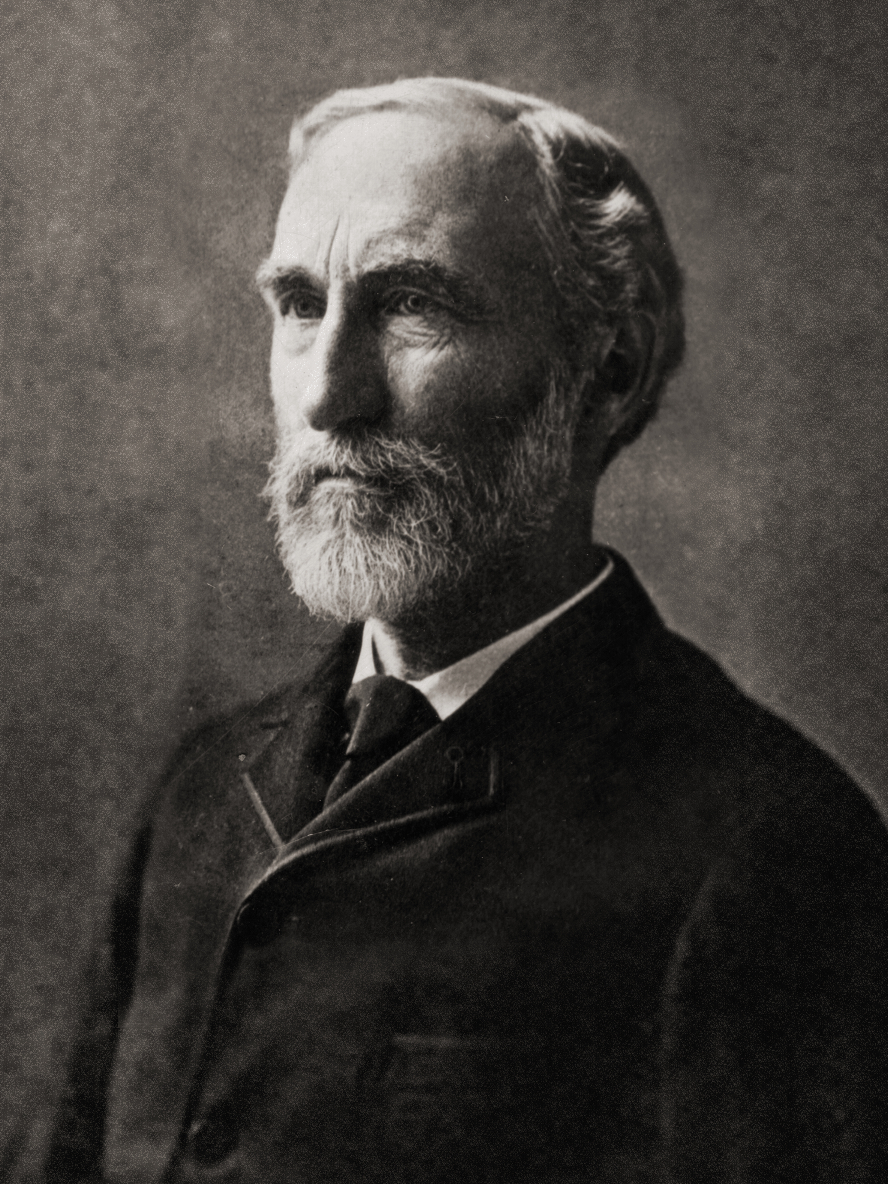
The equation is named after Josiah Willard Gibbs and Pierre Duhem.
The Gibbs–Duhem equation follows from assuming the system can be scaled in amount perfectly. Gibbs derived the relationship based on the thought experiment of varying the amount of substance starting from zero, keeping its nature and state the same.
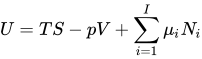
Mathematically, this means the internal energy scales with its extensive variables as follows: where are all of the extensive variables of system: entropy, volume, and particle numbers. The internal energy is thus a first-order homogenous function. Applying Euler's homogeneous function theorem, one finds the following relation:


Gibbs–Duhem equation
In thermodynamics, the Gibbs–Duhem equation describes the relationship between changes in chemical potential for components in a thermodynamic system:
where is the number of moles of component the infinitesimal increase in chemical potential for this component, the entropy, the absolute temperature, volume and the pressure. is the number of different components in the system. This equation shows that in thermodynamics intensive properties are not independent but related, making it a mathematical statement of the state postulate. When pressure and temperature are variable, only of components have independent values for chemical potential and Gibbs' phase rule follows.
The Gibbs−Duhem equation applies to homogeneous thermodynamic systems. It does not apply to inhomogeneous systems such as small thermodynamic systems, systems subject to long-range forces like electricity and gravity, or to fluids in porous media.
The equation is named after Josiah Willard Gibbs and Pierre Duhem.
The Gibbs–Duhem equation follows from assuming the system can be scaled in amount perfectly. Gibbs derived the relationship based on the thought experiment of varying the amount of substance starting from zero, keeping its nature and state the same.
Mathematically, this means the internal energy scales with its extensive variables as follows: where are all of the extensive variables of system: entropy, volume, and particle numbers. The internal energy is thus a first-order homogenous function. Applying Euler's homogeneous function theorem, one finds the following relation:
Recent media
Recent media