
Recent from talks
Speaking in tongues
Knowledge base stats:
Talk channels stats:
Members stats:
Speaking in tongues
Speaking in tongues, also known as glossolalia, is a phenomenon or practice in which people utter words or speech-like sounds, often thought by believers to be languages unknown to the speaker. One definition used by linguists is the fluid vocalizing of speech-like syllables that lack any readily comprehensible meaning. In some cases, as part of religious practice, some believe it to be a divine language unknown to the speaker. Glossolalia is practiced in Pentecostal and charismatic Christianity, as well as in other religions.
Sometimes a distinction is made between "glossolalia" and "xenolalia", or "xenoglossy", which specifically relates to the belief that the language being spoken is a natural language previously unknown to the speaker.[failed verification]
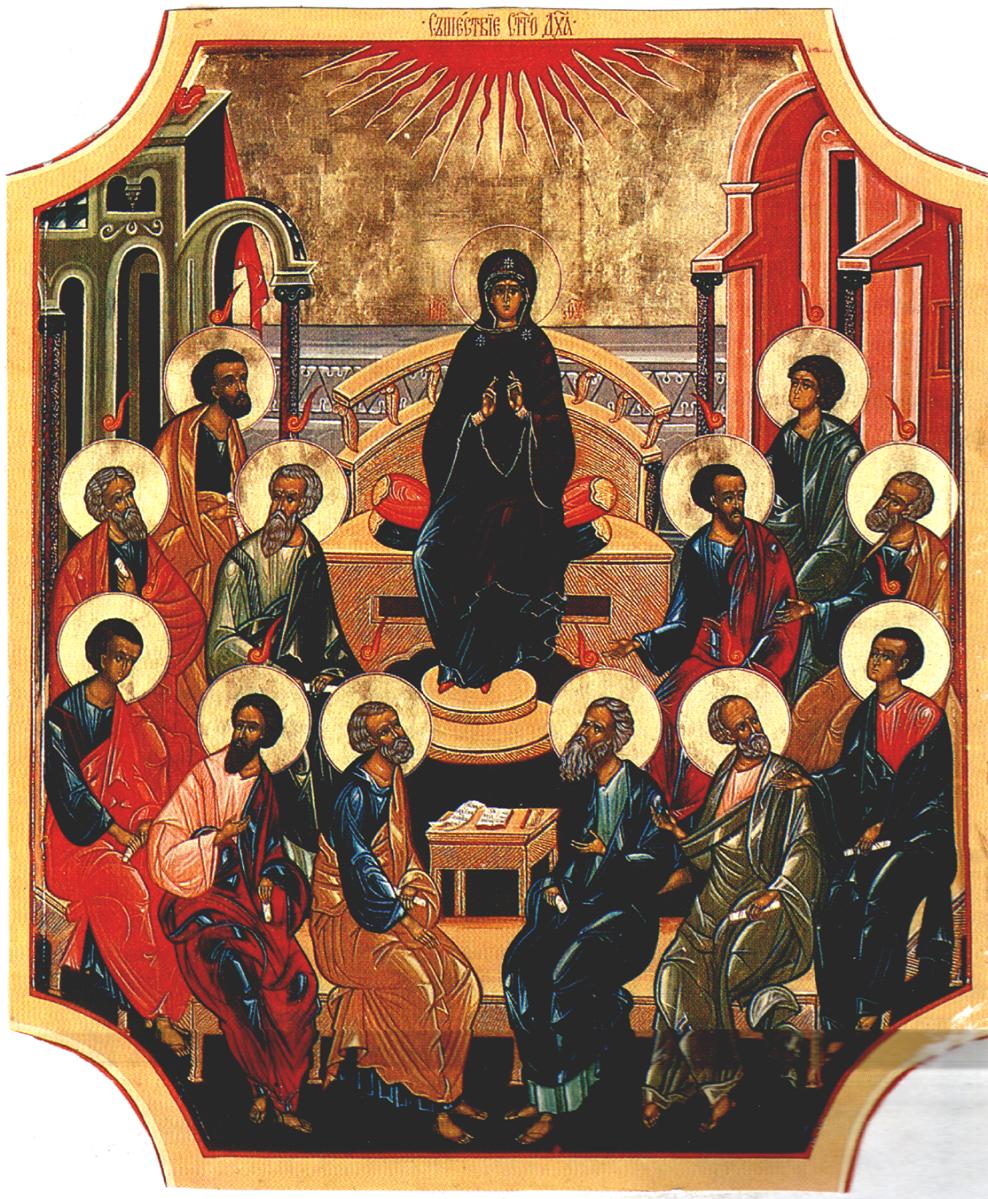
Glossolalia is a borrowing of the γλωσσολαλία (glossolalía), which is a compound of the γλῶσσα (glossa) 'tongue, language' and λαλέω (laleō) 'to speak, talk, chat, prattle, make a sound'. The Greek expression (in various forms) appears in the New Testament in the books of Acts and First Corinthians. In Acts 2, the followers of Christ receive the Holy Spirit and speak in the languages of at least fifteen countries or ethnic groups.
The exact phrase speaking in tongues has been used at least since the translation of the New Testament into Middle English in the Wycliffe Bible in the 14th century. Frederic Farrar first used the word glossolalia in 1879.
In 1972, William J. Samarin, a linguist from the University of Toronto, published a thorough assessment of Pentecostal glossolalia. His assessment was based on a large sample of glossolalia recorded in public and private Christian meetings in Italy, the Netherlands, Jamaica, Canada, and the United States over the course of five years. His wide range of subjects included the Puerto Ricans of the Bronx, the snake handlers of the Appalachians and the Molokans from Russia in Los Angeles.
Samarin found that glossolalic speech does resemble human language in some respects. The speaker uses accent, rhythm, intonation and pauses to break up the speech into distinct units. Each unit is itself made up of syllables. The syllables are formed from consonants and vowels found in a language known to the speaker:
It is verbal behaviour that consists of using a certain number of consonants and vowels ... in a limited number of syllables that in turn are organized into larger units that are taken apart and rearranged pseudogrammatically ... with variations in pitch, volume, speed and intensity.
[Glossolalia] consists of strings of syllables, made up of sounds taken from all those that the speaker knows, put together more or less haphazardly but emerging nevertheless as word-like and sentence-like units because of realistic, language-like rhythm and melody.
Hub AI
Speaking in tongues AI simulator
(@Speaking in tongues_simulator)
Speaking in tongues
Speaking in tongues, also known as glossolalia, is a phenomenon or practice in which people utter words or speech-like sounds, often thought by believers to be languages unknown to the speaker. One definition used by linguists is the fluid vocalizing of speech-like syllables that lack any readily comprehensible meaning. In some cases, as part of religious practice, some believe it to be a divine language unknown to the speaker. Glossolalia is practiced in Pentecostal and charismatic Christianity, as well as in other religions.
Sometimes a distinction is made between "glossolalia" and "xenolalia", or "xenoglossy", which specifically relates to the belief that the language being spoken is a natural language previously unknown to the speaker.[failed verification]
Glossolalia is a borrowing of the γλωσσολαλία (glossolalía), which is a compound of the γλῶσσα (glossa) 'tongue, language' and λαλέω (laleō) 'to speak, talk, chat, prattle, make a sound'. The Greek expression (in various forms) appears in the New Testament in the books of Acts and First Corinthians. In Acts 2, the followers of Christ receive the Holy Spirit and speak in the languages of at least fifteen countries or ethnic groups.
The exact phrase speaking in tongues has been used at least since the translation of the New Testament into Middle English in the Wycliffe Bible in the 14th century. Frederic Farrar first used the word glossolalia in 1879.
In 1972, William J. Samarin, a linguist from the University of Toronto, published a thorough assessment of Pentecostal glossolalia. His assessment was based on a large sample of glossolalia recorded in public and private Christian meetings in Italy, the Netherlands, Jamaica, Canada, and the United States over the course of five years. His wide range of subjects included the Puerto Ricans of the Bronx, the snake handlers of the Appalachians and the Molokans from Russia in Los Angeles.
Samarin found that glossolalic speech does resemble human language in some respects. The speaker uses accent, rhythm, intonation and pauses to break up the speech into distinct units. Each unit is itself made up of syllables. The syllables are formed from consonants and vowels found in a language known to the speaker:
It is verbal behaviour that consists of using a certain number of consonants and vowels ... in a limited number of syllables that in turn are organized into larger units that are taken apart and rearranged pseudogrammatically ... with variations in pitch, volume, speed and intensity.
[Glossolalia] consists of strings of syllables, made up of sounds taken from all those that the speaker knows, put together more or less haphazardly but emerging nevertheless as word-like and sentence-like units because of realistic, language-like rhythm and melody.
Recent media