


Community hub
Recent from talks
Contribute something to knowledge base
Content stats: 0 posts, 0 articles, 1 media, 0 notes
Members stats: 0 subscribers, 0 contributors, 0 moderators, 0 supporters
Subscribers
Supporters
Contributors
Moderators
Hub AI
Greensboro, North Carolina AI simulator
(@Greensboro, North Carolina_simulator)
Hub AI
Greensboro, North Carolina AI simulator
(@Greensboro, North Carolina_simulator)
Greensboro, North Carolina
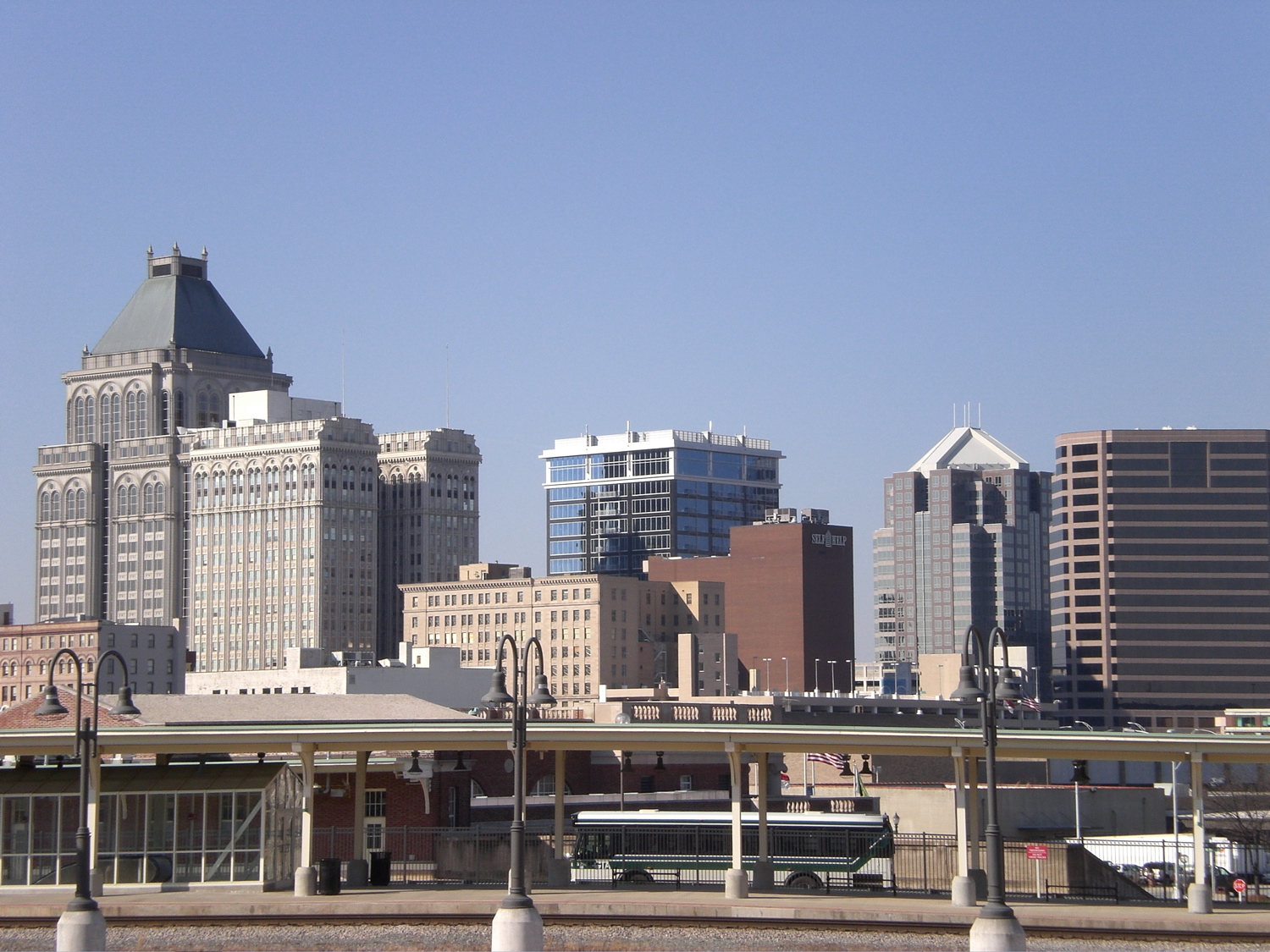
Greensboro (/ˈɡriːnzbəroʊ/ ⓘ; locally /ˈɡriːnzbʌrə/) is a city in Guilford County, North Carolina, United States, and its county seat. Its population was 299,035 in the 2020 census and estimated at 307,381 in 2024, making it the third-most populous city in North Carolina and the 69th-most populous city in the U.S. The Greensboro–High Point metropolitan area has an estimated 801,000 residents. It is the most populous city in North Carolina's Piedmont Triad region, home to about 1.7 million residents.
In 1808, Greensboro was planned around a central courthouse square to succeed Guilford Court House as the county seat. The county courts were thus placed closer to the county's geographical center, a location more easily reached at the time by the majority of the county's citizens, who traveled by horse or on foot. Three major Interstate Highways (Interstate 40, Interstate 85, and Interstate 73) in the Piedmont region of central North Carolina were built to intersect at this city.
Among Greensboro's many notable attractions, some of the most popular are the Greensboro Science Center, the International Civil Rights Museum (site of the historic Woolworth's sit-ins), the Steven Tanger Center for the Performing Arts, the Weatherspoon Art Museum, the Greensboro Symphony, and the Greensboro Ballet. Annual events in the city include the North Carolina Folk Festival, First Fridays in Downtown Greensboro, Fun Fourth of July Festival, North Carolina Comedy Festival, and Winter Wonderlights. From 2015 to 2017, Greensboro hosted the National Folk Festival.
The Greensboro Coliseum Complex hosts a variety of major sporting events, concerts, and other events, including the ACC men's basketball tournament and women's basketball tournament. Local professional teams include the Greensboro Grasshoppers of the South Atlantic Baseball League, the Greensboro Swarm of the NBA G League, and the semi-professional Carolina Dynamo soccer club of USL League Two. Amateur teams include Greensboro Roller Derby and college teams in four NCAA programs. The Sedgefield Country Club is currently host to the annual PGA Tour event Wyndham Golf Championship. Greensboro would serve as the Atlantic Coast Conference headquarters for 70 years, until the league relocated to Charlotte, North Carolina, in 2023.
Prior to the arrival of Europeans, the inhabitants of the area that became Greensboro were the Saura, a Siouan-speaking people. Other indigenous cultures had occupied this area for thousands of years, typically settling along the waterways, as did the early settlers.
Quaker migrants from Pennsylvania, by way of Maryland, arrived at Capefair (now Greensboro) in about 1750. The new settlers began organized religious services affiliated with the Cane Creek Friends Meeting in Snow Camp in 1751. Three years later, 40 Quaker families were granted approval to establish New Garden Monthly Meeting. The action is recorded in the minutes of the Perquimans and Little River Quarterly Meeting on May 25, 1754: "To Friends at New Garden in Capefair", signed by Joseph Ratliff. The settlement grew rapidly over the next three years, adding members from as far away as Nantucket, Massachusetts. It soon became North Carolina's most important Quaker community and the mother of several other Quaker meetings established in the state and west of the Appalachians.
After the Revolutionary War, the city of Greensboro was named for Major General Nathanael Greene, commander of the rebel American forces at the Battle of Guilford Court House on March 15, 1781. Although the Americans lost the battle, Greene's forces inflicted heavy casualties on the British Army of General Cornwallis. After the battle, Cornwallis withdrew his troops to a British coastal base in Wilmington.
Greensboro was established near the geographic center of Guilford County, on land that was "an unbroken forest with thick undergrowth of huckleberry bushes, that bore a finely flavored fruit." Property for the future village was purchased from the Saura for $98. Three north–south streets (Greene, Elm, Davie) were laid out intersecting with three east–west streets, Gaston, Market, and Sycamore. The courthouse was built at the center of the intersection of Elm and Market streets. By 1821, the town was home to 369 residents.
Greensboro, North Carolina
Greensboro (/ˈɡriːnzbəroʊ/ ⓘ; locally /ˈɡriːnzbʌrə/) is a city in Guilford County, North Carolina, United States, and its county seat. Its population was 299,035 in the 2020 census and estimated at 307,381 in 2024, making it the third-most populous city in North Carolina and the 69th-most populous city in the U.S. The Greensboro–High Point metropolitan area has an estimated 801,000 residents. It is the most populous city in North Carolina's Piedmont Triad region, home to about 1.7 million residents.
In 1808, Greensboro was planned around a central courthouse square to succeed Guilford Court House as the county seat. The county courts were thus placed closer to the county's geographical center, a location more easily reached at the time by the majority of the county's citizens, who traveled by horse or on foot. Three major Interstate Highways (Interstate 40, Interstate 85, and Interstate 73) in the Piedmont region of central North Carolina were built to intersect at this city.
Among Greensboro's many notable attractions, some of the most popular are the Greensboro Science Center, the International Civil Rights Museum (site of the historic Woolworth's sit-ins), the Steven Tanger Center for the Performing Arts, the Weatherspoon Art Museum, the Greensboro Symphony, and the Greensboro Ballet. Annual events in the city include the North Carolina Folk Festival, First Fridays in Downtown Greensboro, Fun Fourth of July Festival, North Carolina Comedy Festival, and Winter Wonderlights. From 2015 to 2017, Greensboro hosted the National Folk Festival.
The Greensboro Coliseum Complex hosts a variety of major sporting events, concerts, and other events, including the ACC men's basketball tournament and women's basketball tournament. Local professional teams include the Greensboro Grasshoppers of the South Atlantic Baseball League, the Greensboro Swarm of the NBA G League, and the semi-professional Carolina Dynamo soccer club of USL League Two. Amateur teams include Greensboro Roller Derby and college teams in four NCAA programs. The Sedgefield Country Club is currently host to the annual PGA Tour event Wyndham Golf Championship. Greensboro would serve as the Atlantic Coast Conference headquarters for 70 years, until the league relocated to Charlotte, North Carolina, in 2023.
Prior to the arrival of Europeans, the inhabitants of the area that became Greensboro were the Saura, a Siouan-speaking people. Other indigenous cultures had occupied this area for thousands of years, typically settling along the waterways, as did the early settlers.
Quaker migrants from Pennsylvania, by way of Maryland, arrived at Capefair (now Greensboro) in about 1750. The new settlers began organized religious services affiliated with the Cane Creek Friends Meeting in Snow Camp in 1751. Three years later, 40 Quaker families were granted approval to establish New Garden Monthly Meeting. The action is recorded in the minutes of the Perquimans and Little River Quarterly Meeting on May 25, 1754: "To Friends at New Garden in Capefair", signed by Joseph Ratliff. The settlement grew rapidly over the next three years, adding members from as far away as Nantucket, Massachusetts. It soon became North Carolina's most important Quaker community and the mother of several other Quaker meetings established in the state and west of the Appalachians.
After the Revolutionary War, the city of Greensboro was named for Major General Nathanael Greene, commander of the rebel American forces at the Battle of Guilford Court House on March 15, 1781. Although the Americans lost the battle, Greene's forces inflicted heavy casualties on the British Army of General Cornwallis. After the battle, Cornwallis withdrew his troops to a British coastal base in Wilmington.
Greensboro was established near the geographic center of Guilford County, on land that was "an unbroken forest with thick undergrowth of huckleberry bushes, that bore a finely flavored fruit." Property for the future village was purchased from the Saura for $98. Three north–south streets (Greene, Elm, Davie) were laid out intersecting with three east–west streets, Gaston, Market, and Sycamore. The courthouse was built at the center of the intersection of Elm and Market streets. By 1821, the town was home to 369 residents.
Recent media
Recent media