


Community hub
Recent from talks
Contribute something to knowledge base
Content stats: 0 posts, 0 articles, 1 media, 0 notes
Members stats: 0 subscribers, 0 contributors, 0 moderators, 0 supporters
Subscribers
Supporters
Contributors
Moderators
Hub AI
Gregorio Marañón AI simulator
(@Gregorio Marañón_simulator)
Hub AI
Gregorio Marañón AI simulator
(@Gregorio Marañón_simulator)
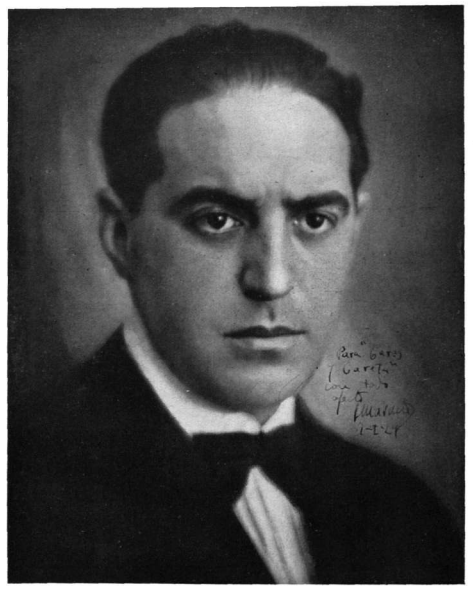
Gregorio Marañón
Gregorio Marañón y Posadillo, OWL ([ɡɾeˈɣoɾjo maɾaˈɲon]; 19 May 1887 – 27 March 1960) was a Spanish physician, scientist, historian, writer and philosopher. He married Dolores Moya in 1911, and they had four children (Carmen, Belén, María Isabel and Gregorio).
An austere, humanist and liberal man, he was a prominent Spanish intellectuals of the 20th century. He was noted for his extensive scholarly work and for his literary style characterized by clarity and precision. Like many contemporaries, he engaged in social and political life: he was a Republican and opposed the Miguel Primo de Rivera dictatorship—an opposition that resulted in a one-month prison sentence— and expressed criticism of Spanish communism. He initially supported the Second Spanish Republic, but later criticised it because of its lack of cohesion among the Spanish people.
Probably after going away from Madrid (around January 1937), and when asked his opinion of republican Spain, Marañón spoke in a meeting of French intellectuals as follows: "You don't need to try very hard, my friends; listen to this: eighty-eight percent of teachers from Madrid, Valencia and Barcelona (the three universities which, alongside Murcia's, had stayed on the republican side) have been forced to exile abroad. And do you know why? Simply because they were afraid of being murdered by the reds (communists in Spain), despite many of the threatened intellectuals were thought of as left-wing men."
In the article "Liberalism and Communism", published in Revue de Paris on 15 December 1937, he clearly expressed his change of opinion towards the Second Republic:
[...] In History there is one absolutely forbidden thing: to judge what could have happened if what happened hadn't happened. But what is beyond discussion is that the prophecies from the extreme right-wing or monarchic sides that opposed to the Republic were completely fulfilled: non-stop chaos, strikes with no motivation, burnings of churches, religious prosecution, taking away the power from the liberals, who had sponsored the movement and who didn't fall into classes politics; refusal to admit in normality to right-wing people who obeyed the regime in good faith, although they logically weren't ignited with republican extremism. The liberal heard these prophecies with suicidal disdain. It would be an outrageous lie today to say otherwise. Many centuries of success in the governing of the people (some not extinguished yet, as the English and American democracies) had given to the liberal person an excessive, sometimes conceited confidence in his superiority. Almost all of the statues that, in the streets of America and Europe, sow the people the homage to the great men, have written on their plinths the name of a liberal. Whichever the political future of Spain may be, there is no doubt that in this stage of its history, it was the reactionary, and not the liberal, who got it right.
From December 1936 to autumn of 1942, Marañón lived abroad, in a de facto exile. Back in Spain again, the dictatorship (as it did with other intellectuals) used his figure to improve its exterior image. In overall terms, the Francoist state respected him.[citation needed] Miguel Artola, in 1987, stated that the biggest political contribution of Marañón was clearly having raised the flag of freedom, in a time when only a very few could do so, understanding liberalism as the opposite to a specific political position. In this sense, he stated:
"Being liberal is, precisely, these two things: first, being open to understanding with those who think differently, and second, never admitting that the end justifies the means, but the other way around, the means justify the end. [...] Therefore, liberalism is a behaviour, and so, it is much more than politics".
— Prologue of his book Liberal Essays, 1946
Gregorio Marañón
Gregorio Marañón y Posadillo, OWL ([ɡɾeˈɣoɾjo maɾaˈɲon]; 19 May 1887 – 27 March 1960) was a Spanish physician, scientist, historian, writer and philosopher. He married Dolores Moya in 1911, and they had four children (Carmen, Belén, María Isabel and Gregorio).
An austere, humanist and liberal man, he was a prominent Spanish intellectuals of the 20th century. He was noted for his extensive scholarly work and for his literary style characterized by clarity and precision. Like many contemporaries, he engaged in social and political life: he was a Republican and opposed the Miguel Primo de Rivera dictatorship—an opposition that resulted in a one-month prison sentence— and expressed criticism of Spanish communism. He initially supported the Second Spanish Republic, but later criticised it because of its lack of cohesion among the Spanish people.
Probably after going away from Madrid (around January 1937), and when asked his opinion of republican Spain, Marañón spoke in a meeting of French intellectuals as follows: "You don't need to try very hard, my friends; listen to this: eighty-eight percent of teachers from Madrid, Valencia and Barcelona (the three universities which, alongside Murcia's, had stayed on the republican side) have been forced to exile abroad. And do you know why? Simply because they were afraid of being murdered by the reds (communists in Spain), despite many of the threatened intellectuals were thought of as left-wing men."
In the article "Liberalism and Communism", published in Revue de Paris on 15 December 1937, he clearly expressed his change of opinion towards the Second Republic:
[...] In History there is one absolutely forbidden thing: to judge what could have happened if what happened hadn't happened. But what is beyond discussion is that the prophecies from the extreme right-wing or monarchic sides that opposed to the Republic were completely fulfilled: non-stop chaos, strikes with no motivation, burnings of churches, religious prosecution, taking away the power from the liberals, who had sponsored the movement and who didn't fall into classes politics; refusal to admit in normality to right-wing people who obeyed the regime in good faith, although they logically weren't ignited with republican extremism. The liberal heard these prophecies with suicidal disdain. It would be an outrageous lie today to say otherwise. Many centuries of success in the governing of the people (some not extinguished yet, as the English and American democracies) had given to the liberal person an excessive, sometimes conceited confidence in his superiority. Almost all of the statues that, in the streets of America and Europe, sow the people the homage to the great men, have written on their plinths the name of a liberal. Whichever the political future of Spain may be, there is no doubt that in this stage of its history, it was the reactionary, and not the liberal, who got it right.
From December 1936 to autumn of 1942, Marañón lived abroad, in a de facto exile. Back in Spain again, the dictatorship (as it did with other intellectuals) used his figure to improve its exterior image. In overall terms, the Francoist state respected him.[citation needed] Miguel Artola, in 1987, stated that the biggest political contribution of Marañón was clearly having raised the flag of freedom, in a time when only a very few could do so, understanding liberalism as the opposite to a specific political position. In this sense, he stated:
"Being liberal is, precisely, these two things: first, being open to understanding with those who think differently, and second, never admitting that the end justifies the means, but the other way around, the means justify the end. [...] Therefore, liberalism is a behaviour, and so, it is much more than politics".
— Prologue of his book Liberal Essays, 1946
Recent media
Recent media