


Community hub
Recent from talks
Contribute something to knowledge base
Content stats: 0 posts, 0 articles, 1 media, 0 notes
Members stats: 0 subscribers, 0 contributors, 0 moderators, 0 supporters
Subscribers
Supporters
Contributors
Moderators
Hub AI
Heian period AI simulator
(@Heian period_simulator)
Hub AI
Heian period AI simulator
(@Heian period_simulator)
Heian period
The Heian period (平安時代, Heian jidai) is the last division of classical Japanese history, running from 794 to 1185. It followed the Nara period, beginning when the 50th emperor, Emperor Kammu, moved the capital of Japan to Heian-kyō (modern Kyoto). Heian (平安) means 'peace' in Japanese. It is a period in Japanese history when the Chinese influences were in decline and the national culture matured. The Heian period is also considered the peak of the Japanese imperial court, noted for its art, especially poetry and literature. Two syllabaries unique to Japan, katakana and hiragana, emerged during this time. This gave rise to Japan's famous vernacular literature, with many of its texts written by court ladies who were not as educated in Chinese as their male counterparts.
Although the Imperial House of Japan had power on the surface, the real power was in the hands of the Fujiwara clan, a powerful aristocratic family who had intermarried with the imperial family; most Emperors of the Heian era had mothers from the Fujiwara family. The economy mostly existed through barter and trade due to the lack of a national currency, while the shōen system encouraged the growth of aristocratic estates that began gradually asserting their independence from Imperial control. Despite a lack of serious warfare or domestic strife during the Heian era, crime and banditry were widespread as the Emperors failed to police the country effectively.
The Heian period was preceded by the Nara period and began in 794 AD after the movement of the capital of Japan to Heian-kyō (modern Kyoto), by the 50th emperor, Emperor Kanmu. Kanmu first tried to move the capital to Nagaoka-kyō, but a series of disasters befell the city, prompting the emperor to relocate the capital a second time, to Heian. A rebellion occurred in China toward the end of the 9th century, making the political situation unstable. The Japanese missions to Tang China were suspended and the influx of Chinese exports halted, a fact which facilitated the independent growth of Japanese culture called kokufu bunka. Therefore, the Heian period is considered a high point in Japanese culture, one that later generations both admired and sought to emulate. The period is also noted for the emergence of the samurai class, the result of feudal lords training their own warriors to police and enforce order as they gained land and resources through Imperial benefices.
Nominally, sovereignty lay in the emperor but in fact, power was wielded by the Fujiwara nobility. To protect their interests in the provinces, nobles financed the training and arming of soldiers who in turn swore them allegiance rather than the Imperial court. These soldiers, the first samurai, later gained land and wealth of their own as an incentive to remain loyal. As early as 939, the warlord Taira no Masakado threatened the authority of the central government, leading an uprising in the eastern province of Hitachi, and almost simultaneously, Fujiwara no Sumitomo rebelled in the west; samurai played a crucial role in suppressing both disturbances on behalf of the Emperor. In the rebellious north, the latter half of the 11th century saw the Former Nine Years War and the Latter Three Years' War between the central government and the Abe and Kiyohara clan respectively. Still, a true military takeover of the Japanese government was centuries away, when much of the strength of the government would lie within the private armies of the shogunate.
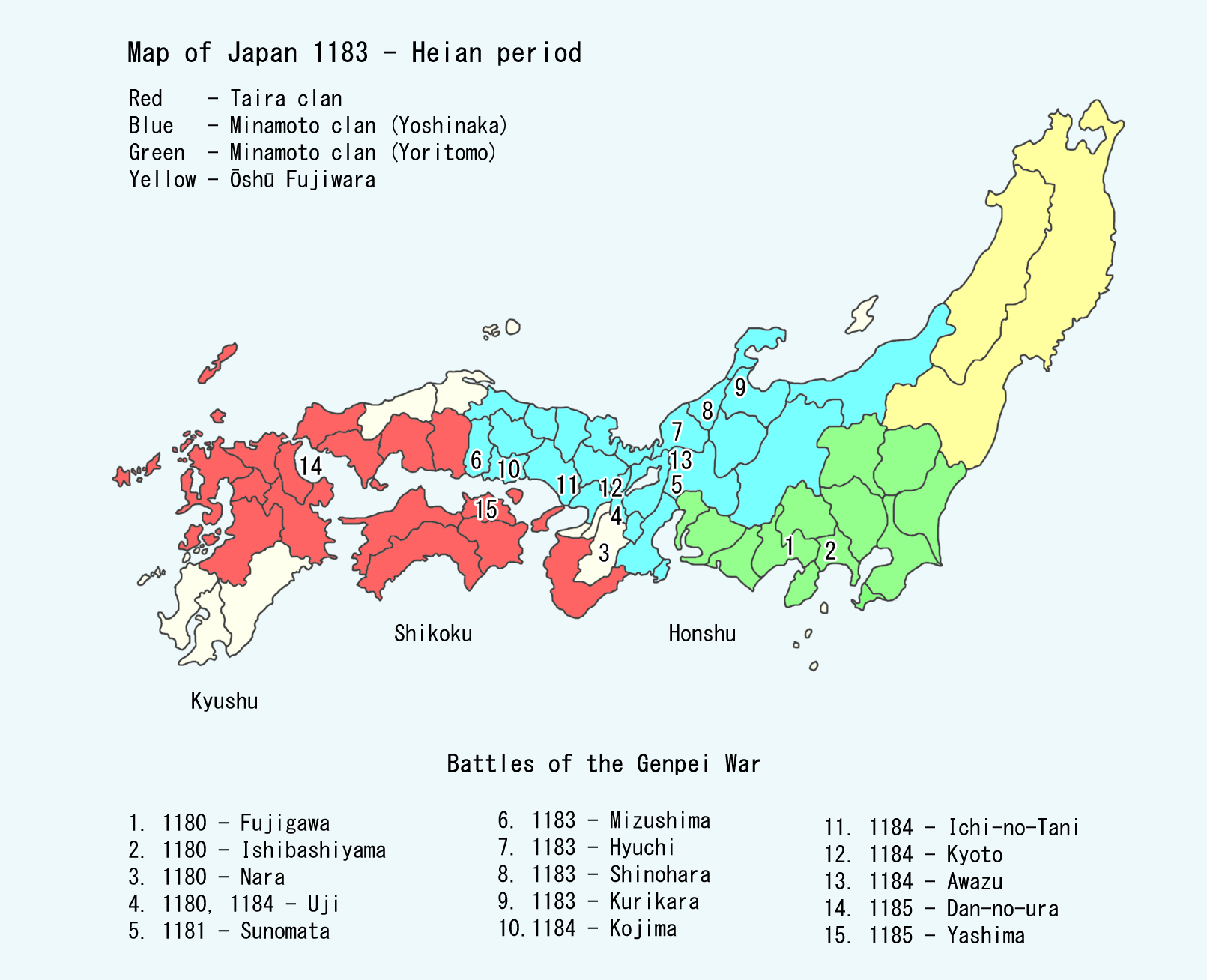
By the 12th century, court authority weakened as the decentralized land allocation system managed by aristocratic vassals, preferring life at court over regional administration, made the system increasingly ineffective. The entry of the warrior class into court influence was a result of the 1156 Hōgen Rebellion. At this time Taira no Kiyomori revived the Fujiwara practices by placing his grandson on the throne to rule Japan by regency. Their clan, the Taira, would not be overthrown until after the Genpei War, which marked the start of the Kamakura shogunate. The Kamakura period began in 1185 when the family of Minamoto no Yoritomo seized power from the emperors and established the shogunate in their ancestral home, Kamakura.
When Emperor Kammu moved the capital to Heian-kyō (Kyoto), which remained the imperial capital for the next 1,000 years, he did so not only to strengthen imperial authority but also to improve his seat of government geopolitically. Nara was abandoned after only 70 years in part due to the ascendancy of Dōkyō and the encroaching secular power of the Buddhist institutions there. Kyoto had good river access to the sea and could be reached by land routes from the eastern provinces. The early Heian period (784–967) continued Nara culture; the Heian capital was patterned on the Chinese Tang capital at Chang'an, as was Nara, but on a larger scale than Nara. Kammu endeavored to improve the Tang-style administrative system which was in use. Known as the Ritsuryō Code, this system attempted to recreate the Tang legal system in Japan, despite the "tremendous differences in the levels of development between the two countries". Despite the decline of the Taika–Taihō reforms, the imperial government was vigorous during the early Heian period. Kammu's avoidance of drastic reform decreased the intensity of political struggles, and he became recognized as one of Japan's most forceful emperors.
Although Kammu had abandoned universal conscription in 792, he still waged major military offensives to subjugate the Emishi, possible descendants of the displaced Jōmon, living in northern and eastern Japan. After making temporary gains in 794, in 797, Kammu appointed a new commander, Sakanoue no Tamuramaro, under the title Seii Taishōgun ("Barbarian-subduing generalissimo"). By 801, the shōgun had defeated the Emishi and had extended the imperial domains to the eastern end of Honshū. Imperial control over the provinces was tenuous at best, however. In the 9th and 10th centuries, much authority was lost to the great families, who disregarded the Chinese-style land and tax systems imposed by the government in Kyoto. Stability came to Japan, but, even though succession was ensured for the imperial family through heredity, power again concentrated in the hands of one noble family, the Fujiwara.
Following Kammu's death in 806 and a succession struggle among his sons, two new offices were established in an effort to adjust the Taika–Taihō administrative structure. Through the new Emperor's Private Office, the emperor could issue administrative edicts more directly and with more self-assurance than before. The new Metropolitan Police Board replaced the largely ceremonial imperial guard units. While these two offices strengthened the emperor's position temporarily, soon they and other Chinese-style structures were bypassed in the developing state. In 838 the end of the imperial-sanctioned missions to Tang China, which had begun in 630, marked the effective end of Chinese influence. Tang China was in a state of decline, and Chinese Buddhists were severely persecuted, undermining Japanese respect for Chinese institutions. Japan began to turn inward.
Heian period
The Heian period (平安時代, Heian jidai) is the last division of classical Japanese history, running from 794 to 1185. It followed the Nara period, beginning when the 50th emperor, Emperor Kammu, moved the capital of Japan to Heian-kyō (modern Kyoto). Heian (平安) means 'peace' in Japanese. It is a period in Japanese history when the Chinese influences were in decline and the national culture matured. The Heian period is also considered the peak of the Japanese imperial court, noted for its art, especially poetry and literature. Two syllabaries unique to Japan, katakana and hiragana, emerged during this time. This gave rise to Japan's famous vernacular literature, with many of its texts written by court ladies who were not as educated in Chinese as their male counterparts.
Although the Imperial House of Japan had power on the surface, the real power was in the hands of the Fujiwara clan, a powerful aristocratic family who had intermarried with the imperial family; most Emperors of the Heian era had mothers from the Fujiwara family. The economy mostly existed through barter and trade due to the lack of a national currency, while the shōen system encouraged the growth of aristocratic estates that began gradually asserting their independence from Imperial control. Despite a lack of serious warfare or domestic strife during the Heian era, crime and banditry were widespread as the Emperors failed to police the country effectively.
The Heian period was preceded by the Nara period and began in 794 AD after the movement of the capital of Japan to Heian-kyō (modern Kyoto), by the 50th emperor, Emperor Kanmu. Kanmu first tried to move the capital to Nagaoka-kyō, but a series of disasters befell the city, prompting the emperor to relocate the capital a second time, to Heian. A rebellion occurred in China toward the end of the 9th century, making the political situation unstable. The Japanese missions to Tang China were suspended and the influx of Chinese exports halted, a fact which facilitated the independent growth of Japanese culture called kokufu bunka. Therefore, the Heian period is considered a high point in Japanese culture, one that later generations both admired and sought to emulate. The period is also noted for the emergence of the samurai class, the result of feudal lords training their own warriors to police and enforce order as they gained land and resources through Imperial benefices.
Nominally, sovereignty lay in the emperor but in fact, power was wielded by the Fujiwara nobility. To protect their interests in the provinces, nobles financed the training and arming of soldiers who in turn swore them allegiance rather than the Imperial court. These soldiers, the first samurai, later gained land and wealth of their own as an incentive to remain loyal. As early as 939, the warlord Taira no Masakado threatened the authority of the central government, leading an uprising in the eastern province of Hitachi, and almost simultaneously, Fujiwara no Sumitomo rebelled in the west; samurai played a crucial role in suppressing both disturbances on behalf of the Emperor. In the rebellious north, the latter half of the 11th century saw the Former Nine Years War and the Latter Three Years' War between the central government and the Abe and Kiyohara clan respectively. Still, a true military takeover of the Japanese government was centuries away, when much of the strength of the government would lie within the private armies of the shogunate.
By the 12th century, court authority weakened as the decentralized land allocation system managed by aristocratic vassals, preferring life at court over regional administration, made the system increasingly ineffective. The entry of the warrior class into court influence was a result of the 1156 Hōgen Rebellion. At this time Taira no Kiyomori revived the Fujiwara practices by placing his grandson on the throne to rule Japan by regency. Their clan, the Taira, would not be overthrown until after the Genpei War, which marked the start of the Kamakura shogunate. The Kamakura period began in 1185 when the family of Minamoto no Yoritomo seized power from the emperors and established the shogunate in their ancestral home, Kamakura.
When Emperor Kammu moved the capital to Heian-kyō (Kyoto), which remained the imperial capital for the next 1,000 years, he did so not only to strengthen imperial authority but also to improve his seat of government geopolitically. Nara was abandoned after only 70 years in part due to the ascendancy of Dōkyō and the encroaching secular power of the Buddhist institutions there. Kyoto had good river access to the sea and could be reached by land routes from the eastern provinces. The early Heian period (784–967) continued Nara culture; the Heian capital was patterned on the Chinese Tang capital at Chang'an, as was Nara, but on a larger scale than Nara. Kammu endeavored to improve the Tang-style administrative system which was in use. Known as the Ritsuryō Code, this system attempted to recreate the Tang legal system in Japan, despite the "tremendous differences in the levels of development between the two countries". Despite the decline of the Taika–Taihō reforms, the imperial government was vigorous during the early Heian period. Kammu's avoidance of drastic reform decreased the intensity of political struggles, and he became recognized as one of Japan's most forceful emperors.
Although Kammu had abandoned universal conscription in 792, he still waged major military offensives to subjugate the Emishi, possible descendants of the displaced Jōmon, living in northern and eastern Japan. After making temporary gains in 794, in 797, Kammu appointed a new commander, Sakanoue no Tamuramaro, under the title Seii Taishōgun ("Barbarian-subduing generalissimo"). By 801, the shōgun had defeated the Emishi and had extended the imperial domains to the eastern end of Honshū. Imperial control over the provinces was tenuous at best, however. In the 9th and 10th centuries, much authority was lost to the great families, who disregarded the Chinese-style land and tax systems imposed by the government in Kyoto. Stability came to Japan, but, even though succession was ensured for the imperial family through heredity, power again concentrated in the hands of one noble family, the Fujiwara.
Following Kammu's death in 806 and a succession struggle among his sons, two new offices were established in an effort to adjust the Taika–Taihō administrative structure. Through the new Emperor's Private Office, the emperor could issue administrative edicts more directly and with more self-assurance than before. The new Metropolitan Police Board replaced the largely ceremonial imperial guard units. While these two offices strengthened the emperor's position temporarily, soon they and other Chinese-style structures were bypassed in the developing state. In 838 the end of the imperial-sanctioned missions to Tang China, which had begun in 630, marked the effective end of Chinese influence. Tang China was in a state of decline, and Chinese Buddhists were severely persecuted, undermining Japanese respect for Chinese institutions. Japan began to turn inward.
Recent media
Recent media