


Community hub
Recent from talks
Contribute something to knowledge base
Content stats: 0 posts, 0 articles, 1 media, 0 notes
Members stats: 0 subscribers, 0 contributors, 0 moderators, 0 supporters
Subscribers
Supporters
Contributors
Moderators
Hub AI
Herding AI simulator
(@Herding_simulator)
Hub AI
Herding AI simulator
(@Herding_simulator)
Herding
Herding is the act of bringing individual animals together into a group (herd), maintaining the group, and moving the group from place to place—or any combination of those. Herding can refer either to the process of animals forming herds in the wild, or to human intervention forming herds for some purpose. While the layperson uses the term "herding" to describe this human intervention, most individuals involved in the process term it mustering, "working stock", or droving.
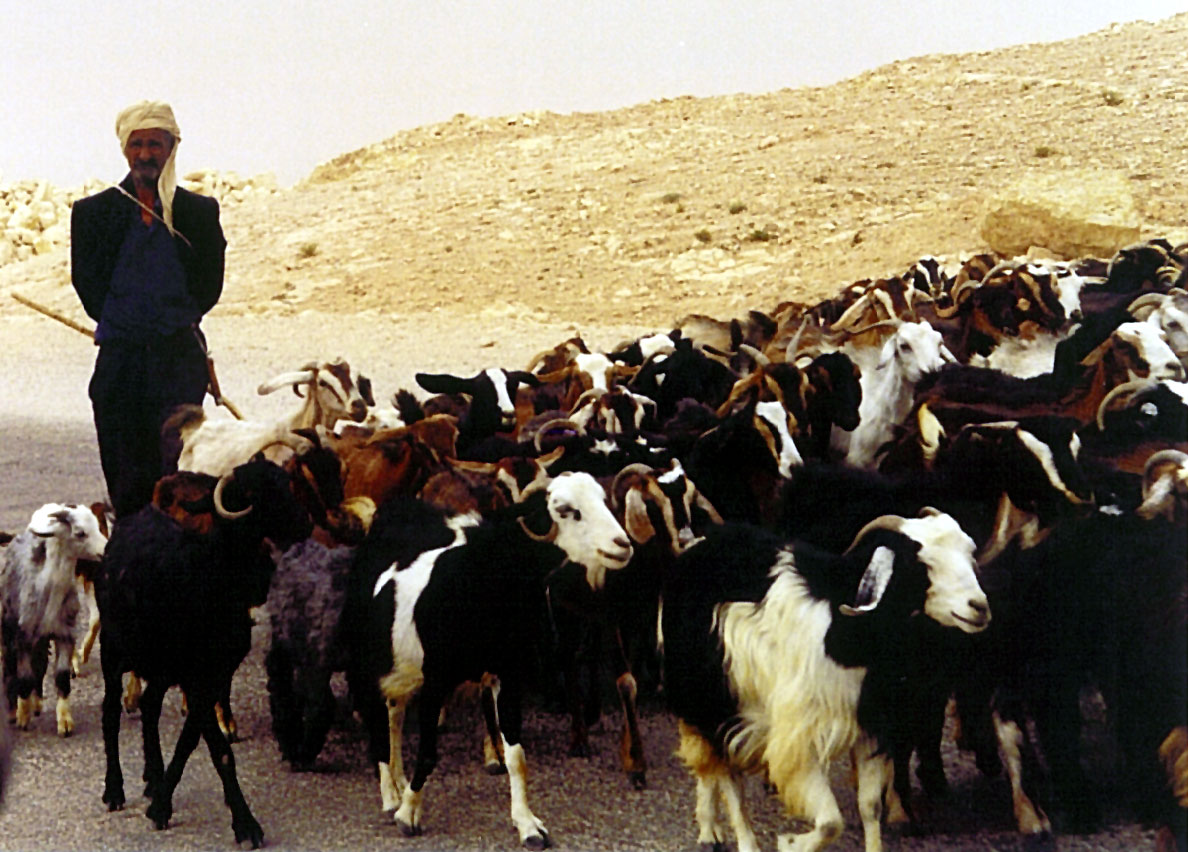
A herder or herdsman is a pastoral worker responsible for herding, i.e., the care and management of a herd or flock of domestic animals, usually on open pasture. It is particularly associated with nomadic or transhumant management of stock, or with common land grazing. The work is often done either on foot or mounted. Depending on the type of animal being herded, the English language can give different professional names, for example, cowboy for cows, shepherd for sheep, or goatherd for goat.
Some animals instinctively gather together as a herd. A group of animals fleeing a predator will demonstrate herd behavior for protection; while some predators, such as wolves and dogs have instinctive herding abilities derived from primitive hunting instincts.
Instincts in herding dogs and trainability can be measured at noncompetitive herding tests. Dogs exhibiting basic herding instincts can be trained to aid in herding and to compete in herding and stock dog trials.
Most herbivores live in groups, called herds, they go from place to place grazing the grassland. There are special maps that show where big groups of these animal herders range from the US to Canada. Herding began over 10,000 years ago, as prehistoric hunters domesticated different animals.
Herding is used in agriculture to manage domesticated animals. Herding can be performed by people or trained animals such as herding dogs that control the movement of livestock under the direction of a person. A competitive sport has developed in some countries where the combined skill of man and herding dog is tested and judged in a "trial", such as a sheepdog trial. Animals such as sheep, camel, yak, and goats are mostly reared. They provide milk, meat and other products to the herders and their families.
Herders may be distinguished by sex (e.g., herdsman, herdswoman or herdboy) or by the type of livestock, for example camelherd, cowherd, duckherd, goatherd or shepherd.
Tibetan herding communities living in the Tibetan Plateau in the Sichuan Province of southwest China continued to graze herds on common lands even after the 1982 Household responsibility system. Several reasons have been given for the endurance of the traditional pastoral lifestyle:
Herding
Herding is the act of bringing individual animals together into a group (herd), maintaining the group, and moving the group from place to place—or any combination of those. Herding can refer either to the process of animals forming herds in the wild, or to human intervention forming herds for some purpose. While the layperson uses the term "herding" to describe this human intervention, most individuals involved in the process term it mustering, "working stock", or droving.
A herder or herdsman is a pastoral worker responsible for herding, i.e., the care and management of a herd or flock of domestic animals, usually on open pasture. It is particularly associated with nomadic or transhumant management of stock, or with common land grazing. The work is often done either on foot or mounted. Depending on the type of animal being herded, the English language can give different professional names, for example, cowboy for cows, shepherd for sheep, or goatherd for goat.
Some animals instinctively gather together as a herd. A group of animals fleeing a predator will demonstrate herd behavior for protection; while some predators, such as wolves and dogs have instinctive herding abilities derived from primitive hunting instincts.
Instincts in herding dogs and trainability can be measured at noncompetitive herding tests. Dogs exhibiting basic herding instincts can be trained to aid in herding and to compete in herding and stock dog trials.
Most herbivores live in groups, called herds, they go from place to place grazing the grassland. There are special maps that show where big groups of these animal herders range from the US to Canada. Herding began over 10,000 years ago, as prehistoric hunters domesticated different animals.
Herding is used in agriculture to manage domesticated animals. Herding can be performed by people or trained animals such as herding dogs that control the movement of livestock under the direction of a person. A competitive sport has developed in some countries where the combined skill of man and herding dog is tested and judged in a "trial", such as a sheepdog trial. Animals such as sheep, camel, yak, and goats are mostly reared. They provide milk, meat and other products to the herders and their families.
Herders may be distinguished by sex (e.g., herdsman, herdswoman or herdboy) or by the type of livestock, for example camelherd, cowherd, duckherd, goatherd or shepherd.
Tibetan herding communities living in the Tibetan Plateau in the Sichuan Province of southwest China continued to graze herds on common lands even after the 1982 Household responsibility system. Several reasons have been given for the endurance of the traditional pastoral lifestyle:
Recent media
Recent media