



Community hub
Recent from talks
Knowledge base stats:
Talk channels stats:
Members stats:
Herero and Nama genocide
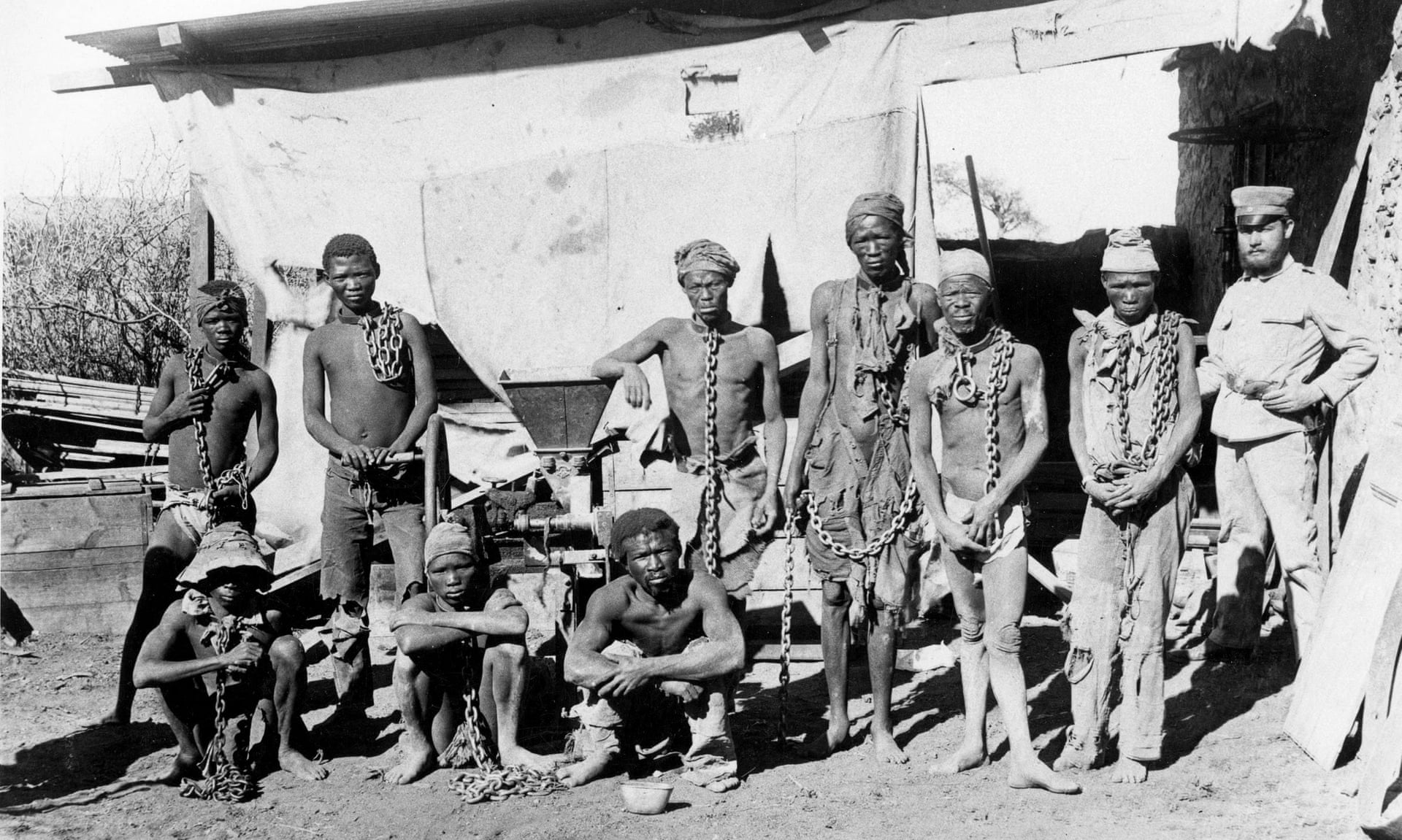
The Herero and Nama genocide or Namibian genocide, formerly known also as the Herero and Namaqua genocide, was a campaign of ethnic extermination and collective punishment waged against the Herero (Ovaherero) and the Nama people in German South West Africa (now Namibia) by the German Empire. It was one of the earliest genocides to begin in the 20th century, occurring between 1904 and 1908. In January 1904, the Herero people, who were led by Samuel Maharero, and the Nama people, who were led by Captain Hendrik Witbooi, rebelled against German colonial rule. On 12 January 1904, they killed more than 100 German settlers in the area of Okahandja. Between 24,000 and 100,000 Hereros and 10,000 Nama were killed in the genocide.
In August 1904, German General Lothar von Trotha defeated the Ovaherero in the Battle of Waterberg and drove them into the desert of Omaheke, where most of them died of dehydration. In October, the Nama people also rebelled against the Germans, only to suffer a similar fate. Between 24,000 and 100,000 Hereros and 10,000 Nama were killed in the genocide. The first phase of the genocide was characterized by widespread death from starvation and dehydration, due to the prevention of the Herero from leaving the Namib desert by German forces. Once defeated, thousands of Hereros and Namas were imprisoned in concentration camps, where the majority died of diseases, abuse, and exhaustion.
In 1985, the United Nations' Whitaker Report classified the aftermath as an attempt to exterminate the Herero and Nama people of South West Africa, and therefore one of the earliest attempts at genocide in the 20th century. In 2004, the German government recognised the events in what a German minister qualified as an "apology" but ruled out financial compensation for the victims' descendants. In July 2015, the German government and the speaker of the Bundestag officially called the events a "genocide"; however, it refused to consider reparations at that time. Despite this, the last batch of skulls and other remains of the slaughtered tribesmen, which were taken to Germany to promote racial superiority were returned to Namibia in 2018, with Petra Bosse-Huber, a German Protestant bishop, describing the event as "the first genocide of the 20th century".
In May 2021, the German government issued an official statement in which it said that Germany
"apologizes and bows before the descendants of the victims. Today, more than 100 years later, Germany asks for forgiveness for the sins of their forefathers. It is not possible to undo what has been done. But the suffering, inhumanity and pain inflicted on the tens of thousands of innocent men, women and children by Germany during the war in what is today Namibia must not be forgotten. It must serve as a warning against racism and genocide."
The same year, the German government agreed to pay €1.1 billion over 30 years to fund projects in communities that were impacted by the genocide.
The original inhabitants of what is now Namibia were the San and the Khoekhoe.
Herero, who speak a Bantu language, were originally a group of cattle herders who migrated into what is now Namibia during the mid-18th century. The Herero seized vast swathes of the arable upper plateaus which were ideal for cattle grazing. Agricultural duties, which were minimal, were assigned to enslaved Khoisan and Bushmen. Over the rest of the 18th century, the Herero slowly drove the Khoisan into the dry, rugged hills to the south and east.
Hub AI
Herero and Nama genocide AI simulator
(@Herero and Nama genocide_simulator)
Herero and Nama genocide
The Herero and Nama genocide or Namibian genocide, formerly known also as the Herero and Namaqua genocide, was a campaign of ethnic extermination and collective punishment waged against the Herero (Ovaherero) and the Nama people in German South West Africa (now Namibia) by the German Empire. It was one of the earliest genocides to begin in the 20th century, occurring between 1904 and 1908. In January 1904, the Herero people, who were led by Samuel Maharero, and the Nama people, who were led by Captain Hendrik Witbooi, rebelled against German colonial rule. On 12 January 1904, they killed more than 100 German settlers in the area of Okahandja. Between 24,000 and 100,000 Hereros and 10,000 Nama were killed in the genocide.
In August 1904, German General Lothar von Trotha defeated the Ovaherero in the Battle of Waterberg and drove them into the desert of Omaheke, where most of them died of dehydration. In October, the Nama people also rebelled against the Germans, only to suffer a similar fate. Between 24,000 and 100,000 Hereros and 10,000 Nama were killed in the genocide. The first phase of the genocide was characterized by widespread death from starvation and dehydration, due to the prevention of the Herero from leaving the Namib desert by German forces. Once defeated, thousands of Hereros and Namas were imprisoned in concentration camps, where the majority died of diseases, abuse, and exhaustion.
In 1985, the United Nations' Whitaker Report classified the aftermath as an attempt to exterminate the Herero and Nama people of South West Africa, and therefore one of the earliest attempts at genocide in the 20th century. In 2004, the German government recognised the events in what a German minister qualified as an "apology" but ruled out financial compensation for the victims' descendants. In July 2015, the German government and the speaker of the Bundestag officially called the events a "genocide"; however, it refused to consider reparations at that time. Despite this, the last batch of skulls and other remains of the slaughtered tribesmen, which were taken to Germany to promote racial superiority were returned to Namibia in 2018, with Petra Bosse-Huber, a German Protestant bishop, describing the event as "the first genocide of the 20th century".
In May 2021, the German government issued an official statement in which it said that Germany
"apologizes and bows before the descendants of the victims. Today, more than 100 years later, Germany asks for forgiveness for the sins of their forefathers. It is not possible to undo what has been done. But the suffering, inhumanity and pain inflicted on the tens of thousands of innocent men, women and children by Germany during the war in what is today Namibia must not be forgotten. It must serve as a warning against racism and genocide."
The same year, the German government agreed to pay €1.1 billion over 30 years to fund projects in communities that were impacted by the genocide.
The original inhabitants of what is now Namibia were the San and the Khoekhoe.
Herero, who speak a Bantu language, were originally a group of cattle herders who migrated into what is now Namibia during the mid-18th century. The Herero seized vast swathes of the arable upper plateaus which were ideal for cattle grazing. Agricultural duties, which were minimal, were assigned to enslaved Khoisan and Bushmen. Over the rest of the 18th century, the Herero slowly drove the Khoisan into the dry, rugged hills to the south and east.