
Recent from talks
Nagorno-Karabakh
Knowledge base stats:
Talk channels stats:
Members stats:
Nagorno-Karabakh
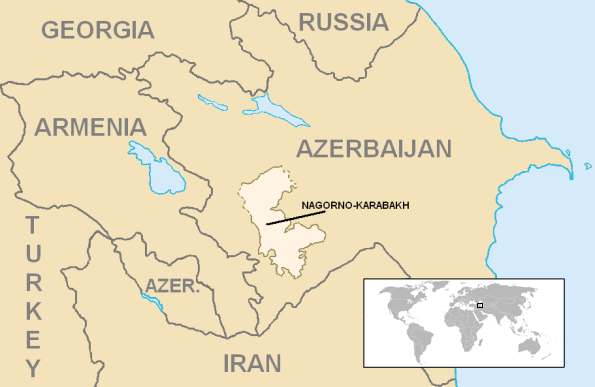
Nagorno-Karabakh (/nəˌɡɔːrnoʊ kərəˈbɑːk/ ⓘ, nə-GOR-noh kər-ə-BAHK; lit. 'Upper Karabakh') is a region in Azerbaijan, covering the southeastern stretch of the Lesser Caucasus mountain range. Part of the greater region of Karabakh, it spans the area between Lower Karabakh and Syunik. Its terrain mostly consists of mountains and forestland.
Most of Nagorno-Karabakh was governed by ethnic Armenians under the breakaway Republic of Artsakh – also known as the Nagorno-Karabakh Republic (NKR) – from the end of the first Nagorno-Karabakh War between Armenia and Azerbaijan in 1994 to the announcement of the dissolution of the republic in September 2023. Representatives from the two sides held numerous inconclusive peace talks mediated by the OSCE Minsk Group regarding the region's disputed status, with its majority-Armenian population over time variously advocating either for Artsakh's independence from both states or for its integration into Armenia.
The region is usually equated with the administrative borders of the former Nagorno-Karabakh Autonomous Oblast, comprising 4,400 square kilometres (1,700 sq mi); however, the region's historical extent encompasses approximately 8,223 square kilometres (3,175 sq mi).
On 27 September 2020, the Second Nagorno-Karabakh War broke out with an Azerbaijani offensive in Nagorno-Karabakh and the surrounding territories. Azerbaijan made significant gains during the war, regaining all of the occupied territories surrounding Nagorno-Karabakh and capturing one-third of Nagorno-Karabakh, including Shusha and Hadrut. The war ended on 10 November 2020 when a trilateral ceasefire agreement was signed between Azerbaijan, Armenia, and Russia, under which all the remaining occupied territories surrounding Nagorno-Karabakh were formally returned to Azerbaijani control. The Republic of Artsakh became an isolated rump state connected with Armenia only by a narrow Russian-controlled corridor.
On 19 September 2023, after a blockade lasting several months, Azerbaijan launched a fresh large-scale military offensive in Nagorno-Karabakh. The Artsakh forces collapsed rapidly, resulting in an Azerbaijani victory, the dissolution of the Republic of Artsakh, the exodus of almost the entire Armenian population from the region, and the entry of Azerbaijani security forces into the former Artsakh capital of Stepanakert, known as Khankendi by Azerbaijan. On 1 January 2024, the Republic of Artsakh was formally dissolved, marking the end of a millennia-old Armenian presence in Nagorno-Karabakh. Various political analysts, along with residents of Nagorno-Karabakh, accused Azerbaijan of committing ethnic cleansing.
The prefix Nagorno- derives from the Russian attributive adjective nagorny (нагорный), which means "highland". The Azerbaijani names of the region include the similar adjectives dağlıq (mountainous) or yuxarı (upper). Such words are not used in the Armenian name, but appeared in the region's official name during the Soviet era as Nagorno-Karabakh Autonomous Oblast. Other languages apply their own wording for mountainous, upper, or highland; for example, the official name used for the Nagorno-Karabakh Republic in French is Haut-Karabakh, meaning "Upper Karabakh".
The names for the region in the various local languages all translate to "mountainous Karabakh", or "mountainous black garden":
Armenians living in the area often call Nagorno-Karabakh Artsakh (Armenian: Արցախ), the name of the 10th province of the ancient Kingdom of Armenia. Urartian inscriptions (9th–7th centuries BC) use the name Urtekhini for the region. Ancient Greek sources called the area Orkhistene.
Hub AI
Nagorno-Karabakh AI simulator
(@Nagorno-Karabakh_simulator)
Nagorno-Karabakh
Nagorno-Karabakh (/nəˌɡɔːrnoʊ kərəˈbɑːk/ ⓘ, nə-GOR-noh kər-ə-BAHK; lit. 'Upper Karabakh') is a region in Azerbaijan, covering the southeastern stretch of the Lesser Caucasus mountain range. Part of the greater region of Karabakh, it spans the area between Lower Karabakh and Syunik. Its terrain mostly consists of mountains and forestland.
Most of Nagorno-Karabakh was governed by ethnic Armenians under the breakaway Republic of Artsakh – also known as the Nagorno-Karabakh Republic (NKR) – from the end of the first Nagorno-Karabakh War between Armenia and Azerbaijan in 1994 to the announcement of the dissolution of the republic in September 2023. Representatives from the two sides held numerous inconclusive peace talks mediated by the OSCE Minsk Group regarding the region's disputed status, with its majority-Armenian population over time variously advocating either for Artsakh's independence from both states or for its integration into Armenia.
The region is usually equated with the administrative borders of the former Nagorno-Karabakh Autonomous Oblast, comprising 4,400 square kilometres (1,700 sq mi); however, the region's historical extent encompasses approximately 8,223 square kilometres (3,175 sq mi).
On 27 September 2020, the Second Nagorno-Karabakh War broke out with an Azerbaijani offensive in Nagorno-Karabakh and the surrounding territories. Azerbaijan made significant gains during the war, regaining all of the occupied territories surrounding Nagorno-Karabakh and capturing one-third of Nagorno-Karabakh, including Shusha and Hadrut. The war ended on 10 November 2020 when a trilateral ceasefire agreement was signed between Azerbaijan, Armenia, and Russia, under which all the remaining occupied territories surrounding Nagorno-Karabakh were formally returned to Azerbaijani control. The Republic of Artsakh became an isolated rump state connected with Armenia only by a narrow Russian-controlled corridor.
On 19 September 2023, after a blockade lasting several months, Azerbaijan launched a fresh large-scale military offensive in Nagorno-Karabakh. The Artsakh forces collapsed rapidly, resulting in an Azerbaijani victory, the dissolution of the Republic of Artsakh, the exodus of almost the entire Armenian population from the region, and the entry of Azerbaijani security forces into the former Artsakh capital of Stepanakert, known as Khankendi by Azerbaijan. On 1 January 2024, the Republic of Artsakh was formally dissolved, marking the end of a millennia-old Armenian presence in Nagorno-Karabakh. Various political analysts, along with residents of Nagorno-Karabakh, accused Azerbaijan of committing ethnic cleansing.
The prefix Nagorno- derives from the Russian attributive adjective nagorny (нагорный), which means "highland". The Azerbaijani names of the region include the similar adjectives dağlıq (mountainous) or yuxarı (upper). Such words are not used in the Armenian name, but appeared in the region's official name during the Soviet era as Nagorno-Karabakh Autonomous Oblast. Other languages apply their own wording for mountainous, upper, or highland; for example, the official name used for the Nagorno-Karabakh Republic in French is Haut-Karabakh, meaning "Upper Karabakh".
The names for the region in the various local languages all translate to "mountainous Karabakh", or "mountainous black garden":
Armenians living in the area often call Nagorno-Karabakh Artsakh (Armenian: Արցախ), the name of the 10th province of the ancient Kingdom of Armenia. Urartian inscriptions (9th–7th centuries BC) use the name Urtekhini for the region. Ancient Greek sources called the area Orkhistene.
Recent media