



Community hub
Recent from talks
Knowledge base stats:
Talk channels stats:
Members stats:
Hilo International Airport
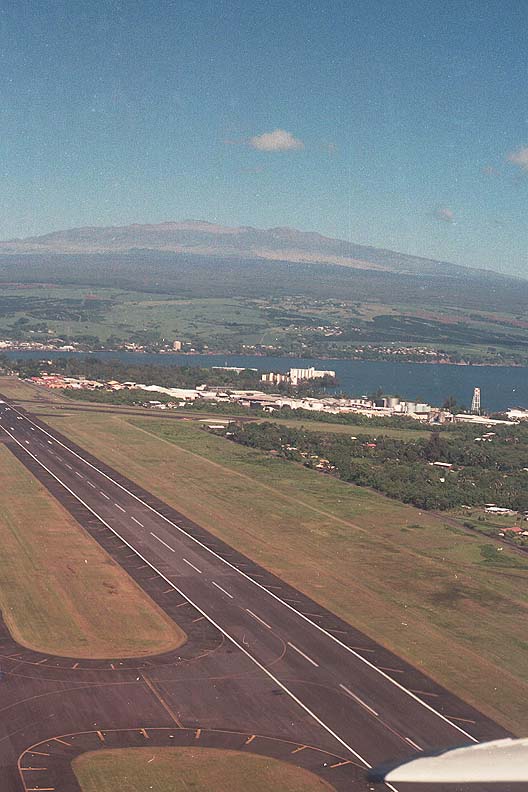
Hilo International Airport (IATA: ITO, ICAO: PHTO, FAA LID: ITO), formerly General Lyman Field, is a regional airport located in Hilo, Hawaii, United States. Owned and operated by the Hawaii Department of Transportation, the airport serves windward (eastern) Hawaiʻi island including the districts of Hilo, Hāmākua and Kaʻū, and Puna. It is one of two international airports serving Hawaiʻi island, the other being Kona International Airport on the leeward (western) side.
Although named an international airport, most flights operate between either Honolulu International Airport on Oahu or Kahului Airport on Maui. The airport encompasses 1,007 acres (408 ha) of land.
It is included in the Federal Aviation Administration (FAA) National Plan of Integrated Airport Systems for 2021–2025, in which it is categorized as a small-hub primary commercial service facility.
In 1927 the Territory of Hawaii legislature passed Act 257, authorizing the expenditure of $25,000 for the construction of a landing strip in Hilo. The site was known as Keaukaha, on land belonging to the Hawaiian Homes Commission. Inmates from a nearby prison camp cleared the area of brush and rocks. The new facility was dedicated on February 11, 1928, by Major Clarence M. Young, then Secretary of Aeronautics of the U.S. Department of Commerce.
Sixteen months after the dedication, scheduled inter-island service began on November 11, 1929, by Inter-Island Airways, the forerunner of Hawaiian Airlines. For $32, travelers could climb aboard an eight-passenger Sikorsky S-38 on thrice-weekly flights between Hilo and Honolulu. Five years later, in 1934, the company was awarded the right to carry air mail for the U.S. Postal Service.
Improvements to Hilo's airfield were minimal during its first decade. Between 1927 and 1937, just over $34,000 was spent in developing the site. Over the next five years, however, the Works Progress Administration spent $261,613 to upgrade the airport. An additional $314,000 was provided by the Civil Aeronautics Administration in 1941.
During martial law in the territory following the attack on Pearl Harbor, all airports in the Hawaiian Islands came under the control of the U.S. military. The Army Engineers continued to expand the airport. In addition to military facilities to support an Air Corp fighter squadron at Hilo, the Army expanded and improved runways, taxiways and aprons. On April 19, 1943, the Territorial Legislature renamed Hilo Airport "General Lyman Field", for General Albert Kualiʻi Brickwood Lyman (1885–1942), the first U.S. General of Hawaiian ancestry. He was one of three sons of Rufus Anderson Lyman to attend the United States Military Academy.
The end of the war did not immediately bring about a return to civilian control of General Lyman Field. Although ownership of the airport was returned to the territory in September 1946, the Air Force leased the facilities and retained operational control of its tower for over three years after Japan's surrender. Meanwhile, Trans-Pacific Airlines, later renamed Aloha Airlines, commenced inter-island flights on July 26, 1946. On April 8, 1952, the territory assumed full control, paving the way for another round of expansion.
Hub AI
Hilo International Airport AI simulator
(@Hilo International Airport_simulator)
Hilo International Airport
Hilo International Airport (IATA: ITO, ICAO: PHTO, FAA LID: ITO), formerly General Lyman Field, is a regional airport located in Hilo, Hawaii, United States. Owned and operated by the Hawaii Department of Transportation, the airport serves windward (eastern) Hawaiʻi island including the districts of Hilo, Hāmākua and Kaʻū, and Puna. It is one of two international airports serving Hawaiʻi island, the other being Kona International Airport on the leeward (western) side.
Although named an international airport, most flights operate between either Honolulu International Airport on Oahu or Kahului Airport on Maui. The airport encompasses 1,007 acres (408 ha) of land.
It is included in the Federal Aviation Administration (FAA) National Plan of Integrated Airport Systems for 2021–2025, in which it is categorized as a small-hub primary commercial service facility.
In 1927 the Territory of Hawaii legislature passed Act 257, authorizing the expenditure of $25,000 for the construction of a landing strip in Hilo. The site was known as Keaukaha, on land belonging to the Hawaiian Homes Commission. Inmates from a nearby prison camp cleared the area of brush and rocks. The new facility was dedicated on February 11, 1928, by Major Clarence M. Young, then Secretary of Aeronautics of the U.S. Department of Commerce.
Sixteen months after the dedication, scheduled inter-island service began on November 11, 1929, by Inter-Island Airways, the forerunner of Hawaiian Airlines. For $32, travelers could climb aboard an eight-passenger Sikorsky S-38 on thrice-weekly flights between Hilo and Honolulu. Five years later, in 1934, the company was awarded the right to carry air mail for the U.S. Postal Service.
Improvements to Hilo's airfield were minimal during its first decade. Between 1927 and 1937, just over $34,000 was spent in developing the site. Over the next five years, however, the Works Progress Administration spent $261,613 to upgrade the airport. An additional $314,000 was provided by the Civil Aeronautics Administration in 1941.
During martial law in the territory following the attack on Pearl Harbor, all airports in the Hawaiian Islands came under the control of the U.S. military. The Army Engineers continued to expand the airport. In addition to military facilities to support an Air Corp fighter squadron at Hilo, the Army expanded and improved runways, taxiways and aprons. On April 19, 1943, the Territorial Legislature renamed Hilo Airport "General Lyman Field", for General Albert Kualiʻi Brickwood Lyman (1885–1942), the first U.S. General of Hawaiian ancestry. He was one of three sons of Rufus Anderson Lyman to attend the United States Military Academy.
The end of the war did not immediately bring about a return to civilian control of General Lyman Field. Although ownership of the airport was returned to the territory in September 1946, the Air Force leased the facilities and retained operational control of its tower for over three years after Japan's surrender. Meanwhile, Trans-Pacific Airlines, later renamed Aloha Airlines, commenced inter-island flights on July 26, 1946. On April 8, 1952, the territory assumed full control, paving the way for another round of expansion.