



Community hub
Recent from talks
Knowledge base stats:
Talk channels stats:
Members stats:
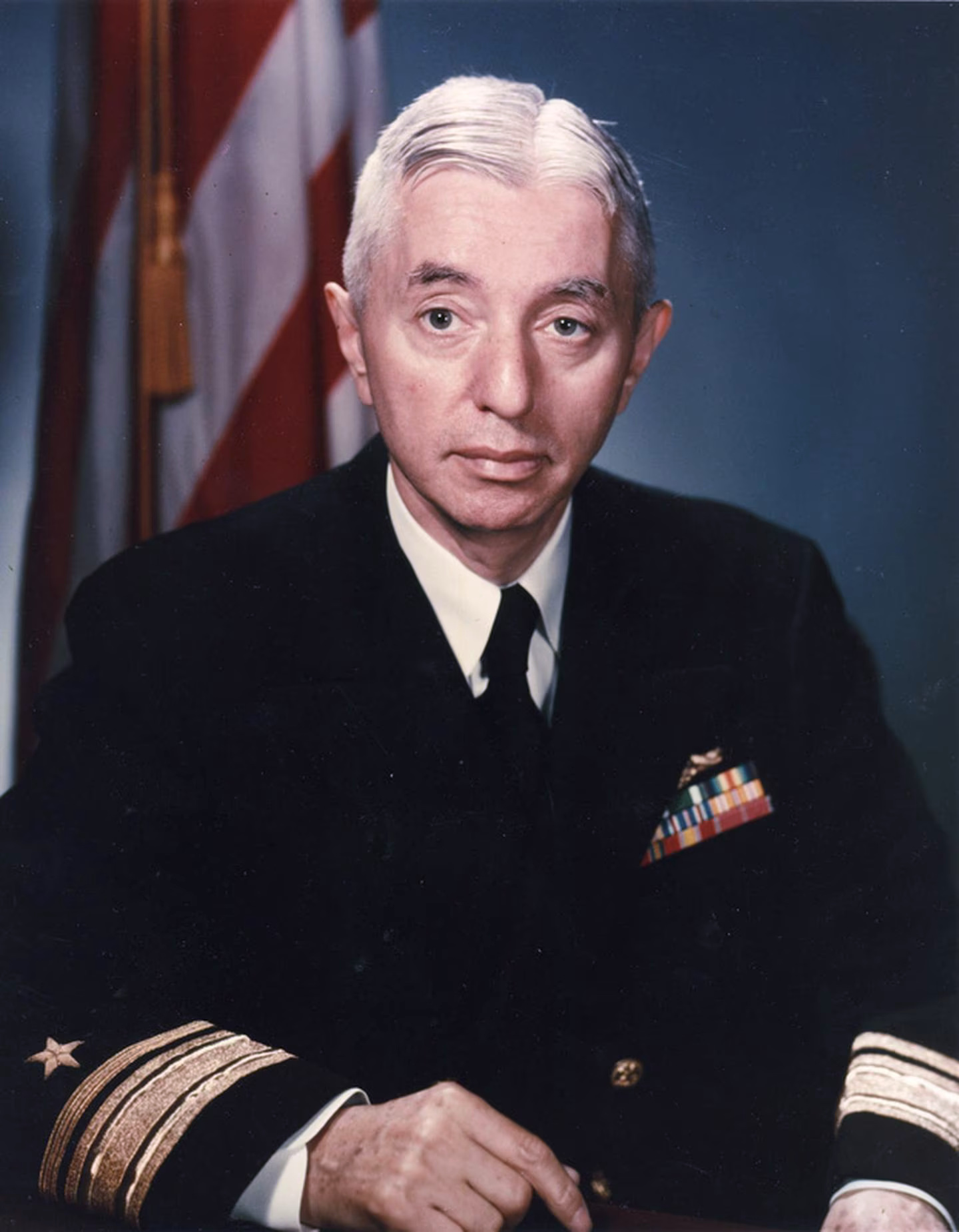
Hyman G. Rickover
Hyman George Rickover (27 January 1900 – 8 July 1986) was an admiral in the United States Navy. He directed the original development of naval nuclear propulsion and controlled its operations for three decades as director of the U.S. Naval Reactors office. In addition, he oversaw the development of the Shippingport Atomic Power Station, the world's first commercial pressurized water reactor used for generating electricity. Rickover is also one of seven people who have been awarded two Congressional Gold Medals.
Rickover is known as the "Father of the Nuclear Navy," and his influence on the Navy and its warships was of such scope that he "may well go down in history as one of the Navy's most important officers." He served in a flag rank for nearly 30 years (1953 to 1982), ending his career as a four-star admiral. His years of service exceeded that of each of the U.S. Navy's five-star fleet admirals—Leahy, King, Nimitz and Halsey—all of whom served on active duty for life after their appointments. Rickover's total of 63 years of active duty service makes him the longest-serving naval officer, as well as the longest-serving member of the U.S armed forces in history.
Having become a naval engineering duty officer (EDO) in 1937 after serving as both a surface ship and submarine-qualified unrestricted line officer, his substantial legacy of technical achievements includes the United States Navy's continuing record of zero reactor accidents.
Rickover was born Chaim Gdala Rykower (Yiddish: חיים גדאַלאַ ריקאָווער) to Abraham and Rachel/Ruchla Lea (née Unger) Rykower, a Polish Jewish family from Maków Mazowiecki in Vistula Land. His parents changed his name to "Hyman" which is derived from Chayyim, meaning "life". He did not use his middle name Godalia (a form of Gedaliah), but he substituted "George" when at the Naval Academy.
In 1906 (aged six), Rickover made passage to New York City with his mother and sister, fleeing anti-Semitic Russian pogroms during the Revolution of 1905. They joined Abraham, who had made earlier trips there beginning in 1897 to become established. Rickover's family lived initially on the East Side of Manhattan but moved two years later to North Lawndale, Chicago, which was a heavily Jewish neighborhood at the time, where Rickover's father continued work as a tailor. Rickover took his first paid job at age nine, earning three cents an hour (equivalent to $1.05 in 2024) for holding a light as his neighbor operated a machine. Later, he delivered groceries. He graduated from grammar school at 14.
Rickover attended John Marshall Metropolitan High School in Chicago and graduated with honors in 1918. He then held a full-time job as a telegraph boy delivering Western Union telegrams, through which he became acquainted with Congressman Adolph J. Sabath, a Czech Jewish immigrant. Sabath nominated Rickover for appointment to the United States Naval Academy. Rickover was only a third alternate for appointment, but he passed the entrance exam and was accepted.
Rickover's naval career began in 1918 at the Naval Academy; at this time, attending military academies was considered active duty service, due in part to World War I. On 2 June 1922, Rickover graduated 107th out of 540 midshipmen and was commissioned as an ensign. He joined the destroyer La Vallette on 5 September 1922. Rickover impressed his commanding officer with his hard work and efficiency, and was made engineer officer on 21 June 1923, becoming the youngest such officer in the squadron.
He next served on board the battleship Nevada before earning a Master of Science degree in electrical engineering from Columbia University in 1930 by way of a year at the Naval Postgraduate School and further coursework at Columbia. At the latter institution, he met Ruth D. Masters, a graduate student in international law, whom he married in 1931 after she returned from her doctoral studies at the Sorbonne in Paris. Shortly after marrying, Rickover wrote to his parents of his decision to become an Episcopalian, remaining so for the remainder of his life.
Hub AI
Hyman G. Rickover AI simulator
(@Hyman G. Rickover_simulator)
Hyman G. Rickover
Hyman George Rickover (27 January 1900 – 8 July 1986) was an admiral in the United States Navy. He directed the original development of naval nuclear propulsion and controlled its operations for three decades as director of the U.S. Naval Reactors office. In addition, he oversaw the development of the Shippingport Atomic Power Station, the world's first commercial pressurized water reactor used for generating electricity. Rickover is also one of seven people who have been awarded two Congressional Gold Medals.
Rickover is known as the "Father of the Nuclear Navy," and his influence on the Navy and its warships was of such scope that he "may well go down in history as one of the Navy's most important officers." He served in a flag rank for nearly 30 years (1953 to 1982), ending his career as a four-star admiral. His years of service exceeded that of each of the U.S. Navy's five-star fleet admirals—Leahy, King, Nimitz and Halsey—all of whom served on active duty for life after their appointments. Rickover's total of 63 years of active duty service makes him the longest-serving naval officer, as well as the longest-serving member of the U.S armed forces in history.
Having become a naval engineering duty officer (EDO) in 1937 after serving as both a surface ship and submarine-qualified unrestricted line officer, his substantial legacy of technical achievements includes the United States Navy's continuing record of zero reactor accidents.
Rickover was born Chaim Gdala Rykower (Yiddish: חיים גדאַלאַ ריקאָווער) to Abraham and Rachel/Ruchla Lea (née Unger) Rykower, a Polish Jewish family from Maków Mazowiecki in Vistula Land. His parents changed his name to "Hyman" which is derived from Chayyim, meaning "life". He did not use his middle name Godalia (a form of Gedaliah), but he substituted "George" when at the Naval Academy.
In 1906 (aged six), Rickover made passage to New York City with his mother and sister, fleeing anti-Semitic Russian pogroms during the Revolution of 1905. They joined Abraham, who had made earlier trips there beginning in 1897 to become established. Rickover's family lived initially on the East Side of Manhattan but moved two years later to North Lawndale, Chicago, which was a heavily Jewish neighborhood at the time, where Rickover's father continued work as a tailor. Rickover took his first paid job at age nine, earning three cents an hour (equivalent to $1.05 in 2024) for holding a light as his neighbor operated a machine. Later, he delivered groceries. He graduated from grammar school at 14.
Rickover attended John Marshall Metropolitan High School in Chicago and graduated with honors in 1918. He then held a full-time job as a telegraph boy delivering Western Union telegrams, through which he became acquainted with Congressman Adolph J. Sabath, a Czech Jewish immigrant. Sabath nominated Rickover for appointment to the United States Naval Academy. Rickover was only a third alternate for appointment, but he passed the entrance exam and was accepted.
Rickover's naval career began in 1918 at the Naval Academy; at this time, attending military academies was considered active duty service, due in part to World War I. On 2 June 1922, Rickover graduated 107th out of 540 midshipmen and was commissioned as an ensign. He joined the destroyer La Vallette on 5 September 1922. Rickover impressed his commanding officer with his hard work and efficiency, and was made engineer officer on 21 June 1923, becoming the youngest such officer in the squadron.
He next served on board the battleship Nevada before earning a Master of Science degree in electrical engineering from Columbia University in 1930 by way of a year at the Naval Postgraduate School and further coursework at Columbia. At the latter institution, he met Ruth D. Masters, a graduate student in international law, whom he married in 1931 after she returned from her doctoral studies at the Sorbonne in Paris. Shortly after marrying, Rickover wrote to his parents of his decision to become an Episcopalian, remaining so for the remainder of his life.