Hubbry Logo
Aero Ae 270 SpiritAero Ae 270 SpiritMain
Open search
Aero Ae 270 Spirit
Community hub
Aero Ae 270 Spirit
logo
8 pages, 0 posts
0 subscribers
Be the first to start a discussion here.
Aero Ae 270 Spirit
Aero Ae 270 Spirit
from Wikipedia

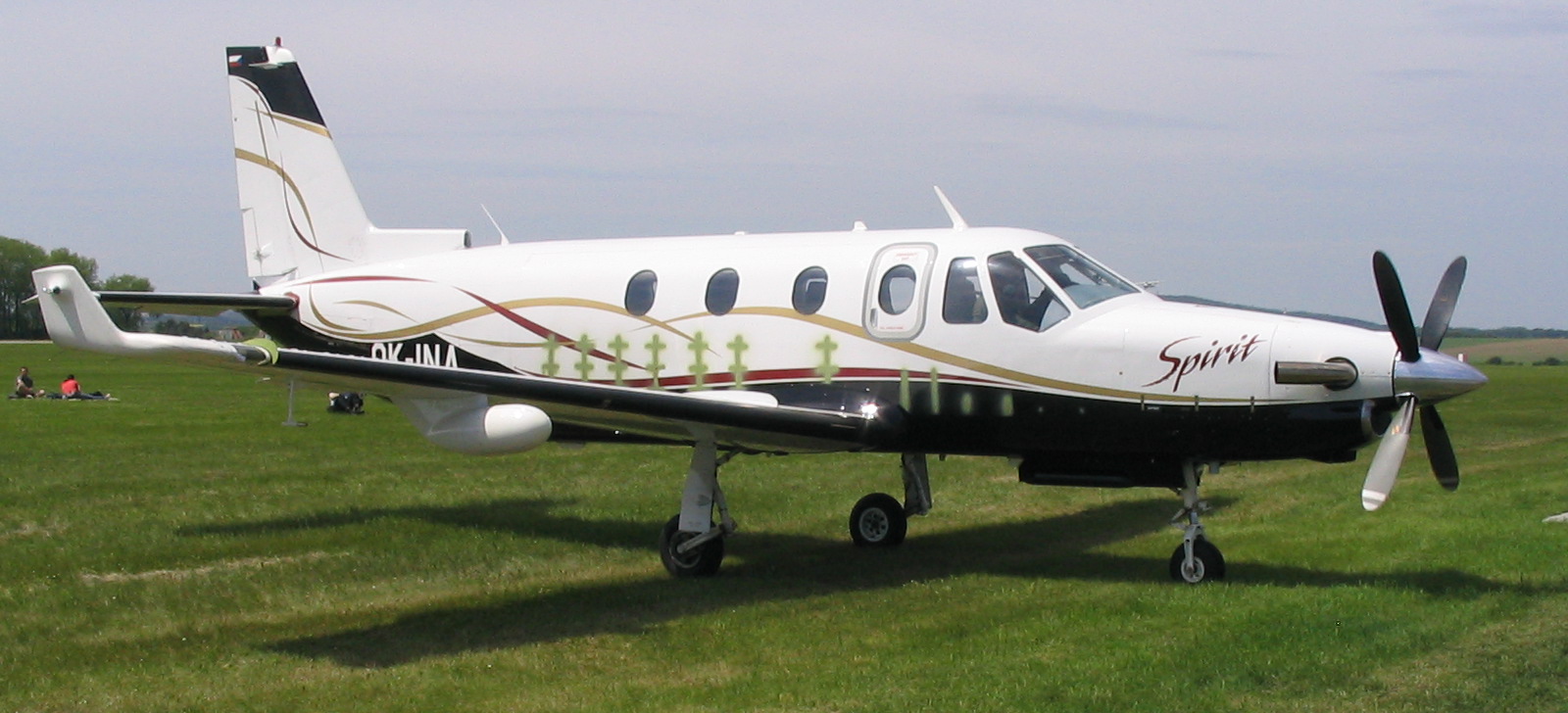
The Aero Ae270 Spirit was a single-engine turboprop general utility aircraft that was developed by the Czech aircraft company Aero Vodochody. A prototype made its maiden flight in 2000, with European Aviation Safety Agency (EASA) Type Certification in 2005 and Federal Aviation Administration (FAA) type certification in 2006.[1] No production followed.

Key Information

History

[edit]

Prototype

[edit]

Design began in the early 1990s. The aircraft's configuration was finalized by 1993. In 1997, Aero signed an agreement with AIDC of Taiwan to jointly manufacture and market the aircraft through Ibis Aerospace. The first prototype (0001, OK-EMA) was completed in 2000, and it first flew on July 25, 2000.

The initial design of the aircraft was projected to have an empty weight of 1,790 kilograms (3,950 lb), a maximum take-off weight of 3,000 kilograms (6,600 lb), and a ceiling of 7,620 metres (25,000 ft). Five prototypes were planned, two for static and dynamic tests and three for flight tests. The requirements changed and the aircraft was redesigned for greater performance and capabilities, new equipment added, a new engine variant chosen. The second (partial) prototype was used for static tests and the fourth, for fatigue tests. The third prototype (OK-SAR) first flew in 2002. The fifth prototype (OK-LIB) was finished in 2003, with its first flight in February. The sixth prototype (OK-INA) was also finished in 2003. UCL (Czech Civil Aeronautical Institute) added more requirements, which delayed further tests. The first prototype was no longer usable for EASA test flights as changes were significant. A seventh prototype (OK-EVA) was built in 2004.

In 2004, AIDC announced that it would not deliver wings for additional airplanes. Aero Vodochody also had issues with money for certification and some members of upper management at Aero were against the program. Deteriorating flight parameters and Aero management interest led to cancellation of preliminary orders. Aero Vodochody was never able to calculate a production price, mostly because the wing was produced in Taiwan and alternate production in Czech Republic was never envisioned.

In 2004, AIDC announced that its business priorities had shifted from the civil to military aviation. At the same time, Aero Vodochody's upper management experienced a similar shift in their business priorities. Aero management's declining interest led to the cancellation of eighty advance orders for the Ae270 aircraft.

Certification

[edit]

Airworthiness was certified by the Czech Civil Aviation Authority permitting training and aerial work, including commencement of commercial use.[2] EASA certification completed on December the 12th 2005. The FAA certificate was received on 24 February 2006.

Programme suspension

[edit]

During 2008 the project was suspended, jigs and tools removed and 3 unfinished fuselages (including fatigue test prototype 0004) were moved to the Air Park Zruč u Plzně museum.[3] In July 2011, Aero Vodochody stated that the Ae-270 Ibis/Spirit program (including know-how, jigs and tools) would be sold to Belarus, where serial production was planned to start in 2015.[4]

Aircraft Integrated Solutions, a British aviation engineering company based in Manchester, announced in August 2016 that it would restart the programme after its intellectual property and rights as well as European and US type certificates were acquired by its parent, Lebanese investment house COPS.[5]

Specifications (Ae 270HP)

[edit]

Data from Jane's All The World's Aircraft 2003–2004[6]

General characteristics

  • Crew: 1 or 2
  • Capacity: ** 8 passengers or
    • 1,200 kg (2,600 lb) cargo
  • Length: 12.23 m (40 ft 1 in)
  • Wingspan: 13.82 m (45 ft 4 in)
  • Height: 4.78 m (15 ft 8 in)
  • Wing area: 21.00 m2 (226.0 sq ft)
  • Aspect ratio: 9.1:1
  • Empty weight: 2,300 kg (5,071 lb)
  • Gross weight: 3,700 kg (8,157 lb)
  • Fuel capacity: 1,170 L (310 US gal; 260 imp gal)
  • Powerplant: 1 × Pratt & Whitney Canada PT6A-66A turboprop, 630 kW (850 shp)
  • Propellers: 4-bladed Hartzell HC-D4N-3/D9511FK, 2.41 m (7 ft 11 in) diameter

Performance

  • Cruise speed: 500 km/h (310 mph, 270 kn) at FL 200 (max. cruise)
  • Stall speed: 76 km/h (47 mph, 41 kn) (flaps down)
  • Range: 2,980 km (1,850 mi, 1,610 nmi) (30 minutes reserves); 2,630 km (1,630 mi; 1,420 nmi)
  • Service ceiling: 9,140 m (29,990 ft)
  • Rate of climb: 8.7 m/s (1,710 ft/min)

See also

[edit]

Aircraft of comparable role, configuration, and era

Related lists

References

[edit]
[edit]
Revisions and contributorsEdit on WikipediaRead on Wikipedia
from Grokipedia
The Aero Ae 270 Spirit is a single-engine turboprop utility aircraft developed in the late 1990s by the Czech manufacturer Aero Vodochody in partnership with Taiwan's Aerospace Industrial Development Corporation (AIDC) under the Ibis Aerospace banner. Designed for versatile short-haul transport, general utility, and multi-role operations such as passenger, cargo, or executive missions, it accommodates one pilot and up to nine passengers in a pressurized cabin with interchangeable configurations. The project originated in the 1980s as the Moravan L-270 before evolving into the Ae 270, with its first prototype achieving maiden flight in 2000. Powered by a Pratt & Whitney Canada PT6A-42A or -66A turboprop engine delivering 850 shp, the aircraft features a low-wing monoplane design, retractable tricycle landing gear, and advanced avionics. Key performance metrics include a maximum cruise speed of 270 knots (500 km/h), a range of up to 1,544 nautical miles (2,859 km), and a service ceiling of 30,000 feet (9,144 m), making it suitable for regional air taxi, ambulance, or cargo services under single-pilot FAR Part 135 operations. Despite earning European Aviation Safety Agency (EASA) certification in 2005 and Federal Aviation Administration (FAA) approval in 2006, the program stalled after eight prototypes were built, primarily due to funding shortages and economic challenges that prioritized Aero Vodochody's military production. In 2007, the joint venture dissolved, and production ceased without customer deliveries. The marketing name "Spirit" was adopted around 2004 for U.S. promotion, highlighting its propjet capabilities at events like the NBAA Convention. Rights to the design were acquired in 2016 by UK-based Aircraft Integrated Solutions (AIS), backed by Nigerian investment firm COPS, with plans to revive manufacturing through partnerships including Aero Vodochody. AIS rebranded it as the AIS Spirit, updated the EASA type certificate in 2021, and established sales offices in Ireland and the UAE by 2025, emphasizing low operating costs and rugged versatility for emerging markets. However, as of November 2025, no new aircraft have entered production, though the company continues to promote the platform for potential global deployment.

Development

Design origins

The project originated in the late 1980s at Moravan Aviation Works as the L-270 before being transferred to Aero Vodochody, which announced it in early 1990 as a versatile single-engine turboprop aircraft intended for multiple utility roles, including passenger transport, cargo hauling, and medical evacuation (medevac). The project addressed the growing demand for a rugged, multi-role platform capable of operating in diverse environments, marking Aero's renewed focus on civil aviation following the end of Cold War-era military production. By 1993, the basic configuration had been finalized as a low-wing monoplane featuring a pressurized cabin accommodating 8 to 10 occupants (including crew), retractable tricycle landing gear, and a high-aspect-ratio wing for improved efficiency in utility operations. This layout emphasized simplicity and adaptability, with options for quick reconfiguration between passenger seating and cargo or medevac setups, such as accommodating two stretcher patients and medical attendants in the latter. The design drew on Aero Vodochody's extensive experience in aircraft manufacturing, adapting elements from prior projects to create a civilian-oriented utility aircraft suitable for short-haul regional missions. A key early engineering decision was the selection of the Pratt & Whitney Canada PT6A engine family, initially the PT6A-42A variant delivering 634 kW (850 shp), chosen for its proven reliability, low maintenance requirements, and compatibility with single-pilot operations under FAA FAR Part 23 certification, making it eligible for FAR Part 135 commuter and on-demand services. This powerplant enabled the Ae 270 to achieve a cruising speed of around 260 kt while supporting a useful load exceeding 1,500 kg, balancing performance with operational versatility. To secure funding and expand market access, particularly in Asia, Aero Vodochody formed a 50:50 joint venture with Taiwan's Aerospace Industrial Development Corporation (AIDC) in March 1997, establishing Ibis Aerospace for the Ae 270's development, production, and marketing; AIDC committed over $30 million and contributed components like wings, tail unit, and doors to leverage its regional manufacturing capabilities.

Prototype construction

The first prototype of the Aero L-270 Ibis (also known as Ae 270), registered as OK-EMA, was constructed at the Aero Vodochody facilities in Odolena Voda, Czech Republic, and completed in 2000. The aircraft was powered by a Pratt & Whitney Canada PT6A-42A turboprop engine, selected for its reliability in utility operations. Rollout of the OK-EMA prototype occurred on 21 December 1999, marking the transition from assembly to ground testing phases. The maiden flight followed on 25 July 2000, departing from Prague's Vodochody Airport and lasting 1 hour and 10 minutes; pilots reported satisfactory basic stability and handling qualities during the initial profile, which included climbs, turns, and low-speed maneuvers at altitudes up to 4,000 ft. The development program initially called for five prototypes, comprising three flying examples and two static/fatigue test airframes to validate structural integrity and load limits. However, due to financial constraints, only three flying prototypes were ultimately constructed, with no static test airframes completed. By 2004, three flying prototypes had been completed (OK-EMA, OK-EMB, OK-EMC) for flight testing and systems evaluation. Early flight testing, conducted primarily with the three flying prototypes between 2000 and 2003, emphasized systems integration for the Honeywell avionics suite, including checks on flight controls, pressurization, and engine performance. Dedicated sorties assessed stall characteristics, revealing benign recovery behaviors across the flight envelope, and high-altitude capabilities, with the aircraft demonstrating stable operations up to 7,000 m. Following initial flights, minor modifications were implemented, such as refinements to the avionics interfaces to enhance compatibility with the Honeywell suite and optimize pilot workload during multi-role missions. These updates addressed minor integration issues identified in ground simulations and early airborne evaluations, ensuring smoother progression to expanded testing.

Testing and certification

The formal flight test program for the Aero Ae 270 Spirit began intensifying in 2004, building on earlier prototype flights and employing multiple airframes dedicated to dynamic evaluation. This phase involved three flight test prototypes, which underwent rigorous envelope expansion, systems integration trials, and performance assessments to ensure compliance with Certification Specifications for normal-category aeroplanes (CS-23) in the commuter configuration. Testing emphasized the aircraft's suitability for single-pilot operations under instrument flight rules (IFR), including validation of critical systems such as the pressurization setup and autopilot functionality. Key milestones included the final certification test flight on May 10, 2005, which successfully concluded a series of evaluations near Prague, Czech Republic, confirming the aircraft's handling qualities and structural integrity. The program validated essential performance parameters, such as a maximum cruise speed of 500 km/h at FL 200 and a ferry range of 2,980 km with 30-minute reserves, alongside short-field capabilities demonstrated through takeoff runs under 600 m on standard conditions. Additional flights addressed specific requirements, including a utility category liaison flight on October 4, 2005, and the final FAA validation flight on November 18, 2005, accumulating extensive data on single-engine reliability and environmental adaptations. The European Aviation Safety Agency (EASA) awarded type certification on December 15, 2005, to Aero Vodochody as the manufacturing partner, marking the culmination of over five years of development and affirming the Ae 270's adherence to CS-23 standards for a pressurized, single-engine turboprop capable of carrying up to eight passengers. This approval enabled European operations and paved the way for international validation. Subsequently, the Federal Aviation Administration (FAA) granted type certification on February 24, 2006, under the equivalent Federal Aviation Regulations (FAR) Part 23, focusing on the aircraft's IFR proficiency and utility in diverse U.S. environments. This certification highlighted the Ae 270's design strengths for commuter and executive roles, including robust single-engine performance, while requiring minor post-certification refinements for production models.

Programme evolution

Marketing and partnerships

In 1997, Aero Vodochody of the Czech Republic formed Ibis Aerospace as a 50:50 joint venture with Taiwan's Aerospace Industrial Development Corporation (AIDC) to jointly develop, manufacture, and market the Ae 270 turboprop aircraft globally. The partnership aimed to leverage Aero's design expertise and AIDC's manufacturing capabilities, with initial investments supporting prototype development and targeting international sales in business and utility aviation sectors. The Ae 270 was initially branded as the Ibis Ae 270, but in late 2003, Ibis adopted "Spirit" as the official marketing name for its executive configuration to emphasize the aircraft's versatility and performance in corporate transport roles. This rebranding coincided with heightened promotional efforts, including the aircraft's debut in North America at the NBAA Convention in October 2003, where it generated significant interest among potential operators. Marketing focused on regions such as North America, Europe, Asia, Australia, and Africa, positioning the Spirit for applications in regional passenger transport, executive travel, and specialized missions like air ambulance services, with an emphasis on its spacious cabin, long range, and cost efficiency. By early 2004, promotional activities had secured approximately 75 letters of intent from prospective customers, including U.S.-based operators, though these remained non-binding and no firm orders materialized by 2008. To support global sales, Ibis established a network of distributors, such as East Coast Jet Center in Florida for the U.S. market, and partnered with U.S. firms like Southstar Aircraft Interiors for cabin completions and SimCom for pilot training. In 2004, AIDC sought to withdraw from the venture due to certification delays and perceived low market demand, leading to halted wing production and negotiations over investments; although commitment was temporarily reaffirmed, the partnership dissolved by 2007, prompting Ibis to prioritize FAA-certified variants for North American entry.

Suspension and revivals

In 2008, the Aero Ae 270 Spirit programme was suspended following a strategic shift by Aero Vodochody after its acquisition by investment group Penta Investments, which prioritized military production and aerostructures over civil aviation projects amid the company's financial difficulties and the broader global economic crisis. The lack of firm orders, despite earlier marketing efforts, further contributed to the halt, leading to the storage of completed prototypes at Aero Vodochody's facility in Odolena Voda. By 2009, in an effort to preserve the project's legacy, Aero transferred the manufacturing tools, jigs, and three unfinished fuselages—including a fatigue test prototype—to the Air Park Zruč u Plzně aviation museum near Plzeň, Czech Republic. This move ensured the physical assets were safeguarded from deterioration while the programme remained inactive. Revival prospects emerged in July 2011 when Aero Vodochody announced advanced negotiations to sell the Ae 270 programme, including all intellectual property, know-how, jigs, and tools, to Belarus for up to Kč 3.5 billion (approximately $200 million at the time). The potential deal envisioned serial production in Belarus, with Aero providing technical support for several years and possibly assisting in establishing local manufacturing facilities; although not explicitly tied to Belavia, the national carrier was implied as a key operator in the regional aviation market. However, the agreement collapsed by 2013 due to unresolved funding issues and geopolitical economic challenges, leaving the project dormant once more. A further attempt to resurrect the programme occurred in August 2016 when UK-based engineering firm Aircraft Integrated Solutions (AIS), backed by Nigerian investment firm COPS Investment, acquired the Ae 270's intellectual property rights, EASA and FAA type certificates, and associated hardware from Aero Vodochody. AIS outlined plans to update certifications for modern standards, develop a new manufacturing strategy leveraging Aero as an industrial partner, and restart production targeting utility roles such as air ambulances, commuter shuttles, and cargo operations, with an emphasis on markets in Africa and the Middle East. That same year, COPS Investment formalized its control over the project rights, with intentions to establish manufacturing in Africa to serve emerging regional demands for versatile turboprops. However, these plans remained unfulfilled, marking the latest in a series of unsuccessful revival efforts for the Ae 270 Spirit.

Current status

The Aero Ae 270 Spirit project remains under the control of COPS Investment through AIS as of November 2025, with the aircraft rebranded as the AIS Spirit. All eight prototypes built for the program were employed solely for flight and ground testing, and no aircraft have entered operational service globally. The first prototype, registered OK-EMA, was last documented in a 2024 photograph while on static display at Aero Vodochody's premises in the Czech Republic. The other prototypes have met varied ends, with some preserved in aviation museums and others reportedly scrapped or disassembled for parts. AIS updated the EASA type certificate in 2021 and established sales offices in Ireland and the UAE by 2025, continuing to promote the platform for potential global deployment in emerging markets such as Africa and the Middle East, emphasizing low operating costs and rugged versatility. However, as of November 2025, no new aircraft have entered production. Despite the program's lack of production, its technical contributions endure in later Czech aerospace endeavors, particularly informing Aero Vodochody's L-39NG trainer through expertise in composite airframe construction and avionics. While emerging aviation markets in Africa and Eastern Europe could spark interest in a comparable utility turboprop design, no concrete revival initiatives beyond marketing exist as of 2025.

Design

Airframe and configuration

The Aero Ae 270 Spirit features an all-metal semi-monocoque airframe construction, incorporating fail-safe structural elements throughout the fuselage and wings. The fuselage is built using conventionally formed sheet metal bulkheads, stringers, and skin, while the two-spar wings utilize formed sheet metal ribs, stringers, and chemically milled skin, primarily sourced from aluminum materials typical for such designs. This robust layout supports the aircraft's utility roles in passenger transport and cargo operations. The aircraft employs a low-wing configuration, with a wingspan of 13.82 meters, a wing area of 21 square meters, and an aspect ratio of 9.1:1, promoting efficient aerodynamic performance during cruise. The wings feature a medium-speed airfoil section with 17 percent thickness-to-chord ratio at the root tapering to 12 percent at the tip, along with a leading-edge sweepback of 7 degrees 42 minutes, 6 degrees of dihedral, 3 degrees of incidence, and 3 degrees of twist. High-aspect-ratio design includes wide-span single-slotted Fowler flaps spanning 70 percent of the trailing edge, deployable to 0, 20, or 40 degrees, and roll control spoilers interconnected with the ailerons for enhanced handling. The pressurized cabin measures approximately 1.36 meters in height and 1.45 meters in width, with a useful length of 5.5 meters, allowing accommodation for one pilot and up to nine passengers in club seating arrangements or up to 1,200 kilograms of cargo. Circular cabin windows and a split passenger/cargo door facilitate versatile configurations, including six- or seven-seat business layouts, four-seat club setups, or medevac variants with space for two stretchers and two attendants. A separate cargo compartment provides an additional 6.63 cubic meters of volume. The landing gear consists of a retractable tricycle arrangement, with single-wheel main units retracting inward into the fuselage and wings, and the nosewheel retracting rearward, all supported by oleo-pneumatic shock-absorbers and Dunlop tubeless tires. The empennage adopts a conventional tail design with a sweptback vertical stabilizer to mitigate yaw stability concerns, and a tailplane equipped with pneumatic de-icing systems. The wings and tailplane also incorporate pneumatic de-icing boots on leading edges for operational reliability in adverse conditions.

Systems and powerplant

The Aero Ae 270 Spirit is powered by a single turboprop engine from Pratt & Whitney Canada. The original baseline Ae 270 P model employed a PT6A-42A engine flat-rated at 634 kW (850 shp) for takeoff, driving a four-bladed Hartzell HC-D4N-3/D9511FK constant-speed, fully feathering, and reversible propeller with a diameter of 2.44 m. The enhanced Ae 270 HP variant upgraded to a PT6A-66A engine, also flat-rated at 850 shp, to improve hot-and-high performance while maintaining compatibility with the same propeller type. Following the 2021 type certificate update by Aircraft Integrated Solutions, the AIS Spirit uses the PT6A-66D engine variant, flat-rated at 850 shp. The avionics suite supports single-pilot instrument flight rules (IFR) operations. Original configurations integrated Honeywell equipment, including VOR/ILS, ADF, Trimble GPS navigation, and an S-Tec S-55 autopilot as standard for the IFR package, with optional enhancements such as weather radar and electronic flight instrument system (EFIS) displays. Later original configurations, including the Ae 270 HP, incorporated the Honeywell APEX integrated system featuring digital communications and navigation radios, a digital autopilot, flight management system, three 10.4-inch LCD displays for engine indication and crew alerting (EICAS) and weather radar, traffic collision avoidance system (TCAS), enhanced ground proximity warning system (EGPWS), radio altimeter, Mode S transponder, DME, and ADF. An earlier proposed setup included the Honeywell Primus 1000 integrated avionics with EFIS and GPS/RNAV capabilities. For the revived AIS Spirit (as of 2021), the avionics have been updated to the Garmin G1000 NXi suite. Environmental control systems maintain passenger comfort and safety across operational envelopes. The Honeywell pressurization system provides a 0.30 bar (4.4 psi) differential pressure, enabling a cabin altitude of approximately 3,000 m (9,800 ft) when cruising at 7,620 m (25,000 ft). Air conditioning draws from engine bleed air supplemented by ram air, with an electrically driven unit for ground pre-cooling and emergency use. Anti-icing provisions include pneumatic de-icing boots on the wings and tailplane, electric heating for the windscreen and propeller, and hot air for the engine intake; an Eros emergency oxygen system is also installed. The fuel system consists of integral tanks in the wing center sections with a combined usable capacity of 1,170 liters (309 US gallons), refueled via gravity points on the upper wing surfaces. Auxiliary fuel options were considered for extended range missions but not detailed in standard configurations. Electrical power is supplied by a 28 V DC system with a 250 A engine-driven starter/generator and a 24 V 42 Ah lead-acid battery, including an optional standby generator and external power connector. The hydraulic system operates at 150 bar (2,175 psi) with a flow rate of 11 liters per minute, actuating the landing gear retraction, flaps, and mainwheel brakes, as well as supporting cargo door operations in utility roles.

Technical data

General characteristics

The Aero Ae 270 Spirit features a crew of one or two pilots and accommodates up to nine passengers or a payload of 1,200 kg in its cabin. The aircraft measures 12.23 m in length, 4.78 m in height, and has a wingspan of 14.13 m with a wing area of 21 m². It has an empty weight of 2,564 kg and a maximum takeoff weight of 4,000 kg, with a fuel capacity of 1,152 L (920 kg). The current revived configuration (AIS Spirit, as of 2021) incorporates a Pratt & Whitney Canada PT6A-66D turboprop engine delivering 850 shp (634 kW) and a Hartzell five-blade carbon composite constant-speed propeller.

Performance

The Ae 270 Spirit has a maximum speed of 500 km/h (270 knots) and a cruise speed of 426 km/h (230 knots). The aircraft offers a maximum range of 2,859 km (1,544 nm) with reserves. The service ceiling is 9,144 m (30,000 ft). Climb performance includes a rate of 9.1 m/s (1,790 ft/min). Takeoff distance is approximately 531 m. Stall speed is approximately 120 km/h. These performance parameters were validated during EASA certification in 2005.

References

Add your contribution
Related Hubs
User Avatar
No comments yet.