
Recent from talks
Ingleton branch line
Knowledge base stats:
Talk channels stats:
Members stats:
Ingleton branch line
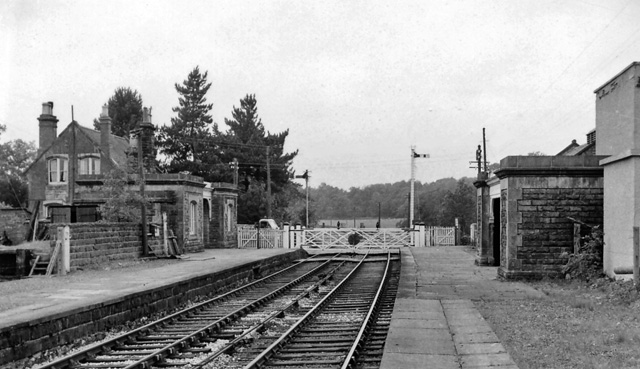
The Ingleton branch line was a rural railway line in the West Riding of Yorkshire, Lancashire and Westmorland in England (now North Yorkshire, Lancashire and Cumbria). It was originally planned in 1846 to form part of a main line route from London to Scotland, but fell victim to rivalry between railway companies. Completion was delayed until 1861, and it was only ever a rural branch line, serving the village of Ingleton and towns of Kirkby Lonsdale and Sedbergh. It closed to passengers in 1954 and was dismantled in 1967.
In 1846, the North Western Railway (NWR) was formed to connect the Leeds and Bradford Extension Railway at Skipton to the Lancaster and Carlisle Railway (L&CR) south of Tebay, with a secondary branch from Clapham to Lancaster. In 1849, the route between Skipton and Ingleton opened, but further work northward was abandoned due to financial difficulties, the company deciding to concentrate instead on the cheaper branch to Lancaster. When the route from Skipton to Lancaster opened in 1850, the short section from Clapham to Ingleton closed.
Other railway companies had an interest in the line north of Ingleton being built, as it could form part of a main-line route from London to Scotland shorter than the existing West Coast Main Line. Over the next few years were many negotiations between the NWR and the L&CR, the Midland Railway (MR), the Great Northern Railway (GNR) and the London and North Western Railway (LNWR). The original time limit, set by Parliament in 1846, for the construction of the line was about to expire, so a further five-year extension was obtained by the NWR in 1852. However, negotiations failed and it became clear the line could not be built even within the new timescale. Eventually, in 1857, two rival bills were put before Parliament. One was from the NWR, with the support of the GNR who hoped to form a mainline route from London to Scotland. The proposed route was from Ingleton to Kirkby Lonsdale, then straight up the Lune valley to join the L&CR line just south of Tebay. The other bill was from the L&CR itself, which wanted to block its rival GNR's ambitions to reach Scotland. The L&CR route differed from the proposed NWR route in two ways: it passed closer to the town of Sedbergh and it joined the main L&CR line significantly further south at the existing Low Gill station. A Commons' Committee decided to accept the L&CR scheme, and its bill was passed on 25 August 1857.
The line was built by the Lancaster and Carlisle Railway between 1858 and 1861, and the work was split into four contracts.
Contract 1A covered 1 mile 6 chains (1.7 km) from Lowgill, and included the Lowgill Viaduct of 11 arches each 45 feet (14 m) wide, with a maximum height of 90 feet (27 m). It was awarded to Samuel Buxton of Leeds.
Contract 1 covered 4 miles 38 chains (7.2 km) and included two major bridges, one over the River Rawthey near Sedbergh, 120 feet (37 m) long and 53 feet (16 m) high, the other over the River Lune, known as Waterside Viaduct, 530 feet (162 m) long and 100 feet (30 m) high, both with a cast metal central arch of similar style to each other. It was awarded to Coulthard and Allen, who had built the Clapham to Ingleton NWR line some 10 years earlier.
Contract 2 covered 7 miles 27 chains (11.8 km) over flatter ground with no major works, and was awarded to James Taylor.
Contract 3 covered the final 5 miles 78 chains (9.6 km) ending at the Ingleton Viaduct of 11 arches each 57 feet (17 m) wide, 800 feet (240 m) long with a maximum height of 80 feet (24 m) (the foundations of which had been laid ten years earlier by the NWR). It was also awarded to James Taylor.
Hub AI
Ingleton branch line AI simulator
(@Ingleton branch line_simulator)
Ingleton branch line
The Ingleton branch line was a rural railway line in the West Riding of Yorkshire, Lancashire and Westmorland in England (now North Yorkshire, Lancashire and Cumbria). It was originally planned in 1846 to form part of a main line route from London to Scotland, but fell victim to rivalry between railway companies. Completion was delayed until 1861, and it was only ever a rural branch line, serving the village of Ingleton and towns of Kirkby Lonsdale and Sedbergh. It closed to passengers in 1954 and was dismantled in 1967.
In 1846, the North Western Railway (NWR) was formed to connect the Leeds and Bradford Extension Railway at Skipton to the Lancaster and Carlisle Railway (L&CR) south of Tebay, with a secondary branch from Clapham to Lancaster. In 1849, the route between Skipton and Ingleton opened, but further work northward was abandoned due to financial difficulties, the company deciding to concentrate instead on the cheaper branch to Lancaster. When the route from Skipton to Lancaster opened in 1850, the short section from Clapham to Ingleton closed.
Other railway companies had an interest in the line north of Ingleton being built, as it could form part of a main-line route from London to Scotland shorter than the existing West Coast Main Line. Over the next few years were many negotiations between the NWR and the L&CR, the Midland Railway (MR), the Great Northern Railway (GNR) and the London and North Western Railway (LNWR). The original time limit, set by Parliament in 1846, for the construction of the line was about to expire, so a further five-year extension was obtained by the NWR in 1852. However, negotiations failed and it became clear the line could not be built even within the new timescale. Eventually, in 1857, two rival bills were put before Parliament. One was from the NWR, with the support of the GNR who hoped to form a mainline route from London to Scotland. The proposed route was from Ingleton to Kirkby Lonsdale, then straight up the Lune valley to join the L&CR line just south of Tebay. The other bill was from the L&CR itself, which wanted to block its rival GNR's ambitions to reach Scotland. The L&CR route differed from the proposed NWR route in two ways: it passed closer to the town of Sedbergh and it joined the main L&CR line significantly further south at the existing Low Gill station. A Commons' Committee decided to accept the L&CR scheme, and its bill was passed on 25 August 1857.
The line was built by the Lancaster and Carlisle Railway between 1858 and 1861, and the work was split into four contracts.
Contract 1A covered 1 mile 6 chains (1.7 km) from Lowgill, and included the Lowgill Viaduct of 11 arches each 45 feet (14 m) wide, with a maximum height of 90 feet (27 m). It was awarded to Samuel Buxton of Leeds.
Contract 1 covered 4 miles 38 chains (7.2 km) and included two major bridges, one over the River Rawthey near Sedbergh, 120 feet (37 m) long and 53 feet (16 m) high, the other over the River Lune, known as Waterside Viaduct, 530 feet (162 m) long and 100 feet (30 m) high, both with a cast metal central arch of similar style to each other. It was awarded to Coulthard and Allen, who had built the Clapham to Ingleton NWR line some 10 years earlier.
Contract 2 covered 7 miles 27 chains (11.8 km) over flatter ground with no major works, and was awarded to James Taylor.
Contract 3 covered the final 5 miles 78 chains (9.6 km) ending at the Ingleton Viaduct of 11 arches each 57 feet (17 m) wide, 800 feet (240 m) long with a maximum height of 80 feet (24 m) (the foundations of which had been laid ten years earlier by the NWR). It was also awarded to James Taylor.
Recent media