


Community hub
Recent from talks
Contribute something to knowledge base
Content stats: 0 posts, 0 articles, 1 media, 0 notes
Members stats: 0 subscribers, 0 contributors, 0 moderators, 0 supporters
Subscribers
Supporters
Contributors
Moderators
Hub AI
Iranian Embassy siege AI simulator
(@Iranian Embassy siege_simulator)
Hub AI
Iranian Embassy siege AI simulator
(@Iranian Embassy siege_simulator)
Iranian Embassy siege
The Iranian Embassy siege took place from 30 April to 5 May 1980, after a group of six armed men stormed the Iranian embassy on Prince's Gate in South Kensington, London.
The gunmen, Iranian Arabs campaigning for the sovereignty of the Khuzestan Province of Iran, took 26 people hostage, including embassy staff, several visitors, and a police officer who had been guarding the embassy. They demanded the release of prisoners in Khuzestan and their own safe passage out of the United Kingdom. The British government quickly decided that safe passage would not be granted and a siege ensued. Subsequently, police negotiators secured the release of five hostages in exchange for minor concessions, such as the broadcasting of the hostage-takers' demands on British television.
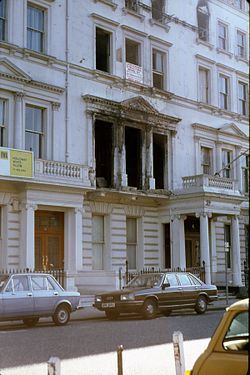
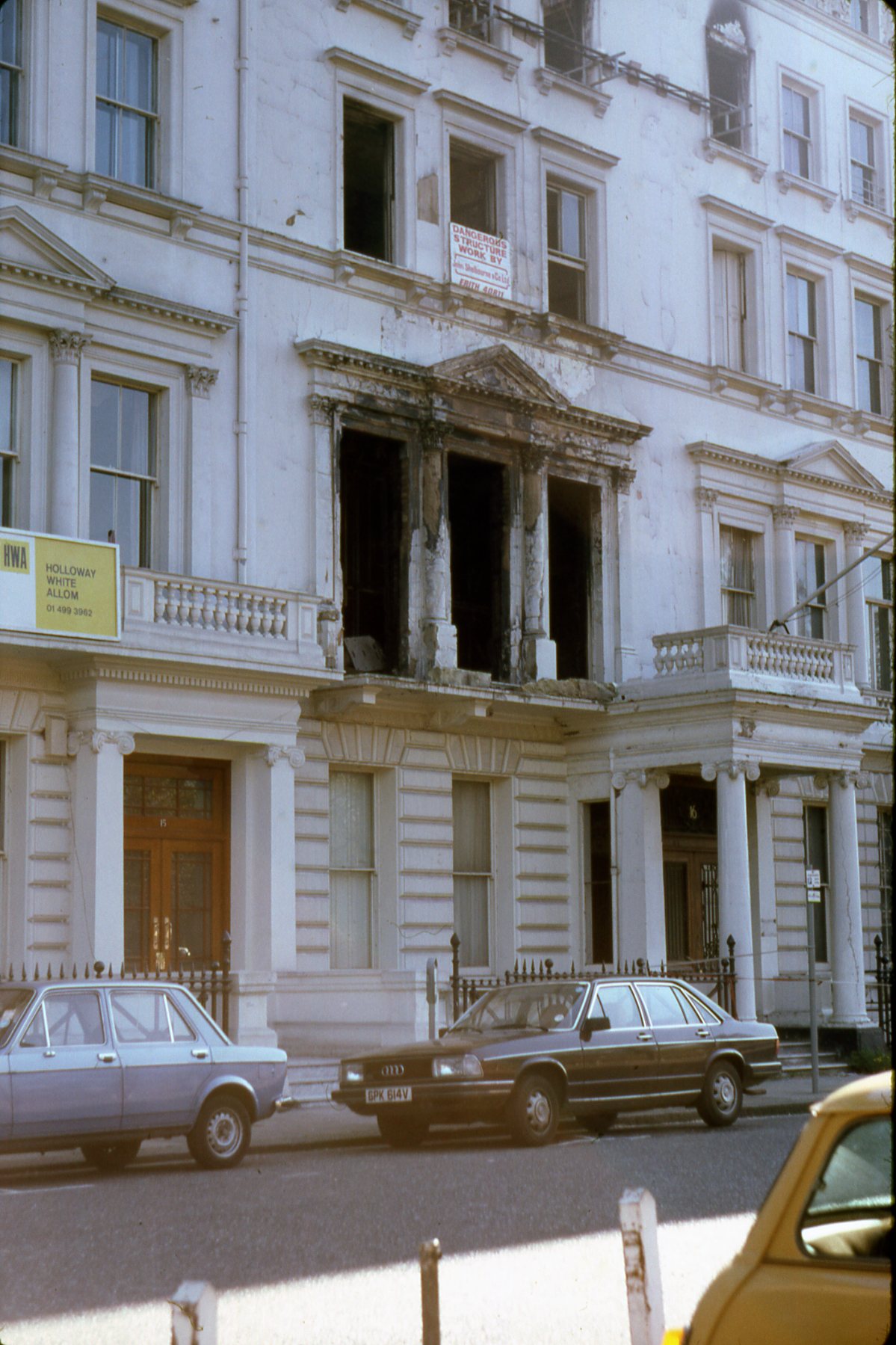
By the sixth day of the siege the gunmen were increasingly frustrated at the lack of progress in meeting their demands. That evening, they killed a hostage and threw his body out of the embassy. The British Special Air Service (SAS) initiated "Operation Nimrod" to rescue the remaining hostages, abseiling from the roof and forcing entry through the windows. During the 17-minute raid they rescued all but one of the remaining hostages and killed five of the six hostage-takers. The sole remaining gunman served 27 years in prison in Britain. The operation brought the SAS to the public eye for the first time and bolstered the reputation of Margaret Thatcher's government. The SAS was quickly overwhelmed by the number of applications it received from people inspired by the operation and experienced greater demand for its expertise from foreign governments. Damaged by a fire which started during the assault, the embassy building did not reopen until 1993.
The SAS raid, televised live on a bank holiday evening, became a defining moment in British history and proved a career boost for several journalists; it became the subject of multiple documentaries and works of fiction, including several films, television series and video games.
The hostage-takers were members of the Democratic Revolutionary Front for the Liberation of Arabistan (DRFLA), Iranian Arabs protesting for the establishment of an autonomous Arab state in the southern region of the Iranian province of Khuzestan which is home to an Arabic-speaking minority. The oil-rich area had become the source of much of Iran's wealth, having been developed by multi-national companies during the reign of the Shah.
According to Oan Ali Mohammed, suppression of the Arab sovereignty movement was the spark that led to his desire to attack the Iranian Embassy in London. The plan was inspired by the Iran hostage crisis in which supporters of the revolution held the staff of the American Embassy in Tehran hostage.
Using Iraqi passports, Oan and three other members of the DRFLA arrived in London on 31 March 1980 and rented a flat in Earl's Court, West London. They claimed they had met by chance on the flight. Over the following days, the group swelled, with up to a dozen men in the flat on one occasion.
Oan was 27 and from Khūzestān; he had studied at the University of Tehran, where he became politically active. He had been imprisoned by SAVAK, the Shah's secret police, and bore scars which he said were from torture in SAVAK custody. The other members of his group were Shakir Abdullah Radhil, known as "Faisal", Oan's second-in-command who also claimed to have been tortured by SAVAK; Shakir Sultan Said, or "Hassan"; Themir Moammed Hussein, or Abbas; Fowzi Badavi Nejad, or "Ali"; and Makki Hanoun Ali, the youngest of the group, who went by the name of "Makki".
Iranian Embassy siege
The Iranian Embassy siege took place from 30 April to 5 May 1980, after a group of six armed men stormed the Iranian embassy on Prince's Gate in South Kensington, London.
The gunmen, Iranian Arabs campaigning for the sovereignty of the Khuzestan Province of Iran, took 26 people hostage, including embassy staff, several visitors, and a police officer who had been guarding the embassy. They demanded the release of prisoners in Khuzestan and their own safe passage out of the United Kingdom. The British government quickly decided that safe passage would not be granted and a siege ensued. Subsequently, police negotiators secured the release of five hostages in exchange for minor concessions, such as the broadcasting of the hostage-takers' demands on British television.
By the sixth day of the siege the gunmen were increasingly frustrated at the lack of progress in meeting their demands. That evening, they killed a hostage and threw his body out of the embassy. The British Special Air Service (SAS) initiated "Operation Nimrod" to rescue the remaining hostages, abseiling from the roof and forcing entry through the windows. During the 17-minute raid they rescued all but one of the remaining hostages and killed five of the six hostage-takers. The sole remaining gunman served 27 years in prison in Britain. The operation brought the SAS to the public eye for the first time and bolstered the reputation of Margaret Thatcher's government. The SAS was quickly overwhelmed by the number of applications it received from people inspired by the operation and experienced greater demand for its expertise from foreign governments. Damaged by a fire which started during the assault, the embassy building did not reopen until 1993.
The SAS raid, televised live on a bank holiday evening, became a defining moment in British history and proved a career boost for several journalists; it became the subject of multiple documentaries and works of fiction, including several films, television series and video games.
The hostage-takers were members of the Democratic Revolutionary Front for the Liberation of Arabistan (DRFLA), Iranian Arabs protesting for the establishment of an autonomous Arab state in the southern region of the Iranian province of Khuzestan which is home to an Arabic-speaking minority. The oil-rich area had become the source of much of Iran's wealth, having been developed by multi-national companies during the reign of the Shah.
According to Oan Ali Mohammed, suppression of the Arab sovereignty movement was the spark that led to his desire to attack the Iranian Embassy in London. The plan was inspired by the Iran hostage crisis in which supporters of the revolution held the staff of the American Embassy in Tehran hostage.
Using Iraqi passports, Oan and three other members of the DRFLA arrived in London on 31 March 1980 and rented a flat in Earl's Court, West London. They claimed they had met by chance on the flight. Over the following days, the group swelled, with up to a dozen men in the flat on one occasion.
Oan was 27 and from Khūzestān; he had studied at the University of Tehran, where he became politically active. He had been imprisoned by SAVAK, the Shah's secret police, and bore scars which he said were from torture in SAVAK custody. The other members of his group were Shakir Abdullah Radhil, known as "Faisal", Oan's second-in-command who also claimed to have been tortured by SAVAK; Shakir Sultan Said, or "Hassan"; Themir Moammed Hussein, or Abbas; Fowzi Badavi Nejad, or "Ali"; and Makki Hanoun Ali, the youngest of the group, who went by the name of "Makki".
Recent media
Recent media