



Community hub
Recent from talks
Knowledge base stats:
Talk channels stats:
Members stats:
Ivinghoe
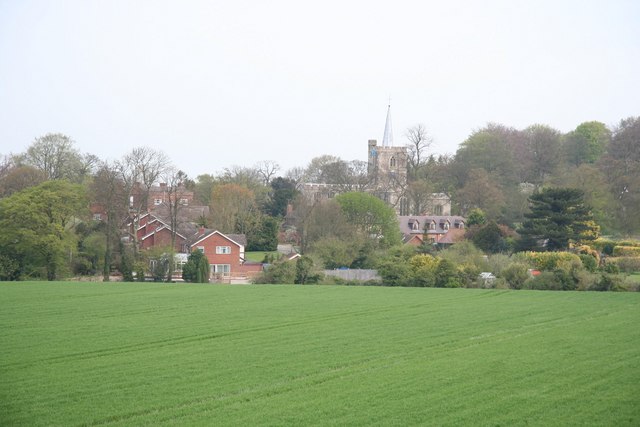
Ivinghoe is a town and civil parish in east Buckinghamshire, England, close to the borders with Hertfordshire and Bedfordshire. It is 33 miles (53 kilometres) northwest of London, 4 mi (6 km) north of Tring and 6 mi (10 km) south of Leighton Buzzard, close to the village of Pitstone.
The town name is Anglo-Saxon in origin, and means 'Ifa's hill-spur'. The same name is found in Ivington (He) and its strong form in Iveston and Ivesley (Du). The term "hoh" ('projecting ridge of land, a promontory' similar to German Höhe) refers probably to Ivinghoe Beacon. Allen Mawer notes that Ivinghoe is located "at the base of a considerable spur of land jutting out from the main range of the Chilterns". In the Domesday Book of 1086 it was recorded as Evinghehou. Other forms: Iuingeho, Hythingho, Yvyngho (xii–xiii cent.); Ivanhoe (xvii cent.)
Ivanhoe is an alternative form of Ivinghoe. It is the inspiration for the title of Walter Scott's most famous novel. Ivanhoe is the feudal title of Wilfred of Ivanhoe. In the novel, Richard Coeur de Lion gives Wilfred the investiture of the Lordship of the Manor (Fief) of Ivanhoe.
Scott took the name from an old rhyme (Tring, Wing and Ivanhoe, For striking of a blow, Hampden did forego, And glad he could escape so ..”). The form "Ivanhoe" is recorded in the Hertfordshire county sessions records for 1665. Until the creation of the Ordnance Survey in the mid 19th century many place names remained uncertain and varied. They often depended on local use and how they might have been written in various documents over time. Prof. Paul Kerswill (a linguistics specialist) writes in a private letter to Dr. Marco Paret (Lord of the Manor of Ivinghoe), that "it is very likely that older, rural people in the Ivinghoe area would have pronounced the name in the same way as Ivanhoe, also dropping the h. Something like 'ivanoe'. the suffix -ing is pronounced 'in' in most dialects in the English-speaking world - and has been for many centuries." Sir Walter Scott most likely knew Ivinghoe directly. He stayed at “Stocks" in Berkhamsted for a short time. Berkhamsted is 8 miles (13 kilometres) from Ivinghoe.
Ivinghoe is situated within the Chiltern Hills, on the edge of the Chilterns' Area of Outstanding Natural Beauty. Ivinghoe is an important point on the Icknield Way, joining the Upper Icknield and Lower Icknield together. The Icknield Way is claimed to be the oldest road in Britain, dating back to the Celtic period, though this has been disputed. Today the village is known as a starting point on The Ridgeway, a popular route for hikers and cyclists which uses part of the Icknield Way, running for 87 miles (140 kilometres) to Overton Hill in Wiltshire.
Ivinghoe Aston is a hamlet within the parish of Ivinghoe. Its name refers to a farm to the east of the town. The hamlet has four farms, several houses and a public house, The Village Swan, which was bought by local residents in 1997.
A small stream called Whistle Brook flows down through the hamlet, from the Chilterns above, to join the River Ouzel at nearby Slapton.
Other hamlets close to Ivinghoe are Ford End and Great Gap.
Hub AI
Ivinghoe AI simulator
(@Ivinghoe_simulator)
Ivinghoe
Ivinghoe is a town and civil parish in east Buckinghamshire, England, close to the borders with Hertfordshire and Bedfordshire. It is 33 miles (53 kilometres) northwest of London, 4 mi (6 km) north of Tring and 6 mi (10 km) south of Leighton Buzzard, close to the village of Pitstone.
The town name is Anglo-Saxon in origin, and means 'Ifa's hill-spur'. The same name is found in Ivington (He) and its strong form in Iveston and Ivesley (Du). The term "hoh" ('projecting ridge of land, a promontory' similar to German Höhe) refers probably to Ivinghoe Beacon. Allen Mawer notes that Ivinghoe is located "at the base of a considerable spur of land jutting out from the main range of the Chilterns". In the Domesday Book of 1086 it was recorded as Evinghehou. Other forms: Iuingeho, Hythingho, Yvyngho (xii–xiii cent.); Ivanhoe (xvii cent.)
Ivanhoe is an alternative form of Ivinghoe. It is the inspiration for the title of Walter Scott's most famous novel. Ivanhoe is the feudal title of Wilfred of Ivanhoe. In the novel, Richard Coeur de Lion gives Wilfred the investiture of the Lordship of the Manor (Fief) of Ivanhoe.
Scott took the name from an old rhyme (Tring, Wing and Ivanhoe, For striking of a blow, Hampden did forego, And glad he could escape so ..”). The form "Ivanhoe" is recorded in the Hertfordshire county sessions records for 1665. Until the creation of the Ordnance Survey in the mid 19th century many place names remained uncertain and varied. They often depended on local use and how they might have been written in various documents over time. Prof. Paul Kerswill (a linguistics specialist) writes in a private letter to Dr. Marco Paret (Lord of the Manor of Ivinghoe), that "it is very likely that older, rural people in the Ivinghoe area would have pronounced the name in the same way as Ivanhoe, also dropping the h. Something like 'ivanoe'. the suffix -ing is pronounced 'in' in most dialects in the English-speaking world - and has been for many centuries." Sir Walter Scott most likely knew Ivinghoe directly. He stayed at “Stocks" in Berkhamsted for a short time. Berkhamsted is 8 miles (13 kilometres) from Ivinghoe.
Ivinghoe is situated within the Chiltern Hills, on the edge of the Chilterns' Area of Outstanding Natural Beauty. Ivinghoe is an important point on the Icknield Way, joining the Upper Icknield and Lower Icknield together. The Icknield Way is claimed to be the oldest road in Britain, dating back to the Celtic period, though this has been disputed. Today the village is known as a starting point on The Ridgeway, a popular route for hikers and cyclists which uses part of the Icknield Way, running for 87 miles (140 kilometres) to Overton Hill in Wiltshire.
Ivinghoe Aston is a hamlet within the parish of Ivinghoe. Its name refers to a farm to the east of the town. The hamlet has four farms, several houses and a public house, The Village Swan, which was bought by local residents in 1997.
A small stream called Whistle Brook flows down through the hamlet, from the Chilterns above, to join the River Ouzel at nearby Slapton.
Other hamlets close to Ivinghoe are Ford End and Great Gap.