
Recent from talks
Ja Thak Wa uprising
Knowledge base stats:
Talk channels stats:
Members stats:
Ja Thak Wa uprising
Ja Thak Wa uprising (Vietnamese: Khởi nghĩa Ja Thak Wa) was a revolt led by two ethnic Cham leaders, Ja Thak Wa and Po War Palei, against the Vietnamese government under Emperor Minh Mạng in 19th century southern Vietnam.
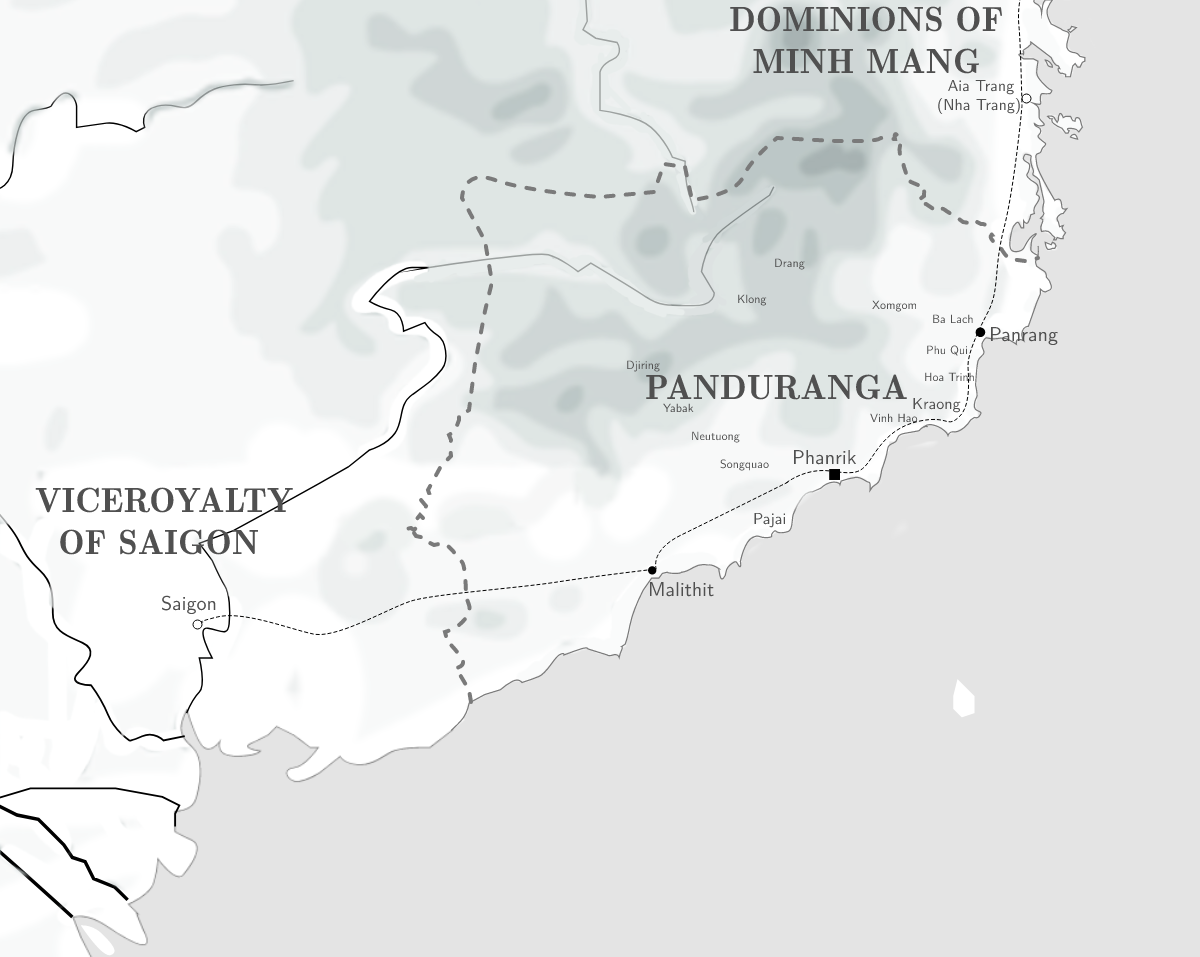
Northern Champa was conquered by the Dai Viet in 1471 but the Cham kept various forms of autonomy until 1832 (Panduranga and Principality of Thuận Thành). The Chams were forced to adopt Vietnamese customs.
After the Katip Sumat uprising was put down, Ja Thak Wa (Thầy Điền or Điền Sư), another Muslim cleric, launched another revolt against Vietnamese in 1834. Ja Thak Wa chose Chek Bicham (Phố Châm Sơn) as his base area; he crowned Po War Palei (La Bôn Vương), a brother-in-law of the last deputy ruler Po Dhar Kaok (Nguyễn Văn Nguyên), as the new Champa king. The rebels attacked Ninh Thuận, Bình Thuận, Khánh Hòa and Phú Yên. They were supported by Montagnard in Central Highlands.
The rebellion was put down in July 1835, though both Ja Thak Wa and Po War Palei were killed in Phan Rang earlier in May. In the same year, two Cham leaders, Po Phaok The (Nguyễn Văn Thừa) and Po Dhar Kaok (Nguyễn Văn Nguyên) were executed by the Emperor.
Ja Thak Wa, a Cham religious leader from Văn Lâm village, Ninh Thuận, originally a distinguished leader of Sumat's uprising, refrained from following Khaṭīb Sumat's prophecies after having a dispute with the khatib about motivation and planning. Sumat's uprising quickly fell apart due to the same reason. Ja Thak Wa criticized Sumat for his fanatical Islamic extremism and sycophant behaviors. He splintered his band from Sumat in late 1833 to the western mountains (Central Highlands). Ja Thak Wa was a moderate Bani dignitary and his movement in chiaroscuro was not motivated by Islamism. His desires were restoring an independent state of Champa with multiethnic and multicultural harmonies from Vietnamese rules, urging the Cham natives to revolt and drive Vietnamese settlers out of Champa.
In August 1834, Ja Thak Wa's forces began the first uprising by organizing attacks on Vietnamese military garrisons in coastal Bình Thuan and rallied people to revolt. An account calls his forlorn homeland quaked and awakened by resentful "holy fire" (Apuei Kadhir). But the Cham leadership in the lowland were too afraid if they denounced the Vietnamese and joined the rebellion against Minh Mang.
In October, the insurrection entered its second offensive, hailing from the mountains to the lowland. Ja Thak Wa believed 'the revolution could only succeed if it gained fully passionate commitment and support from the lowland mass,' the rebels forced people to reach affidavits by launching a terror campaign, mass killing of disloyal Cham and Kinh settlers, especially those who allied with the king Po Phaok The. The Vietnamese daily chronicles of Minh Mang claims that the rebels had committed great slaughters against lowland Chams as well as Kinh settlers.
In late 1834, the revolution's headquarters (located in the Central Highlands east of Khanh Hoa province) were put under a newly established provisional assembly, an aggregate made up of an anti-Vietnamese coalition of the suffered, namely Cham Bani and Cham Balamons, the highlanders,... The assembly's plebiscite then elected Po War Palei, Cei Dhar Kaok's brother-in-law, a descendant of king Po Rome's dynasty, and being a person of Raglai background from Cadang village, as king of New Champa. The assembly then anointed a Churu leader to Yang Aia Harei (Prince of the Sun) and Ja Yok Ai, a Cham leader, as the military commander. Notably, many prolific members of the high royal family of Panduranga also joined the resistance. The assembly's panel also arbitrated hostilities between Balamon and Bani communities. These actions, historian Po Dharma commented, an emphasis that manifests the polyethnic, antiracist, and democratic intentions of Ja Thak Wa's independence movement.
Hub AI
Ja Thak Wa uprising AI simulator
(@Ja Thak Wa uprising_simulator)
Ja Thak Wa uprising
Ja Thak Wa uprising (Vietnamese: Khởi nghĩa Ja Thak Wa) was a revolt led by two ethnic Cham leaders, Ja Thak Wa and Po War Palei, against the Vietnamese government under Emperor Minh Mạng in 19th century southern Vietnam.
Northern Champa was conquered by the Dai Viet in 1471 but the Cham kept various forms of autonomy until 1832 (Panduranga and Principality of Thuận Thành). The Chams were forced to adopt Vietnamese customs.
After the Katip Sumat uprising was put down, Ja Thak Wa (Thầy Điền or Điền Sư), another Muslim cleric, launched another revolt against Vietnamese in 1834. Ja Thak Wa chose Chek Bicham (Phố Châm Sơn) as his base area; he crowned Po War Palei (La Bôn Vương), a brother-in-law of the last deputy ruler Po Dhar Kaok (Nguyễn Văn Nguyên), as the new Champa king. The rebels attacked Ninh Thuận, Bình Thuận, Khánh Hòa and Phú Yên. They were supported by Montagnard in Central Highlands.
The rebellion was put down in July 1835, though both Ja Thak Wa and Po War Palei were killed in Phan Rang earlier in May. In the same year, two Cham leaders, Po Phaok The (Nguyễn Văn Thừa) and Po Dhar Kaok (Nguyễn Văn Nguyên) were executed by the Emperor.
Ja Thak Wa, a Cham religious leader from Văn Lâm village, Ninh Thuận, originally a distinguished leader of Sumat's uprising, refrained from following Khaṭīb Sumat's prophecies after having a dispute with the khatib about motivation and planning. Sumat's uprising quickly fell apart due to the same reason. Ja Thak Wa criticized Sumat for his fanatical Islamic extremism and sycophant behaviors. He splintered his band from Sumat in late 1833 to the western mountains (Central Highlands). Ja Thak Wa was a moderate Bani dignitary and his movement in chiaroscuro was not motivated by Islamism. His desires were restoring an independent state of Champa with multiethnic and multicultural harmonies from Vietnamese rules, urging the Cham natives to revolt and drive Vietnamese settlers out of Champa.
In August 1834, Ja Thak Wa's forces began the first uprising by organizing attacks on Vietnamese military garrisons in coastal Bình Thuan and rallied people to revolt. An account calls his forlorn homeland quaked and awakened by resentful "holy fire" (Apuei Kadhir). But the Cham leadership in the lowland were too afraid if they denounced the Vietnamese and joined the rebellion against Minh Mang.
In October, the insurrection entered its second offensive, hailing from the mountains to the lowland. Ja Thak Wa believed 'the revolution could only succeed if it gained fully passionate commitment and support from the lowland mass,' the rebels forced people to reach affidavits by launching a terror campaign, mass killing of disloyal Cham and Kinh settlers, especially those who allied with the king Po Phaok The. The Vietnamese daily chronicles of Minh Mang claims that the rebels had committed great slaughters against lowland Chams as well as Kinh settlers.
In late 1834, the revolution's headquarters (located in the Central Highlands east of Khanh Hoa province) were put under a newly established provisional assembly, an aggregate made up of an anti-Vietnamese coalition of the suffered, namely Cham Bani and Cham Balamons, the highlanders,... The assembly's plebiscite then elected Po War Palei, Cei Dhar Kaok's brother-in-law, a descendant of king Po Rome's dynasty, and being a person of Raglai background from Cadang village, as king of New Champa. The assembly then anointed a Churu leader to Yang Aia Harei (Prince of the Sun) and Ja Yok Ai, a Cham leader, as the military commander. Notably, many prolific members of the high royal family of Panduranga also joined the resistance. The assembly's panel also arbitrated hostilities between Balamon and Bani communities. These actions, historian Po Dharma commented, an emphasis that manifests the polyethnic, antiracist, and democratic intentions of Ja Thak Wa's independence movement.
Recent media