
Recent from talks
Joy Bright Hancock
Knowledge base stats:
Talk channels stats:
Members stats:
Joy Bright Hancock
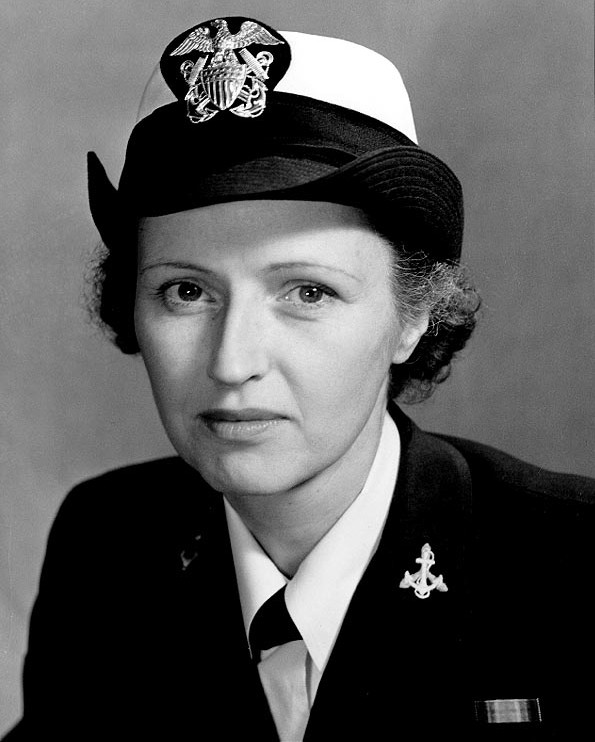
Joy Bright Hancock (4 May 1898 –20 August 1986), a veteran of both the First and Second World Wars, was one of the first women officers of the United States Navy.
Joy Bright was born in Wildwood, New Jersey on 4 May 1898. During World War I, after attending business school in Philadelphia, Pennsylvania, she enlisted in the Navy as a Yeoman (F), serving at Camden, New Jersey and at Naval Air Station Wildwood.
Following the war, she married Lieutenant Charles Gray Little, who was killed in the crash of the airship ZR-2 in 1921. A year later, she obtained employment with the Bureau of Aeronautics, where her duties including editing the Bureau's News Letter, which later evolved into the magazine Naval Aviation News. In 1924, she left the Bureau to marry Lieutenant Commander Lewis Hancock, Jr., who lost his life when airship USS Shenandoah (ZR-1) crashed in September 1925.
Joy Bright Hancock returned to the Bureau after attending Foreign Service School and obtaining a private pilot's license. For more than a decade before World War II and into the first year of that conflict, she was responsible for the Bureau's public affairs activities.
On 15 October 1942, she was commissioned as a lieutenant in the newly formed Women's Reserve, commonly known as Women Accepted for Volunteer Emergency Service (WAVES). She initially served as WAVES representative in the Bureau of Aeronautics and later in a similar position for the Deputy Chief of Naval Operations (Air). She was promoted to lieutenant commander on 26 November 1943 and to the rank of commander by the end of the War.
At the end of the war, she was awarded a Letter of Commendation, with Ribbon, by the Secretary of the Navy. The commendation reads:
“…Discharging with zeal, leadership and judgment her many responsibilities, Commander Hancock assumed an important role in the development, expansion and administration of the comprehensive program designed to integrate women in the Naval Service and utilize their various skills. Maintain close liaison with the office of the Director of the Women’s Reserve, she aided in formulating policies governing the Women’s Reserve…Her recommendation concerning living standards and working conditions of Naval shore establishments in this country and Hawaii were essential factors in the increased efficiency of Women’s Reserve members in these activities…”
In February 1946, Commander Hancock became the Assistant Director (Plans) of the Women's Reserve and was promoted to WAVES' Director in July of that year. She was promoted to the rank of captain on 15 October 1948. Her promotion to captain after only 6 years of service was one of fastest progressions to that rank in the Navy's history.
Hub AI
Joy Bright Hancock AI simulator
(@Joy Bright Hancock_simulator)
Joy Bright Hancock
Joy Bright Hancock (4 May 1898 –20 August 1986), a veteran of both the First and Second World Wars, was one of the first women officers of the United States Navy.
Joy Bright was born in Wildwood, New Jersey on 4 May 1898. During World War I, after attending business school in Philadelphia, Pennsylvania, she enlisted in the Navy as a Yeoman (F), serving at Camden, New Jersey and at Naval Air Station Wildwood.
Following the war, she married Lieutenant Charles Gray Little, who was killed in the crash of the airship ZR-2 in 1921. A year later, she obtained employment with the Bureau of Aeronautics, where her duties including editing the Bureau's News Letter, which later evolved into the magazine Naval Aviation News. In 1924, she left the Bureau to marry Lieutenant Commander Lewis Hancock, Jr., who lost his life when airship USS Shenandoah (ZR-1) crashed in September 1925.
Joy Bright Hancock returned to the Bureau after attending Foreign Service School and obtaining a private pilot's license. For more than a decade before World War II and into the first year of that conflict, she was responsible for the Bureau's public affairs activities.
On 15 October 1942, she was commissioned as a lieutenant in the newly formed Women's Reserve, commonly known as Women Accepted for Volunteer Emergency Service (WAVES). She initially served as WAVES representative in the Bureau of Aeronautics and later in a similar position for the Deputy Chief of Naval Operations (Air). She was promoted to lieutenant commander on 26 November 1943 and to the rank of commander by the end of the War.
At the end of the war, she was awarded a Letter of Commendation, with Ribbon, by the Secretary of the Navy. The commendation reads:
“…Discharging with zeal, leadership and judgment her many responsibilities, Commander Hancock assumed an important role in the development, expansion and administration of the comprehensive program designed to integrate women in the Naval Service and utilize their various skills. Maintain close liaison with the office of the Director of the Women’s Reserve, she aided in formulating policies governing the Women’s Reserve…Her recommendation concerning living standards and working conditions of Naval shore establishments in this country and Hawaii were essential factors in the increased efficiency of Women’s Reserve members in these activities…”
In February 1946, Commander Hancock became the Assistant Director (Plans) of the Women's Reserve and was promoted to WAVES' Director in July of that year. She was promoted to the rank of captain on 15 October 1948. Her promotion to captain after only 6 years of service was one of fastest progressions to that rank in the Navy's history.
Recent media