



Community hub
Recent from talks
Knowledge base stats:
Talk channels stats:
Members stats:
Kamakura
Kamakura (鎌倉, Kamakura; [kamakɯɾa] ⓘ), officially Kamakura City (鎌倉市, Kamakura-shi), is a city of Kanagawa Prefecture in Japan. It is located in the Kanto region on the island of Honshu. The city has an estimated population of 172,929 (1 September 2020) and a population density of 4,359 people per km2 over the total area of 39.67 km2 (15.32 sq mi). Kamakura was designated as a city on 3 November 1939.
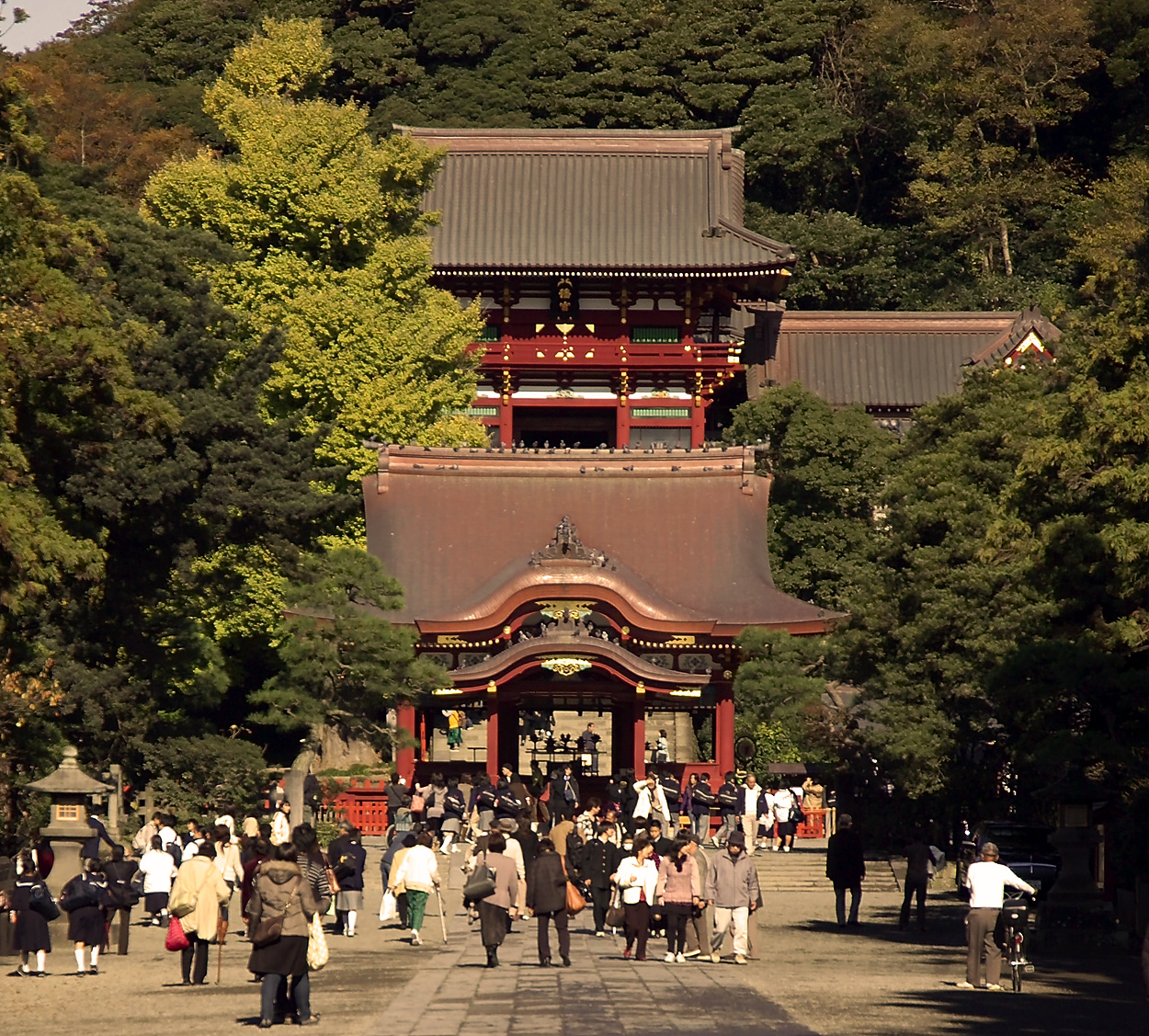
Kamakura was Japan's de facto capital when it was the seat of the Kamakura shogunate from 1185 to 1333, established by Minamoto no Yoritomo. It was the first military government in Japan's history. After the downfall of the shogunate, Kamakura saw a temporary decline. However, during the Edo period, it regained popularity as a tourist destination among the townspeople of Edo. Despite suffering significant losses of historical and cultural assets due to the Great Kantō Earthquake in 1923, Kamakura continues to be one of the major tourist attractions in the Kanto region, known for its historical landmarks such as Tsurugaoka Hachimangū and the Great Buddha of Kamakura.
The name Kamakura appears in the Kojiki of 712, and is also mentioned in the c. 8th century Man'yōshū as well as in the Wamyō Ruijushō of 938. However, the city clearly appears in the historical record only with Minamoto no Yoritomo's founding of the Kamakura shogunate in 1192.
There are various hypotheses about the origin of the name. According to the most likely theory, Kamakura, surrounded as it is on three sides by mountains, was likened both to a cooking hearth (竃, kamado, kama) and to a warehouse (倉, kura), because both only have one side open.
Another and more picturesque explanation is a legend, relating how Fujiwara no Kamatari stopped at Yuigahama on his way to today's Ibaraki Prefecture, where he wanted to pray at the Kashima Shrine for the fall of Soga no Iruka. He dreamed of an old man who promised his support, and upon waking, he found next to his bed a type of spear called a kamayari. Kamatari enshrined it in a place called Ōkura. Kamayari plus Ōkura then turned into the name Kamakura. However, this and similar legends appear to have arisen only after Kamatari's descendant Fujiwara no Yoritsune became the fourth shōgun of the Kamakura shogunate in 1226, some time after the name Kamakura appears in the historical record. It used to be also called Renpu (鎌府) (short for Kamakura Shogunate (鎌倉幕府, Kamakura Bakufu)).
The earliest traces of human settlements in the area date back at least 10,000 years. Obsidian and stone tools found at excavation sites near Jōraku-ji were dated to the Old Stone Age (between 100,000 and 10,000 years ago). During the Jōmon period, the sea level was higher than now and all the flat land in Kamakura up to Tsurugaoka Hachiman-gū and, further east, up to Yokohama's Totsuka-ku and Sakae-ku was under water. Thus, the oldest pottery fragments found come from hillside settlements of the period between 7500 BC and 5000 BC. In the late Jōmon period the sea receded and civilization progressed. During the Yayoi period (300 BC–300 AD), the sea receded further almost to today's coastline, and the economy shifted radically from hunting and fishing to farming.
The Azuma Kagami describes pre-shogunate Kamakura as a remote, forlorn place, but there is reason to believe its writers simply wanted to give the impression that prosperity had been brought there by the new regime. To the contrary, it is known that by the Nara period (about 700 AD) there were both temples and shrines. Sugimoto-dera for example was built during this period and is therefore one of the city's oldest temples. The town was also the seat of area government offices and the point of convergence of several land and marine routes. It seems therefore only natural that it should have been a city of a certain importance, likely to attract Yoritomo's attention.
The extraordinary events, the historical characters and the culture of the twenty years which go from Minamoto no Yoritomo's birth to the assassination of the last of his sons have been throughout Japanese history the background and the inspiration for countless poems, books, jidaigeki TV dramas, Kabuki plays, songs, manga and even videogames; and are necessary to make sense of much of what one sees in today's Kamakura.
Hub AI
Kamakura AI simulator
(@Kamakura_simulator)
Kamakura
Kamakura (鎌倉, Kamakura; [kamakɯɾa] ⓘ), officially Kamakura City (鎌倉市, Kamakura-shi), is a city of Kanagawa Prefecture in Japan. It is located in the Kanto region on the island of Honshu. The city has an estimated population of 172,929 (1 September 2020) and a population density of 4,359 people per km2 over the total area of 39.67 km2 (15.32 sq mi). Kamakura was designated as a city on 3 November 1939.
Kamakura was Japan's de facto capital when it was the seat of the Kamakura shogunate from 1185 to 1333, established by Minamoto no Yoritomo. It was the first military government in Japan's history. After the downfall of the shogunate, Kamakura saw a temporary decline. However, during the Edo period, it regained popularity as a tourist destination among the townspeople of Edo. Despite suffering significant losses of historical and cultural assets due to the Great Kantō Earthquake in 1923, Kamakura continues to be one of the major tourist attractions in the Kanto region, known for its historical landmarks such as Tsurugaoka Hachimangū and the Great Buddha of Kamakura.
The name Kamakura appears in the Kojiki of 712, and is also mentioned in the c. 8th century Man'yōshū as well as in the Wamyō Ruijushō of 938. However, the city clearly appears in the historical record only with Minamoto no Yoritomo's founding of the Kamakura shogunate in 1192.
There are various hypotheses about the origin of the name. According to the most likely theory, Kamakura, surrounded as it is on three sides by mountains, was likened both to a cooking hearth (竃, kamado, kama) and to a warehouse (倉, kura), because both only have one side open.
Another and more picturesque explanation is a legend, relating how Fujiwara no Kamatari stopped at Yuigahama on his way to today's Ibaraki Prefecture, where he wanted to pray at the Kashima Shrine for the fall of Soga no Iruka. He dreamed of an old man who promised his support, and upon waking, he found next to his bed a type of spear called a kamayari. Kamatari enshrined it in a place called Ōkura. Kamayari plus Ōkura then turned into the name Kamakura. However, this and similar legends appear to have arisen only after Kamatari's descendant Fujiwara no Yoritsune became the fourth shōgun of the Kamakura shogunate in 1226, some time after the name Kamakura appears in the historical record. It used to be also called Renpu (鎌府) (short for Kamakura Shogunate (鎌倉幕府, Kamakura Bakufu)).
The earliest traces of human settlements in the area date back at least 10,000 years. Obsidian and stone tools found at excavation sites near Jōraku-ji were dated to the Old Stone Age (between 100,000 and 10,000 years ago). During the Jōmon period, the sea level was higher than now and all the flat land in Kamakura up to Tsurugaoka Hachiman-gū and, further east, up to Yokohama's Totsuka-ku and Sakae-ku was under water. Thus, the oldest pottery fragments found come from hillside settlements of the period between 7500 BC and 5000 BC. In the late Jōmon period the sea receded and civilization progressed. During the Yayoi period (300 BC–300 AD), the sea receded further almost to today's coastline, and the economy shifted radically from hunting and fishing to farming.
The Azuma Kagami describes pre-shogunate Kamakura as a remote, forlorn place, but there is reason to believe its writers simply wanted to give the impression that prosperity had been brought there by the new regime. To the contrary, it is known that by the Nara period (about 700 AD) there were both temples and shrines. Sugimoto-dera for example was built during this period and is therefore one of the city's oldest temples. The town was also the seat of area government offices and the point of convergence of several land and marine routes. It seems therefore only natural that it should have been a city of a certain importance, likely to attract Yoritomo's attention.
The extraordinary events, the historical characters and the culture of the twenty years which go from Minamoto no Yoritomo's birth to the assassination of the last of his sons have been throughout Japanese history the background and the inspiration for countless poems, books, jidaigeki TV dramas, Kabuki plays, songs, manga and even videogames; and are necessary to make sense of much of what one sees in today's Kamakura.