


Community hub
Recent from talks
Contribute something to knowledge base
Content stats: 0 posts, 0 articles, 1 media, 0 notes
Members stats: 0 subscribers, 0 contributors, 0 moderators, 0 supporters
Subscribers
Supporters
Contributors
Moderators
Hub AI
Kanno Sugako AI simulator
(@Kanno Sugako_simulator)
Hub AI
Kanno Sugako AI simulator
(@Kanno Sugako_simulator)
Kanno Sugako
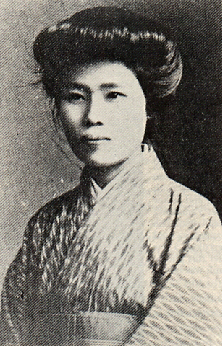
Kanno Sugako (管野 須賀子; June 7, 1881 – January 25, 1911), also known as Kanno Suga (管野 スガ), was a Japanese anarcha-feminist journalist. She was the author of a series of articles about gender oppression, and a defender of freedom and equal rights for men and women.
In 1910, she was accused of treason by the Japanese government for her alleged involvement in what became known as the High Treason Incident, aimed at the assassination of Emperor Meiji. Kanno was executed by hanging on January 25, 1911, at the age of 29. Sugako was the only woman among the twelve accused given the death sentence in the High Treason trials, and the first woman with the status of political prisoner to be executed in the history of modern Japan.
Kanno Sugako was born in Osaka in 1881. Her father, Kanno Yoshihige, owned a successful mining business, but it failed when Kanno was eight or nine years old. Kanno's mother died when she was ten years old, and her father remarried. She had a younger sister, named Hide, and a younger brother.
Kanno's first exposure to socialism was an essay by Sakai Toshihiko, in which Sakai advised rape victims not to carry the guilt of the event around. The essay motivated Kanno to read more of Sakai's writings, which then exposed her to other socialist thinkers.
In September 1899, at the age of seventeen, Kanno married Komiya Fukutarō, a member of a Tokyo merchant family. Kanno felt no physical or emotional attraction towards her new husband, but it allowed her to escape the harassment of her stepmother. Kanno was not particularly interested in business, preferring writing. Eventually, her stepmother left her family, and Kanno returned in 1902 to Osaka to care for her father.
While Kanno took care of her family, she became more familiar with the playwright Udagawa Bunkai, her brother's patron. She managed to impress Udagawa enough that he began helping her with her writing. Udagawa got Kanno a job with the Osaka Choho (Osaka Morning Paper) and gave her advice on how to improve her writing. She wrote a series of short stories, articles, and essays. She and Udagawa became close, with Udagawa visiting Kanno when she was hospitalized in November 1902, even taking care of her family. In turn, Kanno expressed her appreciation of Udagawa in Isshukan. It is often reported in recent sources that Kanno and Udagawa eventually became lovers, however, this is likely to be untrue.
In 1903, Kanno joined the Christian Yajima Kajiko's Fujin Kyofukai (Woman's Christian Temperance Union) due to a personal attraction to a shared belief in charity and reform. The society sought to end the public brothel system of Japan, attacking the institution through print. Earlier in 1903, Kanno attended a lecture where Shimada Saburo argued for the closing of the Osaka red light district. She met with Shimada and attended another socialist meeting where Kinoshita Naoe, a Christian socialist, discussed geisha entertainment at Kanno's request. Furthermore, she also met with her future lover, Kōtoku Shūsui. Kanno also began contributing to the Michi no Tomo (Tenrikyō) and Kirisutokyō Sekai (Protestant), both religious newspapers. In 1904, the Russo-Japanese War formally began. Kanno united with Christians and socialists in opposing the war, joining the Heminsha, led by Sakai and Kotoku. She was a reader of the Heimin Shinbun (Commoners' News), an anti-war magazine headed by Sakai and Kotoku, though she never submitted a contribution to it herself.
By 1905, Kanno and Udagawa became estranged from one another, due to Kanno's newfound association with the Women's Moral Reform Society, as the society was mounting a campaign against the system of concubines and advocating for the independence of women. In the same year, Kanno's father died in Kyoto on June 3. Her younger brother had already left to study abroad in the United States, so she was just left with her younger sister Hide.
Kanno Sugako
Kanno Sugako (管野 須賀子; June 7, 1881 – January 25, 1911), also known as Kanno Suga (管野 スガ), was a Japanese anarcha-feminist journalist. She was the author of a series of articles about gender oppression, and a defender of freedom and equal rights for men and women.
In 1910, she was accused of treason by the Japanese government for her alleged involvement in what became known as the High Treason Incident, aimed at the assassination of Emperor Meiji. Kanno was executed by hanging on January 25, 1911, at the age of 29. Sugako was the only woman among the twelve accused given the death sentence in the High Treason trials, and the first woman with the status of political prisoner to be executed in the history of modern Japan.
Kanno Sugako was born in Osaka in 1881. Her father, Kanno Yoshihige, owned a successful mining business, but it failed when Kanno was eight or nine years old. Kanno's mother died when she was ten years old, and her father remarried. She had a younger sister, named Hide, and a younger brother.
Kanno's first exposure to socialism was an essay by Sakai Toshihiko, in which Sakai advised rape victims not to carry the guilt of the event around. The essay motivated Kanno to read more of Sakai's writings, which then exposed her to other socialist thinkers.
In September 1899, at the age of seventeen, Kanno married Komiya Fukutarō, a member of a Tokyo merchant family. Kanno felt no physical or emotional attraction towards her new husband, but it allowed her to escape the harassment of her stepmother. Kanno was not particularly interested in business, preferring writing. Eventually, her stepmother left her family, and Kanno returned in 1902 to Osaka to care for her father.
While Kanno took care of her family, she became more familiar with the playwright Udagawa Bunkai, her brother's patron. She managed to impress Udagawa enough that he began helping her with her writing. Udagawa got Kanno a job with the Osaka Choho (Osaka Morning Paper) and gave her advice on how to improve her writing. She wrote a series of short stories, articles, and essays. She and Udagawa became close, with Udagawa visiting Kanno when she was hospitalized in November 1902, even taking care of her family. In turn, Kanno expressed her appreciation of Udagawa in Isshukan. It is often reported in recent sources that Kanno and Udagawa eventually became lovers, however, this is likely to be untrue.
In 1903, Kanno joined the Christian Yajima Kajiko's Fujin Kyofukai (Woman's Christian Temperance Union) due to a personal attraction to a shared belief in charity and reform. The society sought to end the public brothel system of Japan, attacking the institution through print. Earlier in 1903, Kanno attended a lecture where Shimada Saburo argued for the closing of the Osaka red light district. She met with Shimada and attended another socialist meeting where Kinoshita Naoe, a Christian socialist, discussed geisha entertainment at Kanno's request. Furthermore, she also met with her future lover, Kōtoku Shūsui. Kanno also began contributing to the Michi no Tomo (Tenrikyō) and Kirisutokyō Sekai (Protestant), both religious newspapers. In 1904, the Russo-Japanese War formally began. Kanno united with Christians and socialists in opposing the war, joining the Heminsha, led by Sakai and Kotoku. She was a reader of the Heimin Shinbun (Commoners' News), an anti-war magazine headed by Sakai and Kotoku, though she never submitted a contribution to it herself.
By 1905, Kanno and Udagawa became estranged from one another, due to Kanno's newfound association with the Women's Moral Reform Society, as the society was mounting a campaign against the system of concubines and advocating for the independence of women. In the same year, Kanno's father died in Kyoto on June 3. Her younger brother had already left to study abroad in the United States, so she was just left with her younger sister Hide.
Recent media
Recent media