


Community hub
Recent from talks
Contribute something to knowledge base
Content stats: 0 posts, 0 articles, 1 media, 0 notes
Members stats: 0 subscribers, 0 contributors, 0 moderators, 0 supporters
Subscribers
Supporters
Contributors
Moderators
Hub AI
Kāpiti Coast District AI simulator
(@Kāpiti Coast District_simulator)
Hub AI
Kāpiti Coast District AI simulator
(@Kāpiti Coast District_simulator)
Kāpiti Coast District
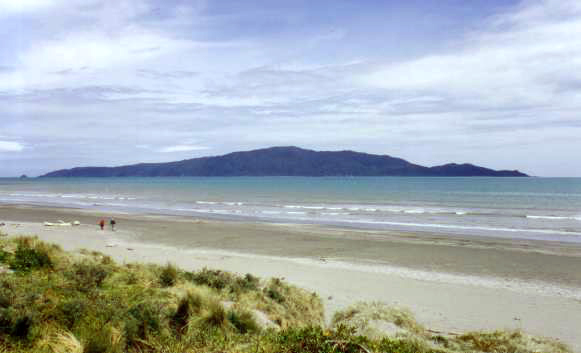
The Kāpiti Coast District (officially the Kapiti Coast District) is a local government district of the Wellington Region in the lower North Island of New Zealand, 50 km (31 mi) north of Wellington City. The district is named after Kapiti Island, a prominent island 5 kilometres (3.1 mi) offshore.
The population of the district is concentrated in a chain of coastal settlements along State Highway One: Ōtaki, Te Horo, Waikanae, Paraparaumu, Raumati Beach, Raumati South, and Paekākāriki. Paraparaumu is the most populous of these towns and the commercial and administrative centre. Much of the rural land is given over to horticulture; market gardens are common along the highway between the settlements. The area available for agriculture and settlement is narrow and coastal. Much of the eastern part of the district is within the Tararua Forest Park, which covers the rugged Tararua Range, with peaks rising to over 1,500 m (4,900 ft).
The Kāpiti Coast District stretches from Ōtaki in the north to Paekākāriki in the south. It includes the towns of Te Horo, Waikanae, Paraparaumu, Raumati Beach, Raumati South, and smaller localities such as Maungakotukutuku, Otaihanga, and Peka Peka. It extends from the Tasman Sea coast to the top of the Tararua Range. Kapiti Island, a prominent offshore feature, is part of the district.
The district is not generally considered part of the Wellington metropolitan area, being distant from Wellington City, Porirua and the Hutt Valley, which make up the nucleus of the area. Still, Waikanae is considered by many to be the absolute northernmost point Wellington can be considered to reach as a city.[citation needed] Many residents travel into Wellington each day for work, and the district is a popular weekend destination for the people of the Wellington Region. The town of Paraparaumu, considered the pivot of the district, is located about 55 km north of Wellington.
The area has an oceanic climate with moderate temperature swings between seasons, resulting in warm summers and mild winters without any severe heat waves or cold spells.[citation needed]
The district was occupied by the Muaūpoko Māori tribe up to the 19th century. Ngāti Toa, led by chief Te Rauparaha, migrated to the district in the 1820s. Te Rauparaha established a base on Kapiti Island, from where he was able to launch attacks on other tribes during the Musket Wars of the early 19th century. Around this time, Europeans began whaling in the area, and on 16 October 1839, William Wakefield of the New Zealand Company arrived in the Kapiti region to purchase land for permanent European settlement. Te Rauparaha sold him land in the Nelson and Golden Bay area.[citation needed]
European settlement of the Kāpiti Coast only took place on a significant scale after the Wellington and Manawatu Railway Company (WMR) opened its railway line from Wellington to Longburn, just south of Palmerston North. The line was opened in 1886, with the final spike driven in on the Kāpiti Coast at Otaihanga. Paekākāriki was quickly established as a significant steam locomotive depot due to the need to swap locomotives at the location; powerful, heavy locomotives were required to handle trains over the rugged section from Wellington to Paekākāriki, while lighter, faster locomotives were more suited to the relatively flat terrain north of Paekākāriki. In 1908, the WMR was purchased by the New Zealand Railways Department, who incorporated the line into the North Island Main Trunk railway.
In June 1940, the Wellington-Paekākāriki section was electrified as electric locomotives provided better motive power. This meant trains would swap from steam (and later diesel-electric) to electric traction in Paekākāriki, and it retained its status as a significant locomotive depot. It also became the northern terminus of the Wellington commuter railway network until 8 May 1983, when it was extended to Paraparaumu. In February 2011, electrification reached Waikanae, which became the new terminus.
Kāpiti Coast District
The Kāpiti Coast District (officially the Kapiti Coast District) is a local government district of the Wellington Region in the lower North Island of New Zealand, 50 km (31 mi) north of Wellington City. The district is named after Kapiti Island, a prominent island 5 kilometres (3.1 mi) offshore.
The population of the district is concentrated in a chain of coastal settlements along State Highway One: Ōtaki, Te Horo, Waikanae, Paraparaumu, Raumati Beach, Raumati South, and Paekākāriki. Paraparaumu is the most populous of these towns and the commercial and administrative centre. Much of the rural land is given over to horticulture; market gardens are common along the highway between the settlements. The area available for agriculture and settlement is narrow and coastal. Much of the eastern part of the district is within the Tararua Forest Park, which covers the rugged Tararua Range, with peaks rising to over 1,500 m (4,900 ft).
The Kāpiti Coast District stretches from Ōtaki in the north to Paekākāriki in the south. It includes the towns of Te Horo, Waikanae, Paraparaumu, Raumati Beach, Raumati South, and smaller localities such as Maungakotukutuku, Otaihanga, and Peka Peka. It extends from the Tasman Sea coast to the top of the Tararua Range. Kapiti Island, a prominent offshore feature, is part of the district.
The district is not generally considered part of the Wellington metropolitan area, being distant from Wellington City, Porirua and the Hutt Valley, which make up the nucleus of the area. Still, Waikanae is considered by many to be the absolute northernmost point Wellington can be considered to reach as a city.[citation needed] Many residents travel into Wellington each day for work, and the district is a popular weekend destination for the people of the Wellington Region. The town of Paraparaumu, considered the pivot of the district, is located about 55 km north of Wellington.
The area has an oceanic climate with moderate temperature swings between seasons, resulting in warm summers and mild winters without any severe heat waves or cold spells.[citation needed]
The district was occupied by the Muaūpoko Māori tribe up to the 19th century. Ngāti Toa, led by chief Te Rauparaha, migrated to the district in the 1820s. Te Rauparaha established a base on Kapiti Island, from where he was able to launch attacks on other tribes during the Musket Wars of the early 19th century. Around this time, Europeans began whaling in the area, and on 16 October 1839, William Wakefield of the New Zealand Company arrived in the Kapiti region to purchase land for permanent European settlement. Te Rauparaha sold him land in the Nelson and Golden Bay area.[citation needed]
European settlement of the Kāpiti Coast only took place on a significant scale after the Wellington and Manawatu Railway Company (WMR) opened its railway line from Wellington to Longburn, just south of Palmerston North. The line was opened in 1886, with the final spike driven in on the Kāpiti Coast at Otaihanga. Paekākāriki was quickly established as a significant steam locomotive depot due to the need to swap locomotives at the location; powerful, heavy locomotives were required to handle trains over the rugged section from Wellington to Paekākāriki, while lighter, faster locomotives were more suited to the relatively flat terrain north of Paekākāriki. In 1908, the WMR was purchased by the New Zealand Railways Department, who incorporated the line into the North Island Main Trunk railway.
In June 1940, the Wellington-Paekākāriki section was electrified as electric locomotives provided better motive power. This meant trains would swap from steam (and later diesel-electric) to electric traction in Paekākāriki, and it retained its status as a significant locomotive depot. It also became the northern terminus of the Wellington commuter railway network until 8 May 1983, when it was extended to Paraparaumu. In February 2011, electrification reached Waikanae, which became the new terminus.
Recent media
Recent media