
Recent from talks
Katsu Kaishū
Knowledge base stats:
Talk channels stats:
Members stats:
Katsu Kaishū
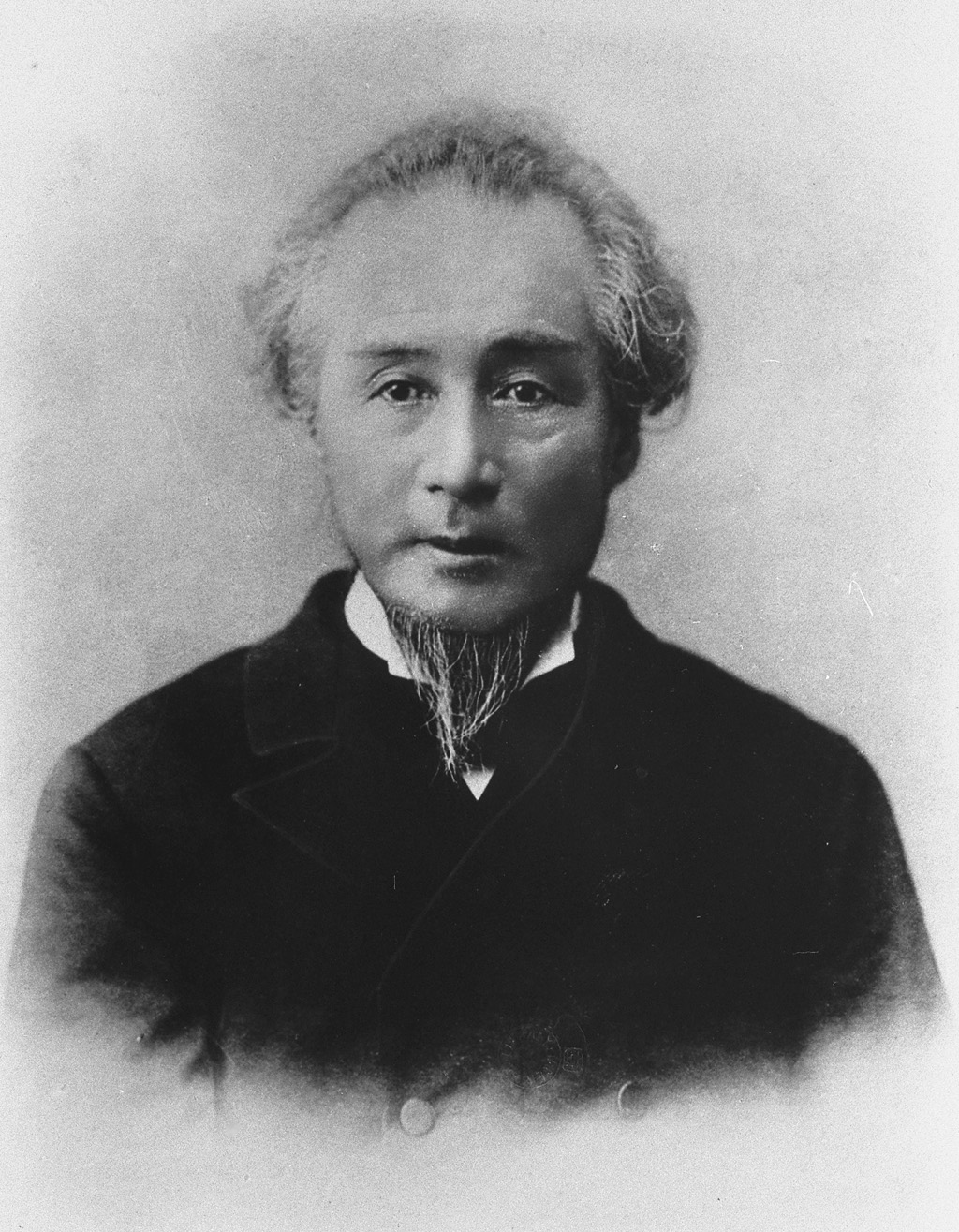
Count Katsu Yasuyoshi (勝 安芳; March 12, 1823—January 21, 1899), born Katsu Yoshikuni (勝 義邦), best known by his nickname Katsu Kaishū (勝 海舟; Japanese pronunciation: [kaꜜ.tsɯ | kaꜜi.ɕɯː]), was a Japanese statesman, naval engineer and military commander during the late Tokugawa shogunate and early Meiji period.
Kaishū was a nickname which he took from a piece of calligraphy (Kaishū Shooku 海舟書屋) by Sakuma Shōzan. He went through a series of given names throughout his life; his childhood name was Rintarō (麟太郎). He was often called Awa (安房) from his ceremonial title Awa-no-kami (安房守) during the late Tokugawa shogunate and later changed his name to Yasuyoshi after the Meiji Restoration.
An advocate of modernization and westernization, Katsu was an influential figure during the end of the Tokugawa Shogunate (Bakumatsu) and subsequent Meiji Restoration. He eventually rose to occupy the position of commissioner (Gunkan-bugyō) in the Tokugawa navy and was a chief negotiator of the bakufu. As a major Tokugawa commander during the Boshin War, he is particularly known for his surrender of Edo to Imperial forces commanded by Saigō Takamori.
Born Katsu Yoshikuni on March 12, 1823, in Edo to a low-ranking retainer of the Tokugawa shogunate. His father, Katsu Kokichi, the subject of the autobiography, Musui's Story, was the ill-behaved head of a minor samurai family. As a youth whose given childhood name was Katsu Rintarō (Kaishu was a pseudonym), he studied Dutch and European military science, and was eventually appointed translator by the government when European powers attempted to open contact with Japan. Katsu developed the reputation as an expert in western military technology.
Under the advice of Dutch naval officers, Katsu served as head naval cadet at the Nagasaki Naval Academy between 1855 and 1859.
In 1860, Katsu served as captain of the warship Kanrin-maru (with assistance from US naval officer Lt. John M. Brooke), to escort the first Japanese delegation to San Francisco, California, en route to Washington, DC, for the formal ratification of the Harris Treaty. The Kanrin Maru, built by the Dutch, was the first Japanese vessel to sail to the Western world. Kaishū remained in San Francisco for nearly two months, observing American society, culture and technology. Following his return to Japan, Katsu held a series of high-ranking posts in the Tokugawa navy, arguing before government councils in favor of a unified Japanese naval force led by professionally trained officers in disregard of promotion and assignment due to hereditary status. During his command as director of the Kobe Naval School, the institute would become a major source of activity for progressive thinking and reformists between 1863 and 1864.
In 1862, the then rōnin Sakamoto Ryōma decided to assassinate Katsu due to his support of both modernization and westernization. However, Katsu persuaded Ryōma of the necessity of a long-term plan to increase Japan's military strength in the face of Western influence that led to the Convention of Kanagawa. Instead of killing Katsu, Ryōma started working as his assistant and protégé.
In 1866, Katsu was appointed negotiator between the bakufu forces and the anti-shogunal domain of Chōshū, and later served as chief negotiator for the Tokugawa bakufu, ensuring a relatively peaceful and orderly transition of power in the Meiji Restoration.
Hub AI
Katsu Kaishū AI simulator
(@Katsu Kaishū_simulator)
Katsu Kaishū
Count Katsu Yasuyoshi (勝 安芳; March 12, 1823—January 21, 1899), born Katsu Yoshikuni (勝 義邦), best known by his nickname Katsu Kaishū (勝 海舟; Japanese pronunciation: [kaꜜ.tsɯ | kaꜜi.ɕɯː]), was a Japanese statesman, naval engineer and military commander during the late Tokugawa shogunate and early Meiji period.
Kaishū was a nickname which he took from a piece of calligraphy (Kaishū Shooku 海舟書屋) by Sakuma Shōzan. He went through a series of given names throughout his life; his childhood name was Rintarō (麟太郎). He was often called Awa (安房) from his ceremonial title Awa-no-kami (安房守) during the late Tokugawa shogunate and later changed his name to Yasuyoshi after the Meiji Restoration.
An advocate of modernization and westernization, Katsu was an influential figure during the end of the Tokugawa Shogunate (Bakumatsu) and subsequent Meiji Restoration. He eventually rose to occupy the position of commissioner (Gunkan-bugyō) in the Tokugawa navy and was a chief negotiator of the bakufu. As a major Tokugawa commander during the Boshin War, he is particularly known for his surrender of Edo to Imperial forces commanded by Saigō Takamori.
Born Katsu Yoshikuni on March 12, 1823, in Edo to a low-ranking retainer of the Tokugawa shogunate. His father, Katsu Kokichi, the subject of the autobiography, Musui's Story, was the ill-behaved head of a minor samurai family. As a youth whose given childhood name was Katsu Rintarō (Kaishu was a pseudonym), he studied Dutch and European military science, and was eventually appointed translator by the government when European powers attempted to open contact with Japan. Katsu developed the reputation as an expert in western military technology.
Under the advice of Dutch naval officers, Katsu served as head naval cadet at the Nagasaki Naval Academy between 1855 and 1859.
In 1860, Katsu served as captain of the warship Kanrin-maru (with assistance from US naval officer Lt. John M. Brooke), to escort the first Japanese delegation to San Francisco, California, en route to Washington, DC, for the formal ratification of the Harris Treaty. The Kanrin Maru, built by the Dutch, was the first Japanese vessel to sail to the Western world. Kaishū remained in San Francisco for nearly two months, observing American society, culture and technology. Following his return to Japan, Katsu held a series of high-ranking posts in the Tokugawa navy, arguing before government councils in favor of a unified Japanese naval force led by professionally trained officers in disregard of promotion and assignment due to hereditary status. During his command as director of the Kobe Naval School, the institute would become a major source of activity for progressive thinking and reformists between 1863 and 1864.
In 1862, the then rōnin Sakamoto Ryōma decided to assassinate Katsu due to his support of both modernization and westernization. However, Katsu persuaded Ryōma of the necessity of a long-term plan to increase Japan's military strength in the face of Western influence that led to the Convention of Kanagawa. Instead of killing Katsu, Ryōma started working as his assistant and protégé.
In 1866, Katsu was appointed negotiator between the bakufu forces and the anti-shogunal domain of Chōshū, and later served as chief negotiator for the Tokugawa bakufu, ensuring a relatively peaceful and orderly transition of power in the Meiji Restoration.
Recent media