
Recent from talks
2005 Kenyan constitutional referendum
Knowledge base stats:
Talk channels stats:
Members stats:
2005 Kenyan constitutional referendum
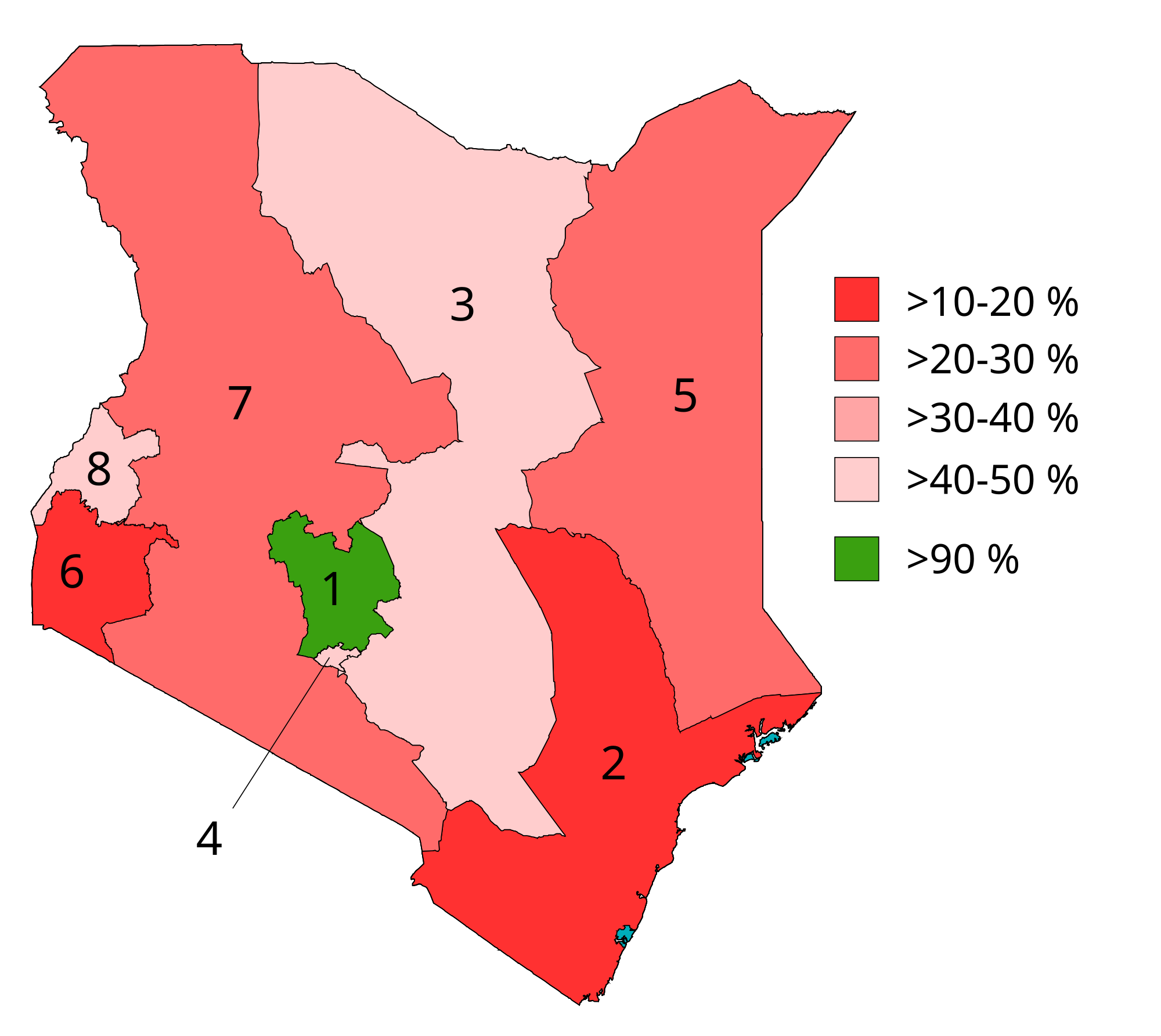
A constitutional referendum was held in Kenya on 21 November 2005. Although many government officials, including President Mwai Kibaki, had campaigned for a "yes" vote, the proposed new constitution was rejected by 58% of voters.
Despite the rising number of literate voters in Kenya (74%), ballot papers used symbols as well as text to indicate the choices. Supporters of the new constitution were assigned the symbol of a banana, while the opposition was assigned the orange, ultimately leading to the opposition group being named the Orange Democratic Movement.
The referendum divided the ruling National Rainbow Coalition into camps for and against the proposal, as well as spurring violence between Orange and Banana supporters; nine people died during the campaign period spread over several months, but the process itself was peaceful.
During the drafting of the constitution there were disagreements over how much power should be vested in the President, with many believing Kibaki was attempting to garner dictatorial powers. In previous drafts, those who feared a concentration of power in the president added provisions for a power-sharing between the President and Prime Minister. However, the final draft of the constitution retained sweeping powers for the Head of State.
The issue of land reform was also prevalent due to the frequency of land disputes between ethnic groups. The draft constitution sought to deal with this and included measures against the ownership of land by foreigners (European immigrants and their descendants own numerous large tracts of land in Kenya). The constitution would have also permitted women to own land for the first time, although only through inheritance, and sought to establish a "Land Commission" that would manage and oversee the redistribution of land (the formation of a commission was included primarily as a means of preventing the gifting of land by government officials in return for favours). The commission would also serve as a human rights watchdog over land disputes and would attempt to give back land to ethnic groups and individuals who had unfairly lost land in the past.
The constitution sought also to classify land as either government, community, or individual property. Many had been alarmed by a more radical provision which would allow the land commission to redistribute land that was "idle"—not being used to its fullest potential—to the landless and squatters. This met the most resistance amongst absentee land owners and nomadic groups such as the Maasai, whose land could potentially be repossessed.
Religious courts were also an area of concern prior to the voting. Since Islamic religious courts already existed in Kenya, demands for courts specific to other religions (mainly Christian and Hindu) were adhered to and the draft constitution provided a legal basis for a number of religious judiciaries.
Because Kibaki so vigorously promoted the new constitution and based his election campaign around it, many voters used the referendum merely as means to voice their approval or disapproval of the Kibaki government. This would become the sentiment on which the victorious Orange camp would base their demands for snap elections, claiming the government had lost its mandate to rule as a result of the "no" vote by the people.
Hub AI
2005 Kenyan constitutional referendum AI simulator
(@2005 Kenyan constitutional referendum_simulator)
2005 Kenyan constitutional referendum
A constitutional referendum was held in Kenya on 21 November 2005. Although many government officials, including President Mwai Kibaki, had campaigned for a "yes" vote, the proposed new constitution was rejected by 58% of voters.
Despite the rising number of literate voters in Kenya (74%), ballot papers used symbols as well as text to indicate the choices. Supporters of the new constitution were assigned the symbol of a banana, while the opposition was assigned the orange, ultimately leading to the opposition group being named the Orange Democratic Movement.
The referendum divided the ruling National Rainbow Coalition into camps for and against the proposal, as well as spurring violence between Orange and Banana supporters; nine people died during the campaign period spread over several months, but the process itself was peaceful.
During the drafting of the constitution there were disagreements over how much power should be vested in the President, with many believing Kibaki was attempting to garner dictatorial powers. In previous drafts, those who feared a concentration of power in the president added provisions for a power-sharing between the President and Prime Minister. However, the final draft of the constitution retained sweeping powers for the Head of State.
The issue of land reform was also prevalent due to the frequency of land disputes between ethnic groups. The draft constitution sought to deal with this and included measures against the ownership of land by foreigners (European immigrants and their descendants own numerous large tracts of land in Kenya). The constitution would have also permitted women to own land for the first time, although only through inheritance, and sought to establish a "Land Commission" that would manage and oversee the redistribution of land (the formation of a commission was included primarily as a means of preventing the gifting of land by government officials in return for favours). The commission would also serve as a human rights watchdog over land disputes and would attempt to give back land to ethnic groups and individuals who had unfairly lost land in the past.
The constitution sought also to classify land as either government, community, or individual property. Many had been alarmed by a more radical provision which would allow the land commission to redistribute land that was "idle"—not being used to its fullest potential—to the landless and squatters. This met the most resistance amongst absentee land owners and nomadic groups such as the Maasai, whose land could potentially be repossessed.
Religious courts were also an area of concern prior to the voting. Since Islamic religious courts already existed in Kenya, demands for courts specific to other religions (mainly Christian and Hindu) were adhered to and the draft constitution provided a legal basis for a number of religious judiciaries.
Because Kibaki so vigorously promoted the new constitution and based his election campaign around it, many voters used the referendum merely as means to voice their approval or disapproval of the Kibaki government. This would become the sentiment on which the victorious Orange camp would base their demands for snap elections, claiming the government had lost its mandate to rule as a result of the "no" vote by the people.
Recent media