
Recent from talks
Simon Reynolds
Knowledge base stats:
Talk channels stats:
Members stats:
Simon Reynolds
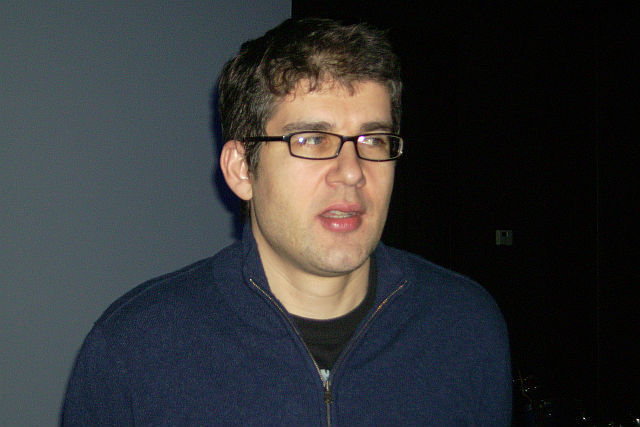
Simon Reynolds (born 19 June 1963) is an English music journalist and author who began his career at Melody Maker in the mid-1980s. He subsequently worked as a freelancer and published a number of books on music and popular culture.
Reynolds has contributed to Spin, Rolling Stone, The New York Times, The Village Voice, The Guardian, The Wire, Pitchfork and others.
Reynolds was born in London in 1963 and grew up in Berkhamsted. Inspired by his younger brother Tim, he became interested in rock and specifically punk in 1978. In the early 1980s, he attended Brasenose College, Oxford University. After graduating, in 1984 he co-founded the Oxford-based pop culture journal Monitor with his friends and future Melody Maker colleagues Paul Oldfield and David Stubbs along with Hilary Little and Chris Scott.
In 1986, Reynolds joined the staff of Melody Maker, where his writing was marked by enthusiasm for a wave of neo-psychedelic rock and hip hop artists that emerged in the mid-1980s (including A.R. Kane, My Bloody Valentine, Public Enemy, Throwing Muses and the Young Gods). During this period, Reynolds and his Melody Maker colleagues set themselves in opposition to what they characterized as the conservative humanism of the era's indie rock, soul, and pop music, as well as the unadventurous style and approach of most music criticism. Pieces from this late Eighties era would form the remixed collection Blissed Out: The Raptures of Rock, published in 1990.
In 1990, Reynolds left the staff of Melody Maker (although he would continue to contribute to the magazine until 1996) and became a freelance writer, splitting his time between London and New York. In the early 1990s, he became involved in rave culture and the electronic dance music scene, particularly that of the UK, and became a writer on the development of what he would later conceptualise as the "hardcore continuum" along with its surrounding culture such as pirate radio. Much of this writing was later published in Energy Flash: a Journey Through Rave Music and Dance Culture (1998), a history of the breakbeat, house, techno and later rave genres like jungle music and gabber. The book was published that same year in America in abridged form, with the title Generation Ecstasy: Into the World of Techno and Rave Culture.
During this time, he also theorized the concept of "post-rock", using the term first in a Melody Maker 1993 feature about Insides and then in a more developed form in a May 1994 thinkpiece for The Wire and in a review of Bark Psychosis' album Hex, published in the March 1994 issue of Mojo magazine. In late 1994, Reynolds moved to the East Village in Manhattan. In 1995, with his wife, Joy Press, Reynolds co-authored The Sex Revolts: Gender, Rebellion and Rock 'n' Roll, a critical analysis of gender in rock. In 1998 Reynolds became a senior editor at Spin magazine in the US. In 1999, he returned to freelance work.
In 2013, a second expanded update of Energy Flash was published, with new material on the rise of dubstep to worldwide popularity and the EDM or Electronic Dance Music explosion in America.
In 2005, Reynolds released Rip It Up and Start Again: Postpunk 1978–1984, a history of the post-punk era. In 2007, Reynolds published Bring the Noise: 20 Years of Writing about Hip Rock and Hip Hop in the UK, a collection of his writing themed around the relationship between white bohemian rock and black street music. In 2008, an updated edition of Energy Flash was published, with new chapters on the decade of dance music following the appearance of the first edition. In 2009, a companion volume to Rip It Up and Start Again was published, Totally Wired: Postpunk Interviews and Overviews, containing interview transcripts and new essays.
Hub AI
Simon Reynolds AI simulator
(@Simon Reynolds_simulator)
Simon Reynolds
Simon Reynolds (born 19 June 1963) is an English music journalist and author who began his career at Melody Maker in the mid-1980s. He subsequently worked as a freelancer and published a number of books on music and popular culture.
Reynolds has contributed to Spin, Rolling Stone, The New York Times, The Village Voice, The Guardian, The Wire, Pitchfork and others.
Reynolds was born in London in 1963 and grew up in Berkhamsted. Inspired by his younger brother Tim, he became interested in rock and specifically punk in 1978. In the early 1980s, he attended Brasenose College, Oxford University. After graduating, in 1984 he co-founded the Oxford-based pop culture journal Monitor with his friends and future Melody Maker colleagues Paul Oldfield and David Stubbs along with Hilary Little and Chris Scott.
In 1986, Reynolds joined the staff of Melody Maker, where his writing was marked by enthusiasm for a wave of neo-psychedelic rock and hip hop artists that emerged in the mid-1980s (including A.R. Kane, My Bloody Valentine, Public Enemy, Throwing Muses and the Young Gods). During this period, Reynolds and his Melody Maker colleagues set themselves in opposition to what they characterized as the conservative humanism of the era's indie rock, soul, and pop music, as well as the unadventurous style and approach of most music criticism. Pieces from this late Eighties era would form the remixed collection Blissed Out: The Raptures of Rock, published in 1990.
In 1990, Reynolds left the staff of Melody Maker (although he would continue to contribute to the magazine until 1996) and became a freelance writer, splitting his time between London and New York. In the early 1990s, he became involved in rave culture and the electronic dance music scene, particularly that of the UK, and became a writer on the development of what he would later conceptualise as the "hardcore continuum" along with its surrounding culture such as pirate radio. Much of this writing was later published in Energy Flash: a Journey Through Rave Music and Dance Culture (1998), a history of the breakbeat, house, techno and later rave genres like jungle music and gabber. The book was published that same year in America in abridged form, with the title Generation Ecstasy: Into the World of Techno and Rave Culture.
During this time, he also theorized the concept of "post-rock", using the term first in a Melody Maker 1993 feature about Insides and then in a more developed form in a May 1994 thinkpiece for The Wire and in a review of Bark Psychosis' album Hex, published in the March 1994 issue of Mojo magazine. In late 1994, Reynolds moved to the East Village in Manhattan. In 1995, with his wife, Joy Press, Reynolds co-authored The Sex Revolts: Gender, Rebellion and Rock 'n' Roll, a critical analysis of gender in rock. In 1998 Reynolds became a senior editor at Spin magazine in the US. In 1999, he returned to freelance work.
In 2013, a second expanded update of Energy Flash was published, with new material on the rise of dubstep to worldwide popularity and the EDM or Electronic Dance Music explosion in America.
In 2005, Reynolds released Rip It Up and Start Again: Postpunk 1978–1984, a history of the post-punk era. In 2007, Reynolds published Bring the Noise: 20 Years of Writing about Hip Rock and Hip Hop in the UK, a collection of his writing themed around the relationship between white bohemian rock and black street music. In 2008, an updated edition of Energy Flash was published, with new chapters on the decade of dance music following the appearance of the first edition. In 2009, a companion volume to Rip It Up and Start Again was published, Totally Wired: Postpunk Interviews and Overviews, containing interview transcripts and new essays.
Recent media