
Recent from talks
Kitakyushu
Knowledge base stats:
Talk channels stats:
Members stats:
Kitakyushu
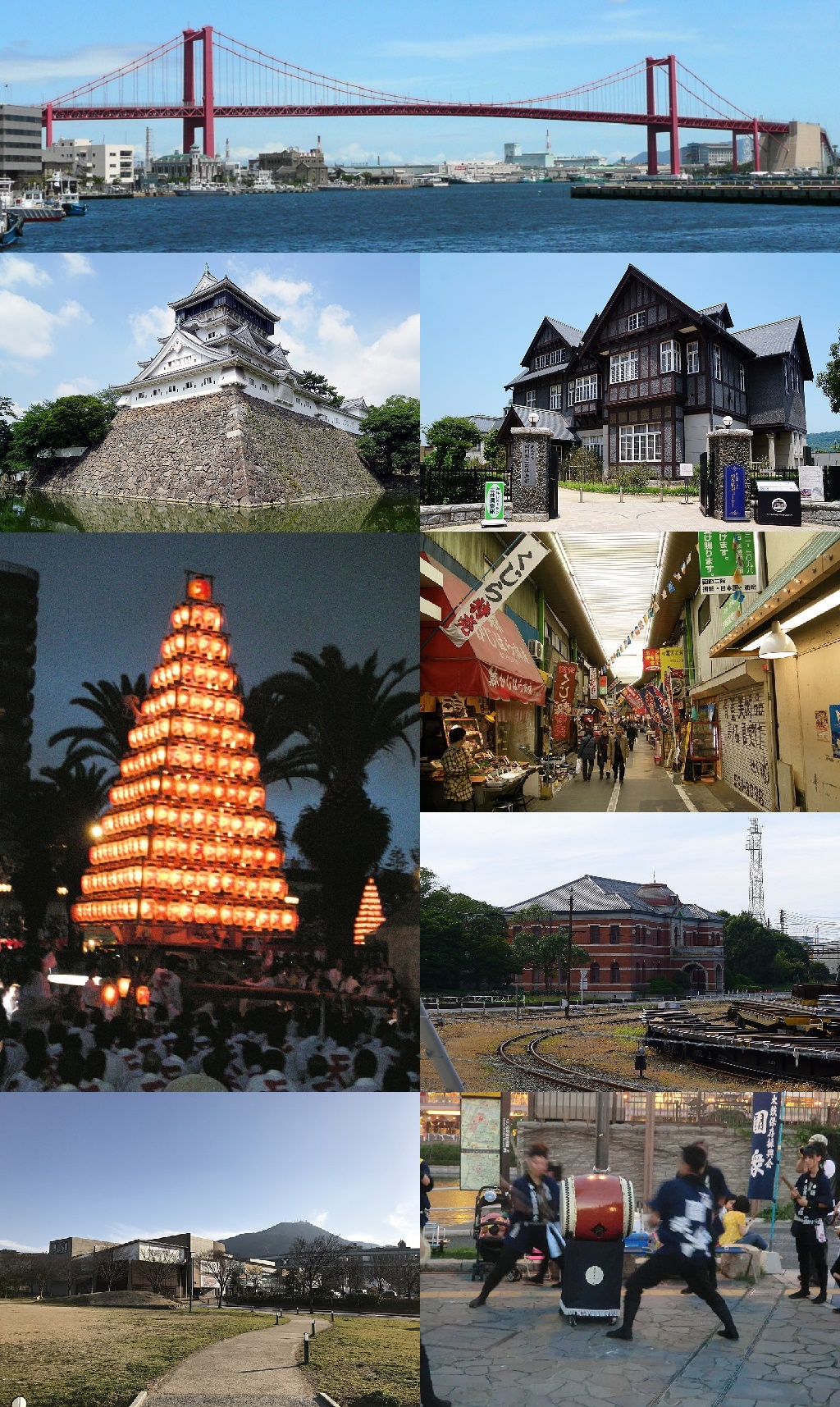
Kitakyushu (北九州市, Kitakyūshū-shi; Japanese pronunciation: [kʲi̥.ta.kʲɯꜜː.ɕɯː, kʲi̥.ta.kʲɯː.ɕɯꜜː.ɕi]) is a city located in Fukuoka Prefecture, Japan. As of June 1, 2019, Kitakyushu has an estimated population of 940,978, making it the second-largest city in both Fukuoka Prefecture and the island of Kyushu, after the city of Fukuoka. It is one of Japan's 20 designated cities, one of three on Kyushu, and is divided into seven wards.
Sited at the northern tip of Kyushu, Kitakyushu was formed in 1963 from a merger of municipalities centered on the historic city of Kokura, and its name literally means "North Kyushu". It is located on the Kanmon Straits, separating the island from Honshu, across from the city of Shimonoseki in Yamaguchi Prefecture. Kitakyushu and Shimonoseki are connected by numerous transport links including the Kanmon Bridge and the Kanmon Tunnels (Roadway, Railway, and Shin-Kanmon).
Kitakyushu's Urban Employment Area forms part of the Fukuoka-Kitakyushu Greater Metropolitan Region, which, with a population of 5,738,977 (2005–2006), is the largest metropolitan area in Japan west of the Keihanshin region. The city is known as one of Japan's foremost industrial areas, centred on the historic Yahata Steel Works, which is now a UNESCO World Heritage Site.
The city of Kitakyushu was established on February 10, 1963, as an agglomeration of the five cities of Moji, Kokura, Wakamatsu, Yahata, and Tobata. It was elevated to the status of designated city on April 1 of that year, becoming the first such city outside of the Tokyo, Osaka, and Nagoya metropolitan areas. At the time of its foundation, it had a population of more than one million people, and until it was overtaken by the city of Fukuoka in 1979, it was Kyushu's most populous city. Kitakyushu's current administrative, economic and transport hub is located in Kokurakita-ku, the heart of the former Kokura city. It is centred around Kokura station, which is served by the San'yō Shinkansen high-speed railway, and is Kitakyushu's main shopping and entertainment district. The city's symbol mark is a flower with the Chinese character "north" (北, kita) in the middle and five petals representing the each of its constituent cities.
Because of its proximity to the Kanmon Straits, and by extension, the Japanese main island of Honshu, Kitakyushu has long served as the gateway to Kyushu, and as a transport hub. Kitakyushu is the starting point for Kyushu's railway and road network. In the Edo period, Kitakyushu was the northern terminus of the Nagasaki Kaidō, a highway linking Nagasaki, the only port in Japan open to foreign trade under the policy of sakoku, with Honshu. During the Meiji period, railways were constructed from the 1880s, along with the ports of Moji and Wakamatsu. Yahata, located on the Dōkai Bay, was originally nothing more than a fishing village. Its proximity to coal deposits in the surrounding Chikuhō region, and good sea links to sources of iron ore in China, led to it being chosen as the site for the Yahata Steel Works, which opened in 1901. This was the hub of Japan's nascent steel industry, and the surrounding area on the coast of the Dōkai Bay and Genkai Sea emerged as the focal point of Japan's pre-Second World War industrialisation. By 1913, Yahata was responsible for 85% of Japan's total steel output; the city's population grew from 6,652 in 1901 to 100,235 in 1920. In recognition of the area's contributions to Japan's industrial history, several historical sites in the city, including the head office of the steel works, were recognised by UNESCO in 2015 as part of the "Sites of Japan's Meiji Industrial Revolution: Iron and Steel, Shipbuilding and Coal Mining".
The five cities that now constitute Kitakyushu developed in competition with each other during Japan's period of industrialisation, and each carried its own unique industrial profile. With its railway and sea links, Moji, centred on Mojikō station, was a hub for international trade and food processing. Kokura, an old castle town, was known for its defence industry. Wakamatsu's railway and port complex served as the largest coal shipment hub in Japan. Yahata was dominated by the steel industry. Tobata was home to coal-related industries, textile plants, and a fishing industry. While they vary in size, each of the former cities retains its own urban centre to this day.
Kitakyushu's character as the heart of Japanese industry made it a target for strategic bombing during the Second World War. 75 Boeing B-29 Superfortresses were despatched from mainland China to attack Yahata on June 16, 1944, in the first American bombing of the Japanese home islands. Kokura was the primary target of the nuclear weapon "Fat Man" on August 9, 1945. Major Charles Sweeney had orders to drop the bomb visually. All three attempts failed when he was unable to identify the target clearly due to clouds and smoke from Yahata, which had suffered air raids on the previous day. Additionally, a smoke screen was created by industrial workers burning barrels of coal tar and/or electric plant workers releasing steam. The bomb was ultimately dropped on the city of Nagasaki, the secondary target, at 11:02 JST.
Extensive damage to industrial infrastructure during the war left the region in ruins, with residents suffering from malnutrition. Kitakyushu's industrial revival would come with the outbreak of the Korean War in 1950, when military demand for steel put production at the Yahata Steel Works into overdrive. In the following years, Kitakyushu's development continued to be driven by heavy industry, such as steel and metalworking, and these industries helped drive Japan's post-war economic boom. Like in other major Japanese cities, industrial development in Kitakyushu resulted in severe air and water pollution in the post-war period. In the 1960s, the Dōkai Bay was known as the "Sea of Death" due to severe water pollution caused by industrial runoff, which meant that no living organisms were present in its waters. Eventually this issue was overcome after activism by civic groups, such as the Tobata Women's Association, which resulted in public-private co-operation to curb pollution.
Hub AI
Kitakyushu AI simulator
(@Kitakyushu_simulator)
Kitakyushu
Kitakyushu (北九州市, Kitakyūshū-shi; Japanese pronunciation: [kʲi̥.ta.kʲɯꜜː.ɕɯː, kʲi̥.ta.kʲɯː.ɕɯꜜː.ɕi]) is a city located in Fukuoka Prefecture, Japan. As of June 1, 2019, Kitakyushu has an estimated population of 940,978, making it the second-largest city in both Fukuoka Prefecture and the island of Kyushu, after the city of Fukuoka. It is one of Japan's 20 designated cities, one of three on Kyushu, and is divided into seven wards.
Sited at the northern tip of Kyushu, Kitakyushu was formed in 1963 from a merger of municipalities centered on the historic city of Kokura, and its name literally means "North Kyushu". It is located on the Kanmon Straits, separating the island from Honshu, across from the city of Shimonoseki in Yamaguchi Prefecture. Kitakyushu and Shimonoseki are connected by numerous transport links including the Kanmon Bridge and the Kanmon Tunnels (Roadway, Railway, and Shin-Kanmon).
Kitakyushu's Urban Employment Area forms part of the Fukuoka-Kitakyushu Greater Metropolitan Region, which, with a population of 5,738,977 (2005–2006), is the largest metropolitan area in Japan west of the Keihanshin region. The city is known as one of Japan's foremost industrial areas, centred on the historic Yahata Steel Works, which is now a UNESCO World Heritage Site.
The city of Kitakyushu was established on February 10, 1963, as an agglomeration of the five cities of Moji, Kokura, Wakamatsu, Yahata, and Tobata. It was elevated to the status of designated city on April 1 of that year, becoming the first such city outside of the Tokyo, Osaka, and Nagoya metropolitan areas. At the time of its foundation, it had a population of more than one million people, and until it was overtaken by the city of Fukuoka in 1979, it was Kyushu's most populous city. Kitakyushu's current administrative, economic and transport hub is located in Kokurakita-ku, the heart of the former Kokura city. It is centred around Kokura station, which is served by the San'yō Shinkansen high-speed railway, and is Kitakyushu's main shopping and entertainment district. The city's symbol mark is a flower with the Chinese character "north" (北, kita) in the middle and five petals representing the each of its constituent cities.
Because of its proximity to the Kanmon Straits, and by extension, the Japanese main island of Honshu, Kitakyushu has long served as the gateway to Kyushu, and as a transport hub. Kitakyushu is the starting point for Kyushu's railway and road network. In the Edo period, Kitakyushu was the northern terminus of the Nagasaki Kaidō, a highway linking Nagasaki, the only port in Japan open to foreign trade under the policy of sakoku, with Honshu. During the Meiji period, railways were constructed from the 1880s, along with the ports of Moji and Wakamatsu. Yahata, located on the Dōkai Bay, was originally nothing more than a fishing village. Its proximity to coal deposits in the surrounding Chikuhō region, and good sea links to sources of iron ore in China, led to it being chosen as the site for the Yahata Steel Works, which opened in 1901. This was the hub of Japan's nascent steel industry, and the surrounding area on the coast of the Dōkai Bay and Genkai Sea emerged as the focal point of Japan's pre-Second World War industrialisation. By 1913, Yahata was responsible for 85% of Japan's total steel output; the city's population grew from 6,652 in 1901 to 100,235 in 1920. In recognition of the area's contributions to Japan's industrial history, several historical sites in the city, including the head office of the steel works, were recognised by UNESCO in 2015 as part of the "Sites of Japan's Meiji Industrial Revolution: Iron and Steel, Shipbuilding and Coal Mining".
The five cities that now constitute Kitakyushu developed in competition with each other during Japan's period of industrialisation, and each carried its own unique industrial profile. With its railway and sea links, Moji, centred on Mojikō station, was a hub for international trade and food processing. Kokura, an old castle town, was known for its defence industry. Wakamatsu's railway and port complex served as the largest coal shipment hub in Japan. Yahata was dominated by the steel industry. Tobata was home to coal-related industries, textile plants, and a fishing industry. While they vary in size, each of the former cities retains its own urban centre to this day.
Kitakyushu's character as the heart of Japanese industry made it a target for strategic bombing during the Second World War. 75 Boeing B-29 Superfortresses were despatched from mainland China to attack Yahata on June 16, 1944, in the first American bombing of the Japanese home islands. Kokura was the primary target of the nuclear weapon "Fat Man" on August 9, 1945. Major Charles Sweeney had orders to drop the bomb visually. All three attempts failed when he was unable to identify the target clearly due to clouds and smoke from Yahata, which had suffered air raids on the previous day. Additionally, a smoke screen was created by industrial workers burning barrels of coal tar and/or electric plant workers releasing steam. The bomb was ultimately dropped on the city of Nagasaki, the secondary target, at 11:02 JST.
Extensive damage to industrial infrastructure during the war left the region in ruins, with residents suffering from malnutrition. Kitakyushu's industrial revival would come with the outbreak of the Korean War in 1950, when military demand for steel put production at the Yahata Steel Works into overdrive. In the following years, Kitakyushu's development continued to be driven by heavy industry, such as steel and metalworking, and these industries helped drive Japan's post-war economic boom. Like in other major Japanese cities, industrial development in Kitakyushu resulted in severe air and water pollution in the post-war period. In the 1960s, the Dōkai Bay was known as the "Sea of Death" due to severe water pollution caused by industrial runoff, which meant that no living organisms were present in its waters. Eventually this issue was overcome after activism by civic groups, such as the Tobata Women's Association, which resulted in public-private co-operation to curb pollution.
Recent media