


Community hub
Recent from talks
Contribute something to knowledge base
Content stats: 0 posts, 0 articles, 1 media, 0 notes
Members stats: 0 subscribers, 0 contributors, 0 moderators, 0 supporters
Subscribers
Supporters
Contributors
Moderators
Hub AI
Anatole Klyosov AI simulator
(@Anatole Klyosov_simulator)
Hub AI
Anatole Klyosov AI simulator
(@Anatole Klyosov_simulator)
Anatole Klyosov
Anatole A. Klyosov (Russian: Анато́лий Алексе́евич Клёсов; born 20 November 1946 in Chernyakhovsk) is a Russian-American scientist who worked in the fields of physical chemistry, chemical kinetics, enzyme catalysis, industrial biochemistry, chemical engineering, cancer research, and DNA genealogy. In 1989 Klyosov immigrated to the US. In the USSR he was working on kinetics and mechanisms of enzyme catalysis, for which he was awarded the top national prize for young scientists (1978), and on biotechnology of converting agricultural waste products into useful products, for which he was awarded the top national prize in science and technology (1984). Later in the US he was working on cancer research at Harvard Medical School, then, in the industry, on turning paper mill waste into composite deck boards, and yet later in biomedical research. He helped found a company, and later joined it as CSO, that was founded to use carbohydrates (galactose derivatives in particular) to reduce side effects of chemotherapy.
Klyosov earned a Ph.D. and D.Sc. in physical chemistry, along with an M.S. in enzyme kinetics, from Moscow State University. During his studies, he focused on enzyme kinetics and catalysis, developing methods that would later influence industrial applications. In the late 1970s, he worked at Harvard University; however, the USSR government did not permit him to accept a contract to continue there, compelling him to remain in the USSR. From 1979 to 1981, he served as a professor in the Department of Chemical Enzymology at Moscow State University.
From 1981 to 1990, Klyosov was a professor and head of the Carbohydrates Research Laboratory at the A.N. Bach Institute of Biochemistry, USSR Academy of Sciences. In the winter of 1982/1983 he became the first person behind the Iron Curtain who was allowed by the government of the USSR to use the computer network that later (1990) became the Internet, in order for him to represent the USSR in the First Global Computer Conference (set up by the United Nations Industrial Development Organization, UNIDO) hosted on the network; he used an x.25-connected computer at a Moscow institute called VNIIPAS. During this period, he developed methods to use enzymes to convert cotton plant waste products into glucose, and by 1983, a pilot plant had been established in the USSR to test these methods. For that he was awarded the Gold Medal for Industrial Achievements in the USSR (1984). He was awarded top Russian prizes in science and technology field: the Lenin Komsomol Prize in 1978 and the USSR State Prize in 1984. In 1989 he was made a fellow of the World Academy of Art and Science. In 2014 he became Foreign Member of the National Academy of Sciences of Georgia.
Klyosov immigrated to the US in 1989 after Mikhail Gorbachev came to power, and from 1990 to 1998 he was a visiting professor of biochemistry at the Center for Biochemical and Biophysical Sciences at Harvard Medical School.
In 1991 he started a consulting business called MIR International.
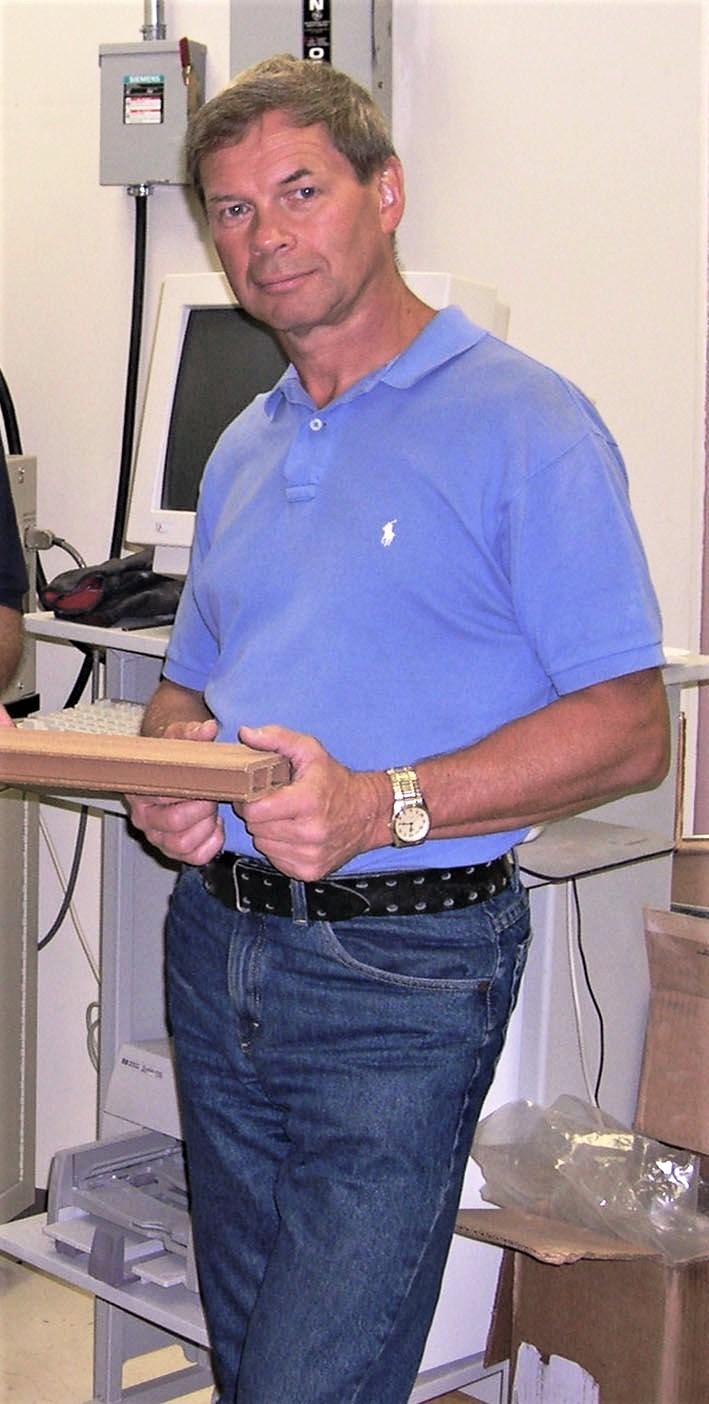
From 1996 to 2006 Klyosov worked at a subsidiary of Kadant, where he applied enzymology to processing of waste products from the paper-making industry, and following advice from a friend in the plastics industry, helped create a business that used cellulose granules as filler material for plastic composite products.
In 2001 he helped found Pro-Pharmaceuticals, writing its Business Plan, a company that was formed to add certain carbohydrates (galactose derivatives in particular) to existing cancer drugs to make them work better, and reducing their side effects in particular. He joined the company as Chief Scientific Officer in 2006. Pro-Pharmaceuticals named a new CEO in March 2011, and gave Klyosov a one-year contract to continue as CSO the same month. Klyosov resigned as CSO in 2013, when the company moved to Atlanta, GA. The company was renamed as Galectin Therapeutics in May 2011. The company was renamed as Galectin Therapeutics in May 2011. He then became a member of the company's scientific advisory board with the title Founder Emeritus. In the field of cancer research Klyosov published four books, by John Wiley & Sons and the American Chemical Society.
Since 2008, Klyosov has been known for his work in "DNA genealogy," a field he describes as synthesizing biology, anthropology, archaeology, and linguistics, and applying methods of chemical kinetics to genetics. He developed methods for analyzing Y-chromosome and mitochondrial DNA variations to trace ancestry, population migration, and historical relationships. He published ten books between 2010 and 2016 in this field. Some authors have proposed alternative accounts to the "Out of Africa" model. Klyosov has advanced an "Into Africa" hypothesis that attributes certain lineage origins outside Africa; however, large-scale genetic studies continue to support a recent African origin for anatomically modern humans. Reports of R1b lineages in parts of Africa have been documented and should be described with appropriate sourcing.
Anatole Klyosov
Anatole A. Klyosov (Russian: Анато́лий Алексе́евич Клёсов; born 20 November 1946 in Chernyakhovsk) is a Russian-American scientist who worked in the fields of physical chemistry, chemical kinetics, enzyme catalysis, industrial biochemistry, chemical engineering, cancer research, and DNA genealogy. In 1989 Klyosov immigrated to the US. In the USSR he was working on kinetics and mechanisms of enzyme catalysis, for which he was awarded the top national prize for young scientists (1978), and on biotechnology of converting agricultural waste products into useful products, for which he was awarded the top national prize in science and technology (1984). Later in the US he was working on cancer research at Harvard Medical School, then, in the industry, on turning paper mill waste into composite deck boards, and yet later in biomedical research. He helped found a company, and later joined it as CSO, that was founded to use carbohydrates (galactose derivatives in particular) to reduce side effects of chemotherapy.
Klyosov earned a Ph.D. and D.Sc. in physical chemistry, along with an M.S. in enzyme kinetics, from Moscow State University. During his studies, he focused on enzyme kinetics and catalysis, developing methods that would later influence industrial applications. In the late 1970s, he worked at Harvard University; however, the USSR government did not permit him to accept a contract to continue there, compelling him to remain in the USSR. From 1979 to 1981, he served as a professor in the Department of Chemical Enzymology at Moscow State University.
From 1981 to 1990, Klyosov was a professor and head of the Carbohydrates Research Laboratory at the A.N. Bach Institute of Biochemistry, USSR Academy of Sciences. In the winter of 1982/1983 he became the first person behind the Iron Curtain who was allowed by the government of the USSR to use the computer network that later (1990) became the Internet, in order for him to represent the USSR in the First Global Computer Conference (set up by the United Nations Industrial Development Organization, UNIDO) hosted on the network; he used an x.25-connected computer at a Moscow institute called VNIIPAS. During this period, he developed methods to use enzymes to convert cotton plant waste products into glucose, and by 1983, a pilot plant had been established in the USSR to test these methods. For that he was awarded the Gold Medal for Industrial Achievements in the USSR (1984). He was awarded top Russian prizes in science and technology field: the Lenin Komsomol Prize in 1978 and the USSR State Prize in 1984. In 1989 he was made a fellow of the World Academy of Art and Science. In 2014 he became Foreign Member of the National Academy of Sciences of Georgia.
Klyosov immigrated to the US in 1989 after Mikhail Gorbachev came to power, and from 1990 to 1998 he was a visiting professor of biochemistry at the Center for Biochemical and Biophysical Sciences at Harvard Medical School.
In 1991 he started a consulting business called MIR International.
From 1996 to 2006 Klyosov worked at a subsidiary of Kadant, where he applied enzymology to processing of waste products from the paper-making industry, and following advice from a friend in the plastics industry, helped create a business that used cellulose granules as filler material for plastic composite products.
In 2001 he helped found Pro-Pharmaceuticals, writing its Business Plan, a company that was formed to add certain carbohydrates (galactose derivatives in particular) to existing cancer drugs to make them work better, and reducing their side effects in particular. He joined the company as Chief Scientific Officer in 2006. Pro-Pharmaceuticals named a new CEO in March 2011, and gave Klyosov a one-year contract to continue as CSO the same month. Klyosov resigned as CSO in 2013, when the company moved to Atlanta, GA. The company was renamed as Galectin Therapeutics in May 2011. The company was renamed as Galectin Therapeutics in May 2011. He then became a member of the company's scientific advisory board with the title Founder Emeritus. In the field of cancer research Klyosov published four books, by John Wiley & Sons and the American Chemical Society.
Since 2008, Klyosov has been known for his work in "DNA genealogy," a field he describes as synthesizing biology, anthropology, archaeology, and linguistics, and applying methods of chemical kinetics to genetics. He developed methods for analyzing Y-chromosome and mitochondrial DNA variations to trace ancestry, population migration, and historical relationships. He published ten books between 2010 and 2016 in this field. Some authors have proposed alternative accounts to the "Out of Africa" model. Klyosov has advanced an "Into Africa" hypothesis that attributes certain lineage origins outside Africa; however, large-scale genetic studies continue to support a recent African origin for anatomically modern humans. Reports of R1b lineages in parts of Africa have been documented and should be described with appropriate sourcing.
Recent media
Recent media