


Community hub
Recent from talks
Contribute something to knowledge base
Content stats: 0 posts, 0 articles, 1 media, 0 notes
Members stats: 0 subscribers, 0 contributors, 0 moderators, 0 supporters
Subscribers
Supporters
Contributors
Moderators
Hub AI
Knobkerrie AI simulator
(@Knobkerrie_simulator)
Hub AI
Knobkerrie AI simulator
(@Knobkerrie_simulator)
Knobkerrie
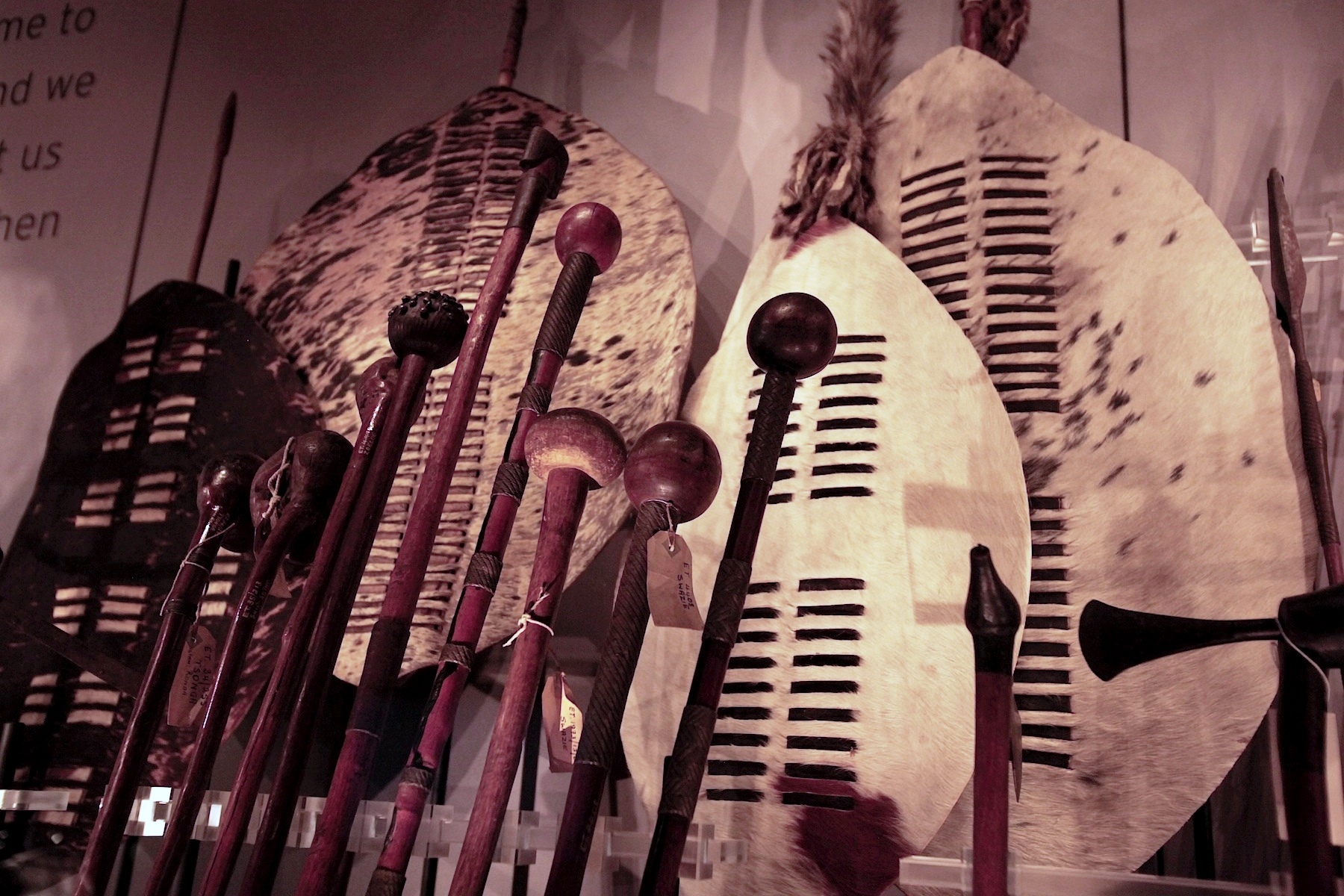
A knobkerrie, also spelled knobkerry, knobkierie, and knopkierie (Afrikaans), is a form of wooden club, used mainly in Southern Africa and Eastern Africa. Typically they have a large knob at one end and can be used for clubbing an enemy's head. For the various peoples who use them, they often have marked cultural significance. Being able to carry the knobkerrie has also had a political dimension, especially in South Africa.
The name derives from the Afrikaans word knop, meaning knob or ball and the Khoekhoe or San word kirri, meaning walking stick. The name has been extended to similar weapons used by the native peoples of Australia, the Pacific islands, and other places, and was also used in the British army.
Knobkerries were an indispensable weapon of war both in Africa and abroad. In Africa, the weapon found particular use among Nguni peoples. Among the Zulu people they are known as iwisa. The iwisa was not typically used in combat – though they were occasionally used as thrown weapons in place of the throwing spear or isijula. Instead, the Zulu used iwisa as swagger sticks, ceremonial objects, or even as snuff containers. In the 20th century, the Zulu nationalist movement Inkatha viewed iwisa as traditional weapons and lobbied for the right to carry such weapons in public. However, many sources emphasise the historical use of the iwisa in close-combat, where it was used to deliver blows, and also in executions.
The Ndebele variant was known as induku and is similar in design to the Zulu iwisa. It was used as a swagger stick or thrown weapon. The induku could also be fashioned into the handle of a fighting axe which, unlike the Zulu, the Ndebele used as weapons of war. Tsonga clubs were also similar to the Zulu and Ndebele type with spherical heads but variants with more elongated oval heads were also used in what is now Mozambique. The Sotho under Mosheshe did not adopt Zulu style weapons and tactics and so unlike the Zulus it was regarded as an important weapon of war.
Outside Africa, the British called their trench clubs knobkerries during World War I, though their form was often not traditional. The weapon was used in No Man's Land by the poet Siegfried Sassoon as relayed in the Sherston trilogy, his pseudonymous autobiography.
During the Apartheid era in South Africa, they were often carried and used by protesters and sometimes by the police opposing them. Knobkerries are still widely carried, especially in rural areas, while in times of peace it serves as a walking-stick, sometimes ornamental. Knobkerries are still commonly carried by protesters.
Knobkerries commonly feature on national and other symbols in Southern Africa. In South Africa they feature on the South African Coat of Arms, though lying down symbolising peace. They are also depicted on the Order of Mendi for Bravery. A knobkerrie appeared on the former flag of Lesotho between 1987 and 2006, on the Coat of Arms and royal standards of Lesotho since its independence in 1966, and on the Coat of Arms of the former (nominally independent) republic of Ciskei.
Used by the Sotho people and made from the Mohlware tree Olea africana, it is a walking stick and alternatively can be used as a weapon. It is traditionally carried by men and boys from puberty.
Knobkerrie
A knobkerrie, also spelled knobkerry, knobkierie, and knopkierie (Afrikaans), is a form of wooden club, used mainly in Southern Africa and Eastern Africa. Typically they have a large knob at one end and can be used for clubbing an enemy's head. For the various peoples who use them, they often have marked cultural significance. Being able to carry the knobkerrie has also had a political dimension, especially in South Africa.
The name derives from the Afrikaans word knop, meaning knob or ball and the Khoekhoe or San word kirri, meaning walking stick. The name has been extended to similar weapons used by the native peoples of Australia, the Pacific islands, and other places, and was also used in the British army.
Knobkerries were an indispensable weapon of war both in Africa and abroad. In Africa, the weapon found particular use among Nguni peoples. Among the Zulu people they are known as iwisa. The iwisa was not typically used in combat – though they were occasionally used as thrown weapons in place of the throwing spear or isijula. Instead, the Zulu used iwisa as swagger sticks, ceremonial objects, or even as snuff containers. In the 20th century, the Zulu nationalist movement Inkatha viewed iwisa as traditional weapons and lobbied for the right to carry such weapons in public. However, many sources emphasise the historical use of the iwisa in close-combat, where it was used to deliver blows, and also in executions.
The Ndebele variant was known as induku and is similar in design to the Zulu iwisa. It was used as a swagger stick or thrown weapon. The induku could also be fashioned into the handle of a fighting axe which, unlike the Zulu, the Ndebele used as weapons of war. Tsonga clubs were also similar to the Zulu and Ndebele type with spherical heads but variants with more elongated oval heads were also used in what is now Mozambique. The Sotho under Mosheshe did not adopt Zulu style weapons and tactics and so unlike the Zulus it was regarded as an important weapon of war.
Outside Africa, the British called their trench clubs knobkerries during World War I, though their form was often not traditional. The weapon was used in No Man's Land by the poet Siegfried Sassoon as relayed in the Sherston trilogy, his pseudonymous autobiography.
During the Apartheid era in South Africa, they were often carried and used by protesters and sometimes by the police opposing them. Knobkerries are still widely carried, especially in rural areas, while in times of peace it serves as a walking-stick, sometimes ornamental. Knobkerries are still commonly carried by protesters.
Knobkerries commonly feature on national and other symbols in Southern Africa. In South Africa they feature on the South African Coat of Arms, though lying down symbolising peace. They are also depicted on the Order of Mendi for Bravery. A knobkerrie appeared on the former flag of Lesotho between 1987 and 2006, on the Coat of Arms and royal standards of Lesotho since its independence in 1966, and on the Coat of Arms of the former (nominally independent) republic of Ciskei.
Used by the Sotho people and made from the Mohlware tree Olea africana, it is a walking stick and alternatively can be used as a weapon. It is traditionally carried by men and boys from puberty.
Recent media
Recent media