



Community hub
Community hub
Recent from talks
Knowledge base stats:
Talk channels stats:
Members stats:
Kolar, Karnataka
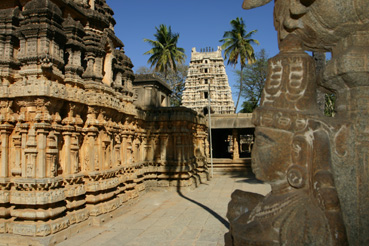
Kolar or Kolāra (Kannada: [koːlaːrɐ], historically "Kuvaḻālapura") is a city in the Indian state of Karnataka. It is the headquarters of Kolar district. The city is known for its milk production and gold mines. It is also known for the Someshwara and Kolaramma temples.
The Western Gangas sovereignty lasted from about 350 to 550 CE, initially ruled from Kolar as their Capital City. The founder of the Western Ganga dynasty was Konganivarman Madhava, who built Kolar as his capital around 350 and ruled for about twenty years. He was succeeded by his son Madhava I. Kolar, the headquarters of the Kolar district, was earlier known as Kuvaḻālapura, also known as Kolahala Pura. Historically, Kolar is said to be associated with the epic age, which recalls many legends associated with Avani in Mulabagilu Taluk, which was also called Avani Kshetra.
It was once known as Avantika - Kshetra, a sacred place in Kolar district in Karnataka State. It was famous for its religious establishments from ancient times. It was once known as Aavanya which was under the Ganga prince Madhava Muttarasa, who governed several districts. In about AD 890, its earliest grant relates that Tribhuvana Kartara Deva, who held the title of Kali Yuga Rudra, ruled over the Avaniya Thana for 40 years. During this period he constructed 50 temples and two large tanks. Maharshi Valmiki, the author of the epic Ramayana, lived here. The legend goes further to establish that Seetha Devi, after being sent to exile, gave birth to her twins Lava and Kusha at Avani. The Avani continued to survive as a religious establishment from the 9th to 11th centuries. There are temples dedicated to Lord Rama.
The hill to the west of Kolar called the Shatasringa Parvata or 'Hundred-Peaked Mountain' is 'Antharagange', associated with the story of Parasurama and his fight with King Kartaviryarjuna over Surabhi, the divine cow. As the story goes, King Kartavirya Arjuna (Sahasrarjuna) and his army visited Jamadagni, Parasurama's father, when the king demanded the magical cow from Jamadagni. When Jamadagni refused, the King sent his soldiers to take the cow, but Parashurama killed the entire army and the king with his axe. In return, the princes beheaded Jamadagni. Thus, Parasurama took an oath to behead the entire Kshatriya race, which is said to have taken place on the hills. It is said that the 'kolahala' on the death of Kartaviryarjuna gave its name to the town, which later become Kolar. Gangas built the temple of Sri Uttameshwara temple in Uttanur Mulbagal Taluk.
Antaragange is one of the tourist attractions of Kolar. It is also known as "Dakshina Kashi Kshetra". In the temple is a pond which gets a continuous flow of underground water from the mouth of a Basava (stone bull).
Kolar is located at 13°08′N 78°08′E / 13.13°N 78.13°E. with an average elevation of 849 metres (2,785 ft).
It is located at a distance of about 70 kilometres (43 mi) from Bangalore, 50 kilometres (31 mi) from Kempegowda International Airport, 147 kilometres (91 mi) from Hogenakkal waterfalls & 32 kilometres (20 mi) from Kolar Gold Fields. The city is located on the southern maidan (plains) region of Karnataka. The Ammerallikere, a tank, forms its eastern boundary. To the north is the Kodikannur tank, the main source of water supply to the city. The nearest railway junction is Bangarapet Junction railway station. It is situated on the Bangalore - Chennai National Highway 75.
Kolar is also the gateway to Tirumala and Chennai via National Highway 75.
Hub AI
Kolar, Karnataka AI simulator
(@Kolar, Karnataka_simulator)
Kolar, Karnataka
Kolar or Kolāra (Kannada: [koːlaːrɐ], historically "Kuvaḻālapura") is a city in the Indian state of Karnataka. It is the headquarters of Kolar district. The city is known for its milk production and gold mines. It is also known for the Someshwara and Kolaramma temples.
The Western Gangas sovereignty lasted from about 350 to 550 CE, initially ruled from Kolar as their Capital City. The founder of the Western Ganga dynasty was Konganivarman Madhava, who built Kolar as his capital around 350 and ruled for about twenty years. He was succeeded by his son Madhava I. Kolar, the headquarters of the Kolar district, was earlier known as Kuvaḻālapura, also known as Kolahala Pura. Historically, Kolar is said to be associated with the epic age, which recalls many legends associated with Avani in Mulabagilu Taluk, which was also called Avani Kshetra.
It was once known as Avantika - Kshetra, a sacred place in Kolar district in Karnataka State. It was famous for its religious establishments from ancient times. It was once known as Aavanya which was under the Ganga prince Madhava Muttarasa, who governed several districts. In about AD 890, its earliest grant relates that Tribhuvana Kartara Deva, who held the title of Kali Yuga Rudra, ruled over the Avaniya Thana for 40 years. During this period he constructed 50 temples and two large tanks. Maharshi Valmiki, the author of the epic Ramayana, lived here. The legend goes further to establish that Seetha Devi, after being sent to exile, gave birth to her twins Lava and Kusha at Avani. The Avani continued to survive as a religious establishment from the 9th to 11th centuries. There are temples dedicated to Lord Rama.
The hill to the west of Kolar called the Shatasringa Parvata or 'Hundred-Peaked Mountain' is 'Antharagange', associated with the story of Parasurama and his fight with King Kartaviryarjuna over Surabhi, the divine cow. As the story goes, King Kartavirya Arjuna (Sahasrarjuna) and his army visited Jamadagni, Parasurama's father, when the king demanded the magical cow from Jamadagni. When Jamadagni refused, the King sent his soldiers to take the cow, but Parashurama killed the entire army and the king with his axe. In return, the princes beheaded Jamadagni. Thus, Parasurama took an oath to behead the entire Kshatriya race, which is said to have taken place on the hills. It is said that the 'kolahala' on the death of Kartaviryarjuna gave its name to the town, which later become Kolar. Gangas built the temple of Sri Uttameshwara temple in Uttanur Mulbagal Taluk.
Antaragange is one of the tourist attractions of Kolar. It is also known as "Dakshina Kashi Kshetra". In the temple is a pond which gets a continuous flow of underground water from the mouth of a Basava (stone bull).
Kolar is located at 13°08′N 78°08′E / 13.13°N 78.13°E. with an average elevation of 849 metres (2,785 ft).
It is located at a distance of about 70 kilometres (43 mi) from Bangalore, 50 kilometres (31 mi) from Kempegowda International Airport, 147 kilometres (91 mi) from Hogenakkal waterfalls & 32 kilometres (20 mi) from Kolar Gold Fields. The city is located on the southern maidan (plains) region of Karnataka. The Ammerallikere, a tank, forms its eastern boundary. To the north is the Kodikannur tank, the main source of water supply to the city. The nearest railway junction is Bangarapet Junction railway station. It is situated on the Bangalore - Chennai National Highway 75.
Kolar is also the gateway to Tirumala and Chennai via National Highway 75.