


Community hub
Recent from talks
Contribute something to knowledge base
Content stats: 0 posts, 0 articles, 1 media, 0 notes
Members stats: 0 subscribers, 0 contributors, 0 moderators, 0 supporters
Subscribers
Supporters
Contributors
Moderators
Hub AI
Konso Zone AI simulator
(@Konso Zone_simulator)
Hub AI
Konso Zone AI simulator
(@Konso Zone_simulator)
Konso Zone
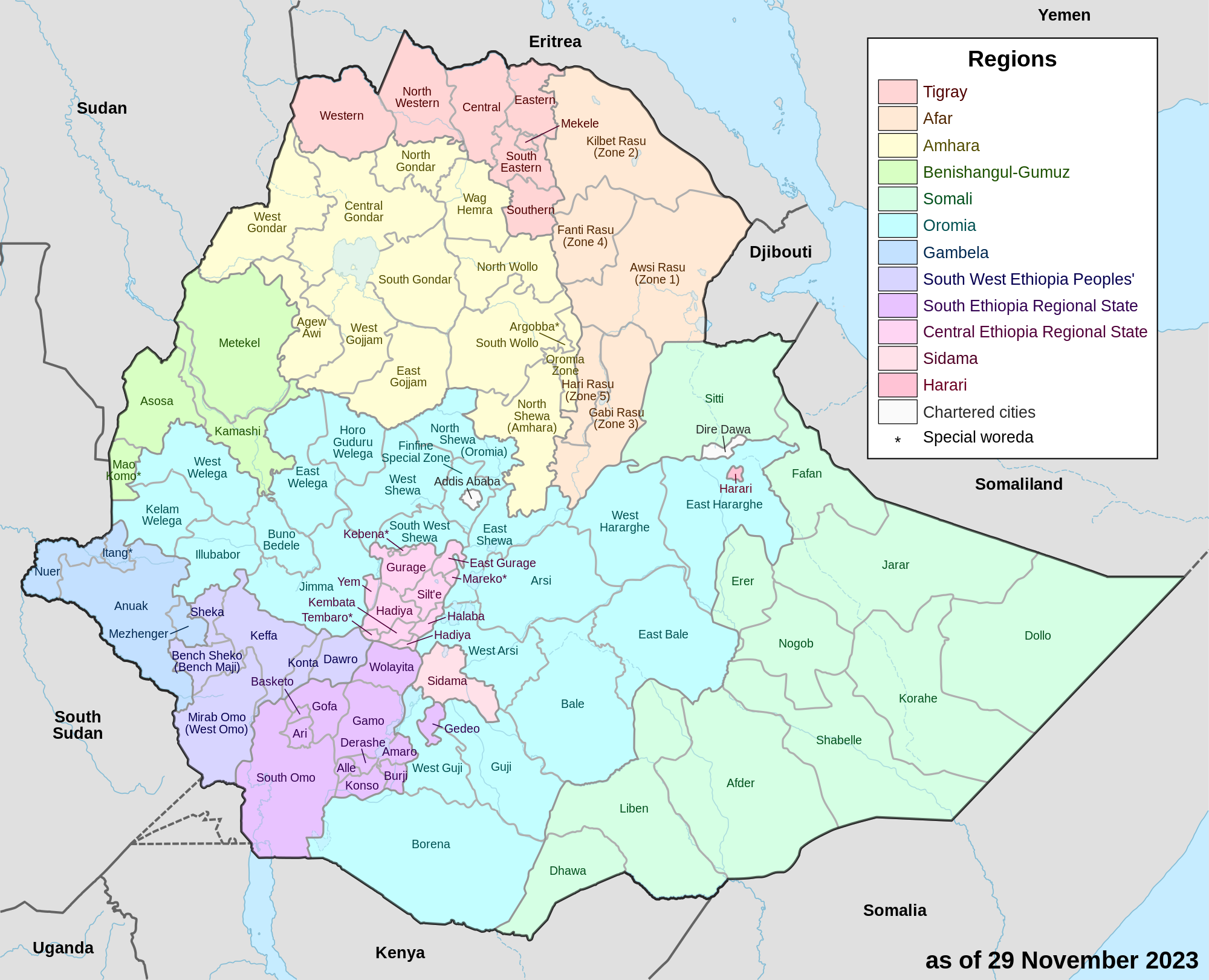
Konso is a zone in the South Ethiopia Regional State, Ethiopia. It was formerly a woreda. Prior to 2011, Konso was not part of any Zone in the Southern Nations, Nationalities and Peoples' Region (SNNPR) and was therefore considered a special woreda, an administrative subdivision which is similar to an autonomous area. In 2011, the Segen Area Peoples Zone was established, which includes Konso special woreda and the 3 former woredas surrounding it. This special woreda is named after the Konso people. Located in the Great Rift Valley, Konso is bordered on the south by the Oromia Region, on the west by the South Omo Zone, on the northwest by Alle special woreda, on the north by Dirashe special woreda, on the northeast by Amaro special woreda, and on the east by Burji special woreda. The Sagan River, which flows south then west to join the Weito, defines part of the woreda's boundary with Burji and the entire length of the boundary with the Oromia Region. The administrative center is Karati; other towns in Konso include Fasha and Sagen. After protesting by residents to become a zone for several years, Konso became a zone in November 2018.
Rivers in this woreda include the Talpeena, a tributary of the Sagan. A 1996 United Nations Development Programme Emergencies Unit for Ethiopia report divided the area of this special woreda "by differences of altitude and economic exploitation", which are the "semi-arid lowland areas supporting the majority of the population (between 60-70 percent); and agricultural uplands in the middle altitude supporting the rest of the primarily cultivating population." The native Konso traditionally practice a distinct and sustainable form of agriculture that involves the building and maintaining of stone terraces, and fertilizing the fields with manure. A central feature of their fields is the endemic tree crop, Moringa stenopetala. The main crop is sorghum, along with some root crops and cotton.
According to a 2004 report, Konso had 178 kilometers of all-weather roads and 81 kilometers of dry-weather roads, for an average road density of 114 kilometers per 1000 square kilometers. The Central Statistical Agency (CSA) reported that five tons of coffee were produced in this woreda in the year ending in 2005, based on inspection records from the Ethiopian Coffee and Tea authority. This represented less than 0.1% of the SNNPR's output and less than 0.1% of Ethiopia's total output.
The Konso area, formerly a woreda, has had a number of boundary disputes with adjacent administrative units. According to Sarah Vaughan, the "most serious of these concerns Teltele district, claimed since 1992 by [the] Borana zone of Oromia" which has been ongoing since 1992. Another dispute was over Gato and Bayde Fuchucha kebeles with Derashe special woreda administrations, with a further claim for Ale, which after mediation between the two woredas was referred to the SNNPR parliament for action.
The 1996 UNDP-EUE report quotes an earlier report prepared in 1993, which had stated that "one peculiarity of the Konso area is its frequent earthquakes. A recent strong tremor sent panic around the villages. Some hillside villages (one nicknamed New York) have slid as a result. Another danger is fire, in the crowded, stockaded villages full of wooden structures." The 1996 report however concludes, "No earthquakes occurred after 1993."
Local government officials in Konso denied elected officials of the opposition Konso People's Democratic Union (KPDU) the offices to which they had been elected in 2001 for several months. Over the next few years, the KPDU was subjected to a campaign of harassment. After opening a branch office in Fasha on 29 December 2002, pro-government supporters severely beat several KPDU members and seriously damaged the newly opened office; the landlord who rented the office space to the KPDU was reportedly arrested. In July of the following year, ruling party supporters, backed by local militia, closed the KPDU branch office in Karati and imprisoned party leaders Tesfaye Korra and Adane Fulayta for one week. Activists of the ruling party then looted the offices and damaged the roof. Then on 12 October, government militias acting on the authority of local officials arrested the chairman of the KPDU, Shako Otto Kora, in Karati and detained him for six days. The local officials accused him of "disturbing development activities" for visiting one of his party's branch offices that had been closed.
The Sudan Times reported that on 14 May 2008 continuing conflict between the Konso and Borena Oromo left 36 people dead and forced more than 5,000 inhabitants to flee their homes. "Among the dead, 35 of them belong to Konso tribes" Areke Geyto, the administrator of the special woreda told local reporters. The refugees were sheltered in the Aba-Roba, Kashale, Nalaya Segen and Gesergo kebeles.
In 2014, Konso residents were unhappy with being part of the Segen Area People's Zone, complaining about unfair budget and job allocation and other local administration and justice issues and called for creating Konso Zone. A petition with two thousand signature was submitted to the regional council and higher authorities. It was rejected. In November 2018, after Abiy Ahmed became prime minister of Ethiopia, the SNNPRS Council made Konso into a zone.
Konso Zone
Konso is a zone in the South Ethiopia Regional State, Ethiopia. It was formerly a woreda. Prior to 2011, Konso was not part of any Zone in the Southern Nations, Nationalities and Peoples' Region (SNNPR) and was therefore considered a special woreda, an administrative subdivision which is similar to an autonomous area. In 2011, the Segen Area Peoples Zone was established, which includes Konso special woreda and the 3 former woredas surrounding it. This special woreda is named after the Konso people. Located in the Great Rift Valley, Konso is bordered on the south by the Oromia Region, on the west by the South Omo Zone, on the northwest by Alle special woreda, on the north by Dirashe special woreda, on the northeast by Amaro special woreda, and on the east by Burji special woreda. The Sagan River, which flows south then west to join the Weito, defines part of the woreda's boundary with Burji and the entire length of the boundary with the Oromia Region. The administrative center is Karati; other towns in Konso include Fasha and Sagen. After protesting by residents to become a zone for several years, Konso became a zone in November 2018.
Rivers in this woreda include the Talpeena, a tributary of the Sagan. A 1996 United Nations Development Programme Emergencies Unit for Ethiopia report divided the area of this special woreda "by differences of altitude and economic exploitation", which are the "semi-arid lowland areas supporting the majority of the population (between 60-70 percent); and agricultural uplands in the middle altitude supporting the rest of the primarily cultivating population." The native Konso traditionally practice a distinct and sustainable form of agriculture that involves the building and maintaining of stone terraces, and fertilizing the fields with manure. A central feature of their fields is the endemic tree crop, Moringa stenopetala. The main crop is sorghum, along with some root crops and cotton.
According to a 2004 report, Konso had 178 kilometers of all-weather roads and 81 kilometers of dry-weather roads, for an average road density of 114 kilometers per 1000 square kilometers. The Central Statistical Agency (CSA) reported that five tons of coffee were produced in this woreda in the year ending in 2005, based on inspection records from the Ethiopian Coffee and Tea authority. This represented less than 0.1% of the SNNPR's output and less than 0.1% of Ethiopia's total output.
The Konso area, formerly a woreda, has had a number of boundary disputes with adjacent administrative units. According to Sarah Vaughan, the "most serious of these concerns Teltele district, claimed since 1992 by [the] Borana zone of Oromia" which has been ongoing since 1992. Another dispute was over Gato and Bayde Fuchucha kebeles with Derashe special woreda administrations, with a further claim for Ale, which after mediation between the two woredas was referred to the SNNPR parliament for action.
The 1996 UNDP-EUE report quotes an earlier report prepared in 1993, which had stated that "one peculiarity of the Konso area is its frequent earthquakes. A recent strong tremor sent panic around the villages. Some hillside villages (one nicknamed New York) have slid as a result. Another danger is fire, in the crowded, stockaded villages full of wooden structures." The 1996 report however concludes, "No earthquakes occurred after 1993."
Local government officials in Konso denied elected officials of the opposition Konso People's Democratic Union (KPDU) the offices to which they had been elected in 2001 for several months. Over the next few years, the KPDU was subjected to a campaign of harassment. After opening a branch office in Fasha on 29 December 2002, pro-government supporters severely beat several KPDU members and seriously damaged the newly opened office; the landlord who rented the office space to the KPDU was reportedly arrested. In July of the following year, ruling party supporters, backed by local militia, closed the KPDU branch office in Karati and imprisoned party leaders Tesfaye Korra and Adane Fulayta for one week. Activists of the ruling party then looted the offices and damaged the roof. Then on 12 October, government militias acting on the authority of local officials arrested the chairman of the KPDU, Shako Otto Kora, in Karati and detained him for six days. The local officials accused him of "disturbing development activities" for visiting one of his party's branch offices that had been closed.
The Sudan Times reported that on 14 May 2008 continuing conflict between the Konso and Borena Oromo left 36 people dead and forced more than 5,000 inhabitants to flee their homes. "Among the dead, 35 of them belong to Konso tribes" Areke Geyto, the administrator of the special woreda told local reporters. The refugees were sheltered in the Aba-Roba, Kashale, Nalaya Segen and Gesergo kebeles.
In 2014, Konso residents were unhappy with being part of the Segen Area People's Zone, complaining about unfair budget and job allocation and other local administration and justice issues and called for creating Konso Zone. A petition with two thousand signature was submitted to the regional council and higher authorities. It was rejected. In November 2018, after Abiy Ahmed became prime minister of Ethiopia, the SNNPRS Council made Konso into a zone.
Recent media
Recent media