Hubbry Logo
Laura Kate DaleLaura Kate DaleMain
Open search
Laura Kate Dale
Community hub
Laura Kate Dale
logo
19 pages, 0 posts
0 subscribers
Be the first to start a discussion here.
Laura Kate Dale
Laura Kate Dale
from Wikipedia

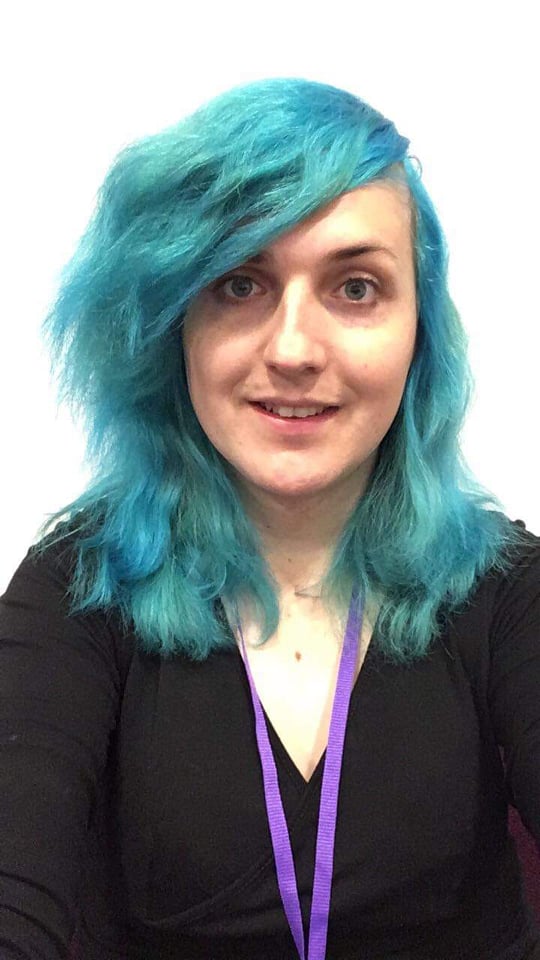
Laura Kate Dale is an English video game journalist, author[2] and activist. She is known for writing about the transgender and autism communities in relation to video games and for her video game industry leaks.[2][3][4] Many of her topics tackle accessibility for disabled players and LGBTQ+ representation.

Key Information

Game journalism

[edit]

Dale has worked at gaming site Destructoid.[2][5] Dale was also the news editor for gaming site Kotaku UK for almost two years.[6] She left the position in June 2019 to pursue other projects.[7] She has also written for The Guardian.[8]

Dale is known for her videogame leaks. She leaked the existence of Until Dawn: Rush of Blood in 2015 and the PlayStation 4 Slim in 2016. She also leaked details about the Nintendo Switch and Mario + Rabbids Kingdom Battle.[2]

Dale was awarded inclusion in MCV's 30 Under 30 list in 2015.[9] The same year she was a finalist for MCV's Games Media Awards 2015 Rising Star.[10] In 2019 she was a finalist for the MCV Women in Games Awards.[11]

Books

[edit]

Dale has published five books. Her first book is Things I Learned from Mario's Butt: A Series of Gaming Butt Critiques, which was funded on the crowdfunding website Unbound in 2018.[3][4]

Her second book, a memoir called Uncomfortable Labels: My Life as a Gay Autistic Trans Woman, was published by Jessica Kingsley Publishers in 2019.[12]

Her third book, Gender Euphoria: Stories of Joy from Trans, Non-Binary and Intersex Writers, which was crowdfunded through Unbound and exceeded its funding goal, was published in 2021.[13] It was intended as a counterpoint to the focus so often placed on the negative aspects of being trans, such as gender dysphoria, and was instead written "to show the world the sheer variety of ways being non cisgender can be a beautiful, joyful experience".

Dale's fourth book, Who Hunts the Whale, is co-written by her wife Jane Magnet, and being funded through the crowdfunding publisher Unbound.[14] Who Hunts the Whale is Dale's first work of fiction. The website summary reads, "Who Hunts the Whale is a completely fictional, entirely made-up novel set in the imaginary world of the video gaming industry. Written with a gamer's wit and an insider's precision, it holds the real-world business up to a carnival house of mirrors, to give a satirical look at the human cost of a rapacious market that must constantly be fed new content."[14]

Dale's fifth book, Me and My Dysphoria Monster, is an children's picture book about the experiences of gender dysphoria in childhood. The book was illustrated by Ang Hui Qing, and published by Jessica Kingsley Publishers in August 2022.[15]

Activism

[edit]

Dale collaborated with former founder of the Trans Rights Collective UK (disbanded in 2020), Felix Fern,[16][17] in 2021 to co-organise a 'trans rights' protest[18] outside Downing Street in London on 6 August 2021, calling on the government to implement better rights and equality for transgender and non-binary people in the United Kingdom.[19] The protest featured a roster of speakers including prominent UK trans activists such as Fox Fisher[20] and Roz Kaveney[21] as well as Dale herself,[22] and was attended by the British human rights campaigner Peter Tatchell.[23]

She has since been part of other activism projects such as writing an open letter to the BBC that was signed by over 20,000 people,[24][25] calling for them to be held accountable for publishing the article originally titled "We're being pressured into sex by some trans women", which the letter greatly criticized for, among other things, publishing the results of a study that the letter labelled as "deeply flawed".

Personal life

[edit]

Dale is transgender and married to podcaster Jane Magnet.[26] The couple, who are both train enthusiasts, married in August 2021 on board an Avanti West Coast train after winning a competition for a train-based wedding. The couple had planned to marry sooner but had delayed their plans due to the COVID-19 pandemic and the requirement to obtain Gender Recognition Certificates in order to marry as women.[27][28][29]

Dale has attention deficit hyperactivity disorder and aphantasia.[30][31]

References

[edit]
Revisions and contributorsEdit on WikipediaRead on Wikipedia
from Grokipedia
Laura Kate Dale (born 14 September 1991) is an English journalist, , and who is autistic and identifies as a woman. She specializes in topics related to disability and LGBTQ+ representation in gaming, contributing articles to outlets such as UK, , and . Dale authored the Uncomfortable Labels: My Life as a Gay Autistic Trans Woman in 2019, which recounts her experiences navigating autism, , and sexuality from childhood onward. She has published additional works, including Me and My Dysphoria Monster (2022) and Gender Euphoria (2023), focusing on personal narratives of experiences intertwined with . In her professional roles, Dale serves as a cultural for developers, contributing to features and character representation in titles like Life is Strange: Double Exposure and Dragon Age: The Veilguard, and co-hosts podcasts such as Podquisition and Access-Ability. Her career has drawn criticism for instances of alleged journalistic errors, including a 2019 article claiming a homophobic slur in Persona 5 DLC audio that was widely disputed as a misinterpretation of the .

Early Life and Personal Background

Childhood and Family

Laura Kate Dale was born on September 14, 1991, in , , and raised in the same coastal town in the . During her childhood, Dale displayed characteristics typical of high-masking autism, including a strong adherence to rules, meticulous attention to detail, and the ability to follow instructions precisely, which led educators and clinicians to overlook autistic traits in favor of diagnosing her with dyspraxia based on observable motor coordination difficulties such as frequent falls and challenges with . These masking behaviors contributed to a delayed autism diagnosis until her late teens, as her outward compliance masked internal struggles with and routine disruptions that became more evident during the transition to . Video games emerged as an early special interest for Dale, providing a structured outlet to cope with sensory sensitivities and social challenges; by age 14, she was deeply engaged with titles like , using virtual environments to explore aspects of identity and manage real-world discomforts. Little public information exists on her family dynamics beyond anecdotal references in her writings to parental interactions during , such as a challenging coming-out conversation with her father amid an autistic meltdown, suggesting limited early awareness of her neurodivergence within the household.

Autism Diagnosis and Experiences

Laura Kate Dale received a formal of Asperger's syndrome after completing , as shifts away from familiar routines intensified preexisting difficulties that had previously gone unrecognized. This late , occurring in late adolescence or early adulthood, exemplifies common delays in identifying autism, particularly when individuals mask traits through compensatory strategies like rigid rule adherence and outward compliance during childhood. An initial focus on dyspraxia—evidenced by issues and challenges—further obscured autistic features, as clinicians often attribute anomalies to a single condition rather than exploring broader neurodevelopmental overlaps. Dale reports profound differences, such as to food textures, auditory stimuli (mitigated by earplugs), and tactile irritants like restrictive clothing seams or straps, which causally disrupt comfort and daily routines. Social navigation posed additional hurdles; as a teenager, she constructed personal "flow charts" to script interactions, highlighting deficits in spontaneous reciprocity and nonverbal cue interpretation. These align with criteria for autism spectrum disorder, requiring persistent social communication impairments alongside at least two restricted or repetitive behaviors—such as routine inflexibility or sensory reactivity—that impair functioning from early development. As a neurodevelopmental condition, autism exerts causal effects on adaptive skills via atypical brain wiring, often co-occurring with dyspraxia (prevalence around 30-80% in autistic individuals) and necessitating targeted supports despite strengths in or focus. Dale favors neurodiversity frameworks that validate lived experiences over deficit-only lenses, critiquing correlations like "high-functioning" with minimal impact; however, diagnostic standards prioritize verifiable impairments, with studies estimating up to 80% of autistic females undiagnosed by age 18 due to camouflaging, which delays intervention and heightens risks like internalizing disorders.

Gender Transition and Sexual Orientation

Laura Kate Dale, born male, came out as a transgender woman at age 18 during an autistic meltdown, an event she described as a breaking point amid long-suppressed gender incongruence. This disclosure, occurring around 2012 given her approximate birth year in the mid-1990s, led to social transition involving changes in presentation and name, followed by to induce female secondary sex characteristics. In her 2019 memoir Uncomfortable Labels, Dale recounts childhood experiences of , including discomfort with male puberty and sensory aversions to traditionally masculine clothing and grooming, which she linked to both autism-related processing differences and gender-related distress. Dale identifies as a transgender woman, denoting primary sexual attraction to women, a orientation she has maintained post-transition. Her accounts emphasize from aligning her body and social role with her internal sense of self, as explored in subsequent writings like the 2022 children's book Me and My Monster, which personifies as an internal "monster" alleviated through transition. Empirical studies document elevated comorbidity between autism spectrum disorder (ASD) and gender dysphoria, with clinic-based research estimating that 15-26% of gender dysphoria referrals involve ASD diagnoses or significant autistic traits, far exceeding general population rates of 1-2%. This overlap raises questions about causal interplay, as autistic traits like intense interests, sensory sensitivities, and challenges interpreting social gender norms may amplify or mimic dysphoric feelings; some clinicians argue these could lead to , where non-gender-related discomforts are reinterpreted through a transgender lens without sufficient . Longitudinal studies of youth with gender dysphoria report desistance rates of 61-98% by adulthood, with most ceasing to identify as absent medical intervention, prompting debate on whether adult transitions like Dale's—occurring soon after in the context of autism—reflect persistent dysphoria or factors amenable to resolution over time. Discussions of rapid-onset gender dysphoria, characterized by abrupt adolescent declarations often amid peer influences or online exposure, further highlight potential diagnostic pitfalls in comorbid cases, though Dale's self-reported history emphasizes pre-pubertal roots delayed by external pressures.

Career in Video Games

Entry into Journalism

Laura Kate Dale began her involvement in in the early as a founder and contributing writer for IndieHaven, an independent site dedicated to coverage of indie titles and emerging developers. This initial foray allowed her to publish reviews and analyses rooted in her personal enthusiasm for gaming, transitioning from hobbyist writing to structured amid a burgeoning indie scene. By 2014, Dale secured freelance bylines with mainstream publications, including contributions to on subjects such as the balance between gaming and other life aspects. Her work emphasized practical insights into game development and player experiences, building on IndieHaven's foundation to reach wider audiences. In the mid-2010s, Dale advanced to salaried positions, assuming the role of UK Editor at circa 2015, where she oversaw regional content and community discussions. This shift marked her establishment as a professional , propelled by demonstrated proficiency in dissecting and industry trends.

Key Roles and Publications

Dale held the position of news editor at from approximately 2017 until May 30, 2019, when she announced her departure to focus on personal projects ahead of E3. During her tenure, she contributed to coverage of gaming industry news, previews, and reviews. Following her exit from , which occurred amid public backlash over a published article, Dale transitioned to freelance writing with bylines at outlets including , , and . Her journalistic output includes hundreds of articles on video games, emphasizing mechanics, gameplay analysis, and industry developments, with contributions spanning the late 2010s into the 2020s. Notable examples encompass reporting on Persona 5-related content, such as a April 18, 2019, Kotaku UK piece alleging a disability slur in the lyrics of the track "Wake Up, Get Up, Get Out There" featured in Super Smash Bros. Ultimate's DLC, which the outlet later apologized for publishing after verification efforts. Dale also authored critiques of titles like Yakuza: Like a Dragon, addressing portrayals of social issues including stereotypes of homeless individuals, though such pieces often extended into video formats post-freelance.

Focus on Accessibility and Representation

Laura Kate Dale has emphasized the need for designs to address barriers faced by disabled players, particularly those with neurodiverse conditions like autism, through features such as customizable controls, extended choice timers, and tailored beyond auditory needs. In her consulting work, she has advocated for options like camera assist and gameplay-skipping mechanics to mitigate and cognitive demands, as seen in her contributions to : Double Exposure, where players can adjust timers and fix camera positions to reduce frustration for users with motor or attention challenges. These efforts draw on of exclusion, with surveys indicating that 66% of gamers with disabilities encounter barriers, including sensory issues that exacerbate overload in non-linear or fast-paced titles. Dale's journalism highlights specific platform shortcomings, such as limited cognitive in modern open-world games on and systems, where linear paths have given way to designs that overwhelm users with executive function difficulties. She has pushed for third-party accessibility tools and developer consultations to foster awareness, hosting events like the Access-Ability Summer Showcase in 2023 to spotlight inclusive prototypes and ensure disabled gamers can evaluate titles without hype-induced disappointment. Her influence is evident in industry shifts toward proactive features, with consulting roles helping studios identify oversights like inadequate subtitle customization for neurodiverse players who process dialogue differently from deaf users. While Dale's work has raised developer consciousness—contributing to broader recognition that autistic individuals, who game at rates up to 41.4% for significant compared to 18% in non-autistic , often face exclusion from unadapted sensory elements—critics in gaming communities have accused her of overemphasizing identity-driven critiques, potentially biasing reviews toward politicized narratives over mechanical evaluation. Such claims arise from perceptions that advocacy sometimes amplifies niche grievances, like demands for emotional or skip functions, as manufactured rather than data-driven necessities, though empirical barriers persist amid industry cutbacks rolling back . This tension underscores a causal divide: genuine design flaws exclude players, yet interpretive framing risks conflating valid fixes with broader cultural agendas.

Authorship

Uncomfortable Labels (2019)

Uncomfortable Labels: My Life as a Gay Autistic Trans Woman is an autobiographical published on July 18, 2019, by Jessica Kingsley Publishers, a specialist in books on autism and . In it, Dale chronicles her personal experiences navigating the intersections of autism, identity, and from childhood through adulthood, emphasizing challenges like social masking of autistic traits to fit neurotypical expectations. The narrative highlights related to gender incongruence, experiences of same-sex attraction, and the discomfort of societal labels, presented with a mix of humor and candid reflection on how these elements compounded her sense of alienation. Central themes include the effort to conceal autistic behaviors—such as scripting social interactions or suppressing sensory sensitivities—to avoid rejection, which Dale links to her delayed autism and . She describes as intertwined with autistic traits, including intense fixations on identity exploration, while recounting relationships amid stigma within both LGBTQ+ and autistic communities. These self-reported accounts prioritize individual resilience and , positioning the book as a pioneering personal exploration of multiple marginalized identities, though lacking external corroboration for specific events. Reception has been largely positive within autism advocacy and LGBTQ+-focused outlets, with reviewers praising its honesty and relatability for similar demographics; for instance, it holds an average rating of 4.1 out of 5 on Goodreads based on over 700 user assessments. Blogs such as Istoria Lit described it as "inspiring, emotional and educational," while others noted its accessible style and novel connections between autism and transgender experiences. However, broader critical analysis is limited, with fewer engagements in mainstream psychological or empirical literature, potentially reflecting niche appeal rather than widespread scrutiny. No public sales figures are available, but its promotion as a "first-of-its-kind" memoir suggests modest impact within targeted readerships. From an empirical perspective, Dale's portrayal of masking as a survival strategy warrants caution, as peer-reviewed studies consistently link prolonged autistic camouflaging to adverse outcomes, including heightened anxiety, depression, autistic burnout, and . A of correlates found camouflaging associated with elevated internalizing symptoms and reduced , effects attributed to chronic cognitive and emotional strain rather than inherent traits. While Dale's narrative offers subjective insight into potential short-term adaptive benefits, it contrasts with this body of evidence from larger cohorts, underscoring the memoir's value as personal testimony over generalizable data; self-reports like hers may underemphasize long-term causal risks due to individual variability or in advocacy-oriented accounts.

Subsequent Books and Contributions

In 2022, Laura Kate Dale authored Me and My Dysphoria Monster, a children's illustrated by Ang Hui Qing and published by Jessica Kingsley Publishers on August 18. The narrative follows a young protagonist named Nisha who confronts an internal "dysphoria monster" representing feelings of incongruence, framing these experiences as a challenge to manage through self-understanding and external support, such as discussing emotions with trusted adults. Dale described the book as the first to explicitly address for young readers, intending to provide a tool for children experiencing distress related to their biological sex to recognize and articulate it without shame. The book received positive reception from transgender advocacy sources, which highlighted its role in promoting visibility and empathy for youth navigating gender-related distress, with Goodreads users averaging a 4.5-star rating based on over 400 reviews praising its accessible language and affirming tone. However, such materials have drawn scrutiny in broader discussions of youth gender identity literature, particularly regarding risks of encouraging premature self-diagnosis among neurodiverse children, where autism spectrum traits correlate highly with reported gender dysphoria—studies indicate up to 20-35% of youth in gender clinics meet autism criteria, often complicating differential diagnosis from social suggestibility or co-occurring conditions. Empirical data on pre-pubertal gender dysphoria show desistance rates exceeding 80% without intervention, raising causal concerns about iatrogenic effects from early affirmation narratives that may amplify identity fixation via social contagion mechanisms observed in clusters of peer-influenced cases. Dale's post-2019 literary contributions extend to edited volumes on , including Stories of Autistic Joy (2023), which compiles personal accounts emphasizing positive autistic experiences, though her specific role focused on curation rather than sole authorship. These works collectively advance trans-autistic intersectional narratives, contributing to a growing body of self-published and niche-press that normalizes dual identities; yet, independent reviews like the UK's Cass Report underscore evidentiary gaps in affirming youth transitions, particularly for autistic individuals, where holistic assessments reveal confounding factors like trauma or neurodevelopmental overlap more reliably predictive of long-term outcomes than early endorsement. This tension reflects ongoing debates, with advocacy-driven publications like Dale's prioritizing experiential validation over longitudinal data cautioning against rushed identity solidification in vulnerable populations.

Advocacy Work

Neurodiversity and Autism Rights

Laura Kate Dale has advocated for the neurodiversity paradigm, framing autism as a distinct neurotype integral to personal identity rather than a disorder necessitating eradication. In her 2019 memoir Uncomfortable Labels, she articulates that efforts to "cure" autism would fundamentally alter her sense of self, equating such interventions with erasing core autistic traits like intense special interests and sensory processing differences. During a December 2022 talk hosted by the University of Glasgow's Neurodiversity Network, Dale emphasized autism's spectrum nature, highlighting positives such as joy derived from repetitive activities and pattern recognition while cautioning against research that might enable eugenic applications or pathologize natural variations. She has consistently opposed cure-oriented narratives, promoting instead societal accommodations that affirm autistic wiring as a form of human diversity. Dale's public engagements, including her authorship and speaking appearances, have elevated visibility for autistic , particularly among verbally articulate individuals who navigate overlapping marginalized identities. Her work challenges stigmatizing depictions in media and policy, fostering discussions on acceptance over remediation and contributing to broader autism rights discourse that prioritizes and anti-ableist reforms. However, these efforts have centered experiences akin to her own—those of relatively high-functioning autistics—aligning with neurodiversity's emphasis on through difference rather than deficit mitigation. The framework Dale endorses faces scrutiny for minimizing autism's objective impairments, particularly in severe cases where individuals exhibit profound intellectual disabilities, challenges, and high dependency needs rooted in neurological differences such as atypical brain connectivity and executive function deficits. Longitudinal studies report autistic adult rates of 50–85%, with global figures as low as 27% employment in some cohorts, often linked to these unaccommodated deficits rather than mere societal barriers. risk is markedly elevated, with meta-analyses indicating 34% prevalence of ideation and up to 24% of attempts among autistics, exceeding general population rates by factors of 3–9 due to factors including , , and co-occurring conditions. Medical and parental perspectives, informed by clinical observations of non-self-advocating autistics, contend that neurodiversity's "difference" rhetoric overlooks causal realities like genetic and prenatal brain alterations leading to lifelong support requirements, potentially discouraging evidence-based interventions such as behavioral therapies that address maladaptive behaviors. Critics argue this paradigm, prevalent in certain circles, risks under-resourcing intensive care for the majority on the who do not share high-functioning profiles, prioritizing ideological affirmation over pragmatic realism grounded in epidemiological data. While Dale's contributions have advanced acceptance for milder presentations, they exemplify tensions in autism discourse where empirical indicators of dysfunction challenge unqualified celebration of neurotypes without accounting for variance in functional outcomes.

LGBTQ+ and Disability Intersectionality

Laura Kate Dale has advocated for the recognition of overlapping autistic and identities, emphasizing that autistic individuals possess the capacity for self-understanding in matters of . In a July 2022 interview published during , she described facing additional barriers to transition-related healthcare due to assumptions that autism diminishes one's ability to comprehend , stating, "As an autistic trans person I faced additional barriers... because I was assumed to have less of an ability to understand my own sense of self, because I am autistic." She has highlighted diagnostic biases, such as clinicians dismissing identity as an autistic "obsession" rather than innate, a view she refutes by noting the absence of obsessive traits in her case and critiquing theories like the "extreme male brain" for failing to explain autistic trans women. Dale's efforts include promoting sensory-friendly accommodations within LGBTQ+ spaces, such as quiet, non-bar environments to better support individuals, and authoring works like Uncomfortable Labels (2019), which details her experiences as a autistic trans woman to foster representation and confidence in . In discussions, she rejects notions of causation where autism directly produces via hyper-fixation, instead attributing overlaps to potential shared neurological factors like regulation without implying one invalidates the other. She has participated in events like a December 2022 talk for the University of Glasgow's Network, focusing on autistic trans perspectives. While Dale's advocacy underscores authentic despite comorbidities, research documents elevated prevalence among autistic populations, with rates up to 15-20% in some clinic samples compared to 0.5-1% generally, prompting theories of causal interplay. Hypotheses include autism's predictive processing deficits contributing to body perception anomalies misinterpreted as dysphoria, or shared neurodevelopmental vulnerabilities; critiques like the 2018 Littman study on rapid-onset gender dysphoria noted 35% autism comorbidity in surveyed cases, suggesting social influences may exacerbate presentations in neurodiverse youth. Dale counters weaponization of such statistics to deny transitions, advocating instead for individualized assessments over blanket skepticism.

Gaming Industry Reforms

Dale has advocated for reforms in the emphasizing (DEI) initiatives, particularly through consulting on features and representation of and disabled characters. As a self-described "accessibility and queer representation critic and consultant," she has worked with developers to integrate options like customizable difficulty settings, skip mechanics, and inclusive narrative elements, arguing these expand player bases beyond able-bodied demographics. In 2024, she consulted on Life is Strange: Double Exposure, contributing to features such as gameplay-skipping options aimed at accommodating players with cognitive or physical disabilities. Her campaigns have targeted perceived stereotypes in games, including a 2021 critique of Yakuza: Like a Dragon for its portrayal of homeless characters, which she described as reinforcing negative tropes without nuance, urging developers to prioritize empathetic depictions. Dale has also pushed for unavoidable inclusive scenes in titles, such as those passing the for female representation, to embed DEI standards into core gameplay rather than optional content. These efforts align with post-2020 industry trends toward mainstream accessibility, evidenced by improved options menus in major releases, which she attributes to collective advocacy pressuring studios. However, Dale's reforms have faced backlash for ideological overreach, with critics arguing they enforce "" narratives that alienate core gamers. Industry observers link such DEI consulting—exemplified by her involvement in titles like Life is Strange: Double Exposure—to perceptions of forced messaging, correlating with player surveys showing majority opposition to overt political content in games. Empirical data indicates sales underperformance in politicized releases; for instance, games associated with heavy DEI consultants have seen diminished returns compared to apolitical successes like Black Myth: Wukong, amid broader gamer preferences for over messaging. This backlash reflects causal industry shifts, where advocacy-driven changes coincide with revenue dips for studios prioritizing representation over mechanics, as tracked in player polling and market analyses.

Controversies and Criticisms

Professional Disputes and Industry Backlash

In April 2019, Laura Kate Dale published an article on UK asserting that the track "Wake Up, Get Up, Get Out There," featured in DLC, contained an ableist slur resembling "retarded" around the 1:57 mark, framing it as a disability-related insensitivity. The claim drew immediate backlash from gamers and analysts who verified the audio and found no such word, attributing the perception to or mishearing amid 's pattern of politically charged critiques. UK retracted the piece and issued an apology, acknowledging the error in publication without prior verification. Dale responded on , defending the intent as raising concerns and disclosing receipt of harassing messages and calls, which she linked to the controversy. Less than two months later, on May 30, 2019, Dale announced her departure from Kotaku UK after nearly two years as news editor, citing a desire to pursue independent projects. Critics in gaming communities speculated the exit stemmed from the fallout and accumulated industry tensions, including her status as a polarizing figure amid Gamergate-era of journalistic , though Dale framed it as a voluntary transition. No evidence emerged of formal dismissal, but the timing fueled perceptions of professional repercussions from reader distrust in outlet practices. Earlier, in September 2013 at the Eurogamer Expo, Dale publicly accused event host and comedian Fraser Millward of dehumanizing her onstage by using terms like "it," "thing," "this one," and male pronouns, prompting widespread media reports of misgendering. responded with an apology to Dale and the community, emphasizing inclusivity. Some attendees and online discussions contested the account's severity, arguing neutral phrasing like "this person" was employed without malice, and portraying Dale's reaction as disproportionate to routine event banter. These episodes contributed to broader gamer skepticism toward Dale's work, with accusations during 2014–2015 Gamergate debates highlighting alleged ethics issues in games journalism, such as undisclosed advocacy influencing coverage—claims Dale and peers dismissed as harassment veiled as reform calls. No verified instances of Dale personally engaging in consulting-review conflicts surfaced from that period, but her alignment with outlets criticized for coziness between critics and developers amplified industry-wide backlash.

Public Statements and Media Incidents

In December 2015, Laura Kate Dale publicly criticized the Tranny Gladiator for its title, which she described as employing a derogatory slur against individuals, prompting backlash that included death threats directed at the developer. The developer subsequently altered the game's name and content amid the harassment, with critics attributing the fallout to Dale's advocacy amplifying outrage rather than engaging constructively, though Dale maintained her statements aimed at fostering inclusive language in gaming. This incident drew accusations from free speech proponents that such interventions by advocates like Dale pressure small creators into , potentially hindering creative expression in niche titles. A similar controversy arose in April 2019 when Dale authored a UK article alleging that a track from the DLC in contained a disability slur, specifically claiming the word "retarded" appeared at approximately 1:58 followed by an assertion of permission to use it. The claim stemmed from a mishearing of Japanese lyrics in the song "Rivers in the Desert," which upon verification did not include the term; later updated the piece and issued a clarification, but not before sparking widespread criticism of Dale for factual inaccuracy and cultural misunderstanding of non-English audio. Detractors, including gaming commentators, argued this exemplified hypersensitivity that fabricates offenses, eroding trust in critiques and prioritizing outrage over evidence, while supporters viewed it as a good-faith effort to highlight potential in media. In October 2024, renewed scrutiny of Dale's advocacy emerged online, with commentators labeling her influence "troubling" for allegedly perpetuating a pattern of inflammatory statements that invite mob responses against developers, including past claims of inciting threats through public callouts. These criticisms highlighted her role in accessibility consulting, such as for : Double Exposure, where features like skippable gameplay were decried by some as over-accommodating and detrimental to game integrity, though Dale defended such options as essential for neurodiverse players. Proponents of unrestricted creativity contended that Dale's high-profile interventions, while advancing sensitivity in some titles, often result in empirical fallout like developer or content alterations, fostering a on indie innovation.

Ideological Debates on Identity and Advocacy

Dale has advocated for self-identification in both autism and contexts, emphasizing personal understanding of one's neurotype and as central to authentic living, as detailed in her 2019 memoir Uncomfortable Labels where she recounts navigating these intersections without external gatekeeping. This aligns with broader paradigms that prioritize acceptance over medical or hierarchical interventions, rejecting notions of "cure" or functionality-based sorting in favor of social accommodation. Critics, however, contend that such self-ID approaches overlook empirical evidence of biological underpinnings and potential long-term risks, particularly for autistics with . Twin studies indicate substantial for , estimated at 62% in some analyses, suggesting innate factors rather than purely social constructs. Similarly, autism spectrum disorder exhibits high , around 80% from meta-analyses of twin data, underscoring genetic causality over environmental or identity-driven explanations alone. Emerging research highlights elevated between autism and , with critiques noting that uncritical self-ID may contribute to higher or regret rates in this subgroup, though comprehensive longitudinal data remains limited due to methodological flaws in earlier studies tracking only short-term outcomes. Neurodiversity's dismissal of functional hierarchies is further challenged by IQ and adaptive skill variances across the spectrum, where high-IQ advocates like Dale may not represent those with profound impairments requiring intensive support, potentially sidelining causal interventions for severe cases. In gaming advocacy, Dale's calls for reforms including and representation have drawn right-leaning rebukes framing them as virtue-signaling that exacerbates industry polarization. Detractors argue her influence as a promotes DEI initiatives correlating with commercial underperformance, such as a 2023 Newzoo survey finding 62% of gamers viewing such policies as detrimental to quality and sales in titles perceived as ideologically driven. These perspectives posit that prioritizing identity-based narratives over meritocratic design alienates core audiences, evidenced by backlash against projects involving DEI consultants, though proponents counter that inclusivity enhances market reach without empirical proof of causation in flops. data reinforces causal realism here too, implying neurodevelopmental traits like autism influence creative outputs in ways not fully reducible to advocacy-driven equity frameworks.

Recent Developments

Ongoing Projects and Media Presence

Dale operates a personal website, laurakbuzz.com, featuring critiques on gaming, LGBTQ+ topics, disability advocacy, and media analysis, with dedicated sections for articles, videos, and podcasts. She maintains an active presence on Bluesky under the handle @laurakbuzz.bsky.social, where she shares updates on her consulting work, media appearances, and a professional media kit outlining services as an accessibility critic, speaker, and mock reviewer. In early 2025, Dale co-launched Abletop, a six-part video series on tabletop gaming in collaboration with Cari Watterton, with episodes releasing weekly starting February 19 and addressing topics including rulebook design, mobility challenges, and broader inclusivity in board games. The series builds on her consulting expertise, providing practical guidance for developers and players. Dale continues accessibility consulting for video game developers, including cognitive expertise for Play-Ability and contributions to titles like Life is Strange: Double Exposure (released October 2024), where she evaluated features for neurodiverse users. She participates in podcasts such as Fix Your Heart or Die!, discussing media and gaming narratives, and appeared on Slate's ICYMI podcast on October 24, 2025, analyzing incidents at TwitchCon 2025. Her freelance writing persists in outlets like Slate, with a October 11, 2025, article critiquing political backlash against a video game franchise. This reflects ongoing independent output following earlier staff roles, emphasizing accessibility and cultural representation in media.

2024–2025 Activities

In January 2025, Dale disseminated details on the anticipated Nintendo Switch 2 hardware, sharing a purported image of its dock on January 7 via Bluesky, which revealed specifications including a 60W power adapter and input/output voltages incompatible with the original Switch's charger, potentially affecting accessory ecosystems like the Hori Flex until later confirmations. While such leaks from industry insiders have historically aligned with eventual reveals, skeptics highlighted their unverified nature prior to Nintendo's official June 2025 announcements, emphasizing reliance on anecdotal sourcing over empirical hardware testing. In February 2025, Dale co-launched the Abletop video series focused on tabletop gaming , partnering with Cari Watterton for six weekly episodes debuting February 19, covering topics from rulebook clarity to mobility aids in board games, with releases every Wednesday at 5 PM GMT. The series aimed to expand beyond video games into analog formats, though its impact remains primarily educational rather than tied to documented shifts in publishers. Dale's Access-Ability Summer Showcase returned on June 6, 2025, coinciding with Summer Games Fest's opening, spotlighting features in 15 titles amid a reported industry slowdown in AAA adoption, as she noted in promotional statements; the event prioritized indie demonstrations over enforceable standards, yielding visibility but no verified developer commitments. She continued critiquing DEI practices in a June 2025 CBC interview, attributing stagnation to financial pressures rather than ideological resistance, contrasting with her consulting work that influences select projects without broad metric-tracked outcomes. Through her Ctrl, Alt, Access on LauraKBuzz.com, Dale released analyzing , such as Episode 30 on August 28, 2025, discussing playable titles during illness, and earlier 2024 entries reviewing Summer Games Fest trailers; these efforts sustain discourse but lack quantifiable influence on game releases beyond awareness-raising. On October 1, 2025, Dale published in a critique of ' acquisition by entities linked to and Saudi Arabia's , warning of risks to progressive elements in franchises like The Sims, based on developer interviews; while highlighting potential cultural shifts, the piece drew from speculative concerns without evidence of post-acquisition changes by late 2025.

References

Add your contribution
Related Hubs
User Avatar
No comments yet.