
Recent from talks
Levite's concubine
Knowledge base stats:
Talk channels stats:
Members stats:
Levite's concubine
The episode of the Levite's concubine, also known as the Benjamite War, in Judges 19–21 concerns a Levite from Ephraim and his concubine. They travel through the Benjamite city of Gibeah and are assailed by a mob, who wish to gang-rape the Levite. The man takes his concubine over to the crowd, and they rape her until she collapses. After she dies from her ill treatment, the Levite dismembers her body and presents the remains to the other tribes of Israel.
Outraged by the incident, the tribes swear that none shall give his daughter to the Benjamites for marriage, and launch a war which nearly wipes out the tribe, leaving only 600 surviving men. However, the punitive expedition is overcome by remorse, fearing that it will cause the extinction of an entire tribe. To ensure the survival of the Benjamite tribe while still complying with their oath, the Levites pillage and massacre the city of Jabesh-Gilead, none of whose residents partook in the war or in the vow, and capture its 400 maidens as wives for the Benjamites. The 200 men still lacking women are subtly allowed to abduct the maidens dancing at Shiloh.
A Levite from the mountains of Ephraim had a concubine, who left him and returned to the house of her father in Bethlehem in Judah. Heidi M. Szpek observes that this story serves to support the institution of monarchy, and the choice of the locations of Ephraim (the ancestral home of Samuel, who anointed the first king) and Bethlehem (the home of King David) are not accidental.
According to the King James Version and the New International Version, the concubine was unfaithful to the Levite; according to a note in the Septuagint and in the New Living Translation she was "angry" with him. Rabbinical interpretations say that the woman was both fearful and angry with her husband and left because he was selfish, putting his comfort before his wife and their relationship, and the Cambridge Bible for Schools and Colleges argues that the translation as 'angry' "suits the context, which implies a quarrel, but not unfaithfulness, on the woman’s part". The Levite travelled to Bethlehem to retrieve her, and for five days her father managed to persuade him to delay their departure. On the fifth day, the Levite declined to postpone their journey any longer, and they set out late in the day.
As they approached Jebus (Jerusalem), the servant suggested they stop for the night, but the Levite refused to stay in a Jebusite city, and they continued on to Gibeah. J. P. Fokkelman argues that Judges 19:11–14 is a chiasm, which hinges on the Levite referring to Jebus as "a town of aliens who are not of Israel". In doing this, the narrator is hinting at the "selfishness and rancid group egotism" of the Levite. Yet, it is not the "aliens" of Jebus who commit a heinous crime, but Benjaminites in Gibeah.
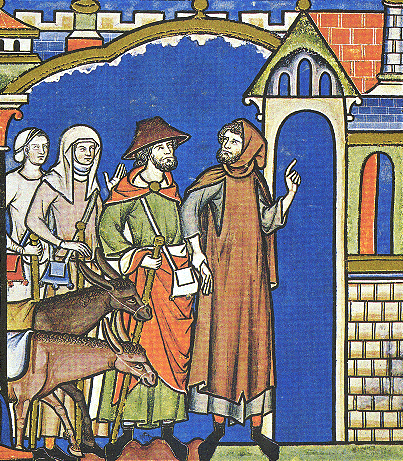
They arrived in Gibeah just at nightfall. The Levite and his party waited in the public square, but no one offered the customary hospitality. Eventually, an old man came in from working in the field and inquired as to their situation. He, too was from the mountains of Ephraim, but had lived among the Benjaminites for some time. He invited them to spend the night at his house rather than the open square. He brought him into his house, and gave fodder to the donkeys; they washed their feet, and ate and drank.
Suddenly certain men of the city surrounded the house and beat on the door. They spoke to the master of the house, the old man, saying, "Bring out the man who came to your house, that we may know him." "To know" is probably a euphemism for sexual intercourse here, as in other biblical texts and as the NRSV translates it.
The Ephraimite host offered instead his own maiden daughter and the Levite's concubine. Ken Stone observes, "Apparently the sexual violation of women was considered less shameful than that of men, at least in the eyes of other men. Such an attitude reflects both the social subordination of women and the fact that homosexual rape was viewed as a particularly severe attack on male honor."
Hub AI
Levite's concubine AI simulator
(@Levite's concubine_simulator)
Levite's concubine
The episode of the Levite's concubine, also known as the Benjamite War, in Judges 19–21 concerns a Levite from Ephraim and his concubine. They travel through the Benjamite city of Gibeah and are assailed by a mob, who wish to gang-rape the Levite. The man takes his concubine over to the crowd, and they rape her until she collapses. After she dies from her ill treatment, the Levite dismembers her body and presents the remains to the other tribes of Israel.
Outraged by the incident, the tribes swear that none shall give his daughter to the Benjamites for marriage, and launch a war which nearly wipes out the tribe, leaving only 600 surviving men. However, the punitive expedition is overcome by remorse, fearing that it will cause the extinction of an entire tribe. To ensure the survival of the Benjamite tribe while still complying with their oath, the Levites pillage and massacre the city of Jabesh-Gilead, none of whose residents partook in the war or in the vow, and capture its 400 maidens as wives for the Benjamites. The 200 men still lacking women are subtly allowed to abduct the maidens dancing at Shiloh.
A Levite from the mountains of Ephraim had a concubine, who left him and returned to the house of her father in Bethlehem in Judah. Heidi M. Szpek observes that this story serves to support the institution of monarchy, and the choice of the locations of Ephraim (the ancestral home of Samuel, who anointed the first king) and Bethlehem (the home of King David) are not accidental.
According to the King James Version and the New International Version, the concubine was unfaithful to the Levite; according to a note in the Septuagint and in the New Living Translation she was "angry" with him. Rabbinical interpretations say that the woman was both fearful and angry with her husband and left because he was selfish, putting his comfort before his wife and their relationship, and the Cambridge Bible for Schools and Colleges argues that the translation as 'angry' "suits the context, which implies a quarrel, but not unfaithfulness, on the woman’s part". The Levite travelled to Bethlehem to retrieve her, and for five days her father managed to persuade him to delay their departure. On the fifth day, the Levite declined to postpone their journey any longer, and they set out late in the day.
As they approached Jebus (Jerusalem), the servant suggested they stop for the night, but the Levite refused to stay in a Jebusite city, and they continued on to Gibeah. J. P. Fokkelman argues that Judges 19:11–14 is a chiasm, which hinges on the Levite referring to Jebus as "a town of aliens who are not of Israel". In doing this, the narrator is hinting at the "selfishness and rancid group egotism" of the Levite. Yet, it is not the "aliens" of Jebus who commit a heinous crime, but Benjaminites in Gibeah.
They arrived in Gibeah just at nightfall. The Levite and his party waited in the public square, but no one offered the customary hospitality. Eventually, an old man came in from working in the field and inquired as to their situation. He, too was from the mountains of Ephraim, but had lived among the Benjaminites for some time. He invited them to spend the night at his house rather than the open square. He brought him into his house, and gave fodder to the donkeys; they washed their feet, and ate and drank.
Suddenly certain men of the city surrounded the house and beat on the door. They spoke to the master of the house, the old man, saying, "Bring out the man who came to your house, that we may know him." "To know" is probably a euphemism for sexual intercourse here, as in other biblical texts and as the NRSV translates it.
The Ephraimite host offered instead his own maiden daughter and the Levite's concubine. Ken Stone observes, "Apparently the sexual violation of women was considered less shameful than that of men, at least in the eyes of other men. Such an attitude reflects both the social subordination of women and the fact that homosexual rape was viewed as a particularly severe attack on male honor."
Recent media