
Recent from talks
Out-of-band management
Knowledge base stats:
Talk channels stats:
Members stats:
Out-of-band management
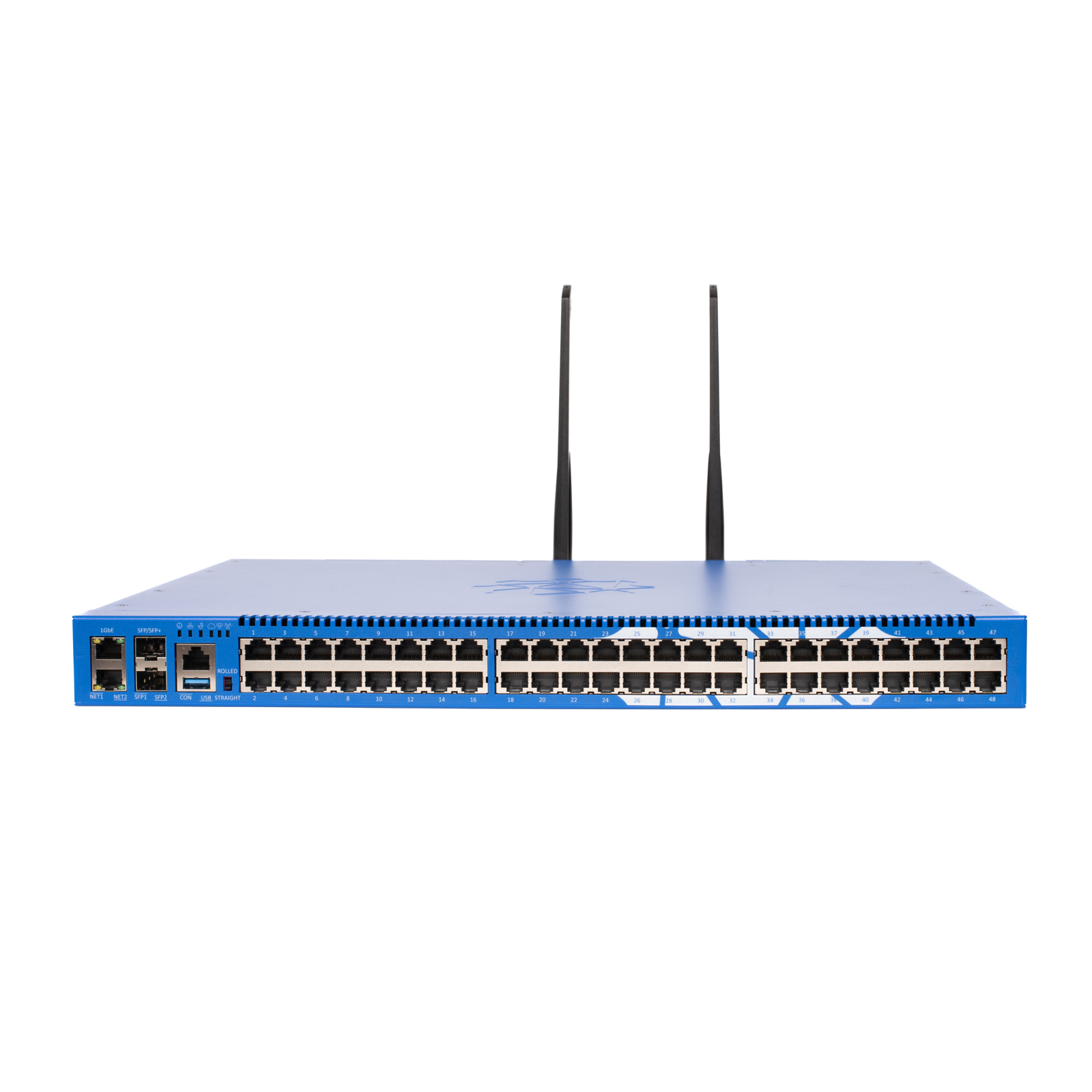
In systems management, out-of-band management (OOB), or lights-out management (LOM), is a process for accessing and managing devices and infrastructure at remote locations through a management plane separate from that of the production network. OOB allows a system administrator to monitor and manage servers and other network-attached equipment by remote control regardless of whether the machine is powered on or whether an OS is installed or functional. It is contrasted to in-band management, which requires the managed systems to be powered on and available over their operating system's networking facilities.
OOB can use dedicated management interfaces, serial ports, or cellular 4G and 5G networks for connectivity.
Out-of-band management is now considered an essential network component to ensure business continuity and many manufacturers have it as a product offering.
By contrast, in-band management through VNC or SSH is based on in-band connectivity (the usual network channel). It typically requires software that must be installed on the remote system being managed and only works after the operating system has been booted and networking is brought up. It does not allow management of remote network components independently of the current status of other network components. A classic example of this limitation is when a sysadmin attempts to reconfigure the network on a remote machine only to find themselves locked out and unable to fix the problem without physically going to the machine. Despite these limitations, in-band solutions are still common because they are simpler and much lower-cost.
A complete remote management system allows hardware monitoring (fan speed, power voltages, chassis intrusion, etc.), remote power cycling, broadcasting of video output to remote terminals, and receiving of input from remote keyboard and mouse (KVM over IP). It also can access local media like a DVD drive, or disk images, from the remote machine. If necessary, this allows one to perform remote installation of the operating system. Remote management can be used to adjust BIOS settings that may not be accessible after the operating system has already booted. Settings for hardware RAID or RAM timings can also be adjusted as the management card needs no hard drives or main memory to operate.
As management via serial port has traditionally been important on servers, a complete remote management system also allows interfacing with the server through a serial over LAN cable.[citation needed]
As sending monitor output through the network is bandwidth intensive, cards like AMI's MegaRAC use built-in video compression. Versions of VNC are often used in implementing this.
The remote system can be accessed either through an SSH command-line interface, specialized client software, or through various web-browser-based solutions. Client software is usually optimized to manage multiple systems easily.[citation needed]
Hub AI
Out-of-band management AI simulator
(@Out-of-band management_simulator)
Out-of-band management
In systems management, out-of-band management (OOB), or lights-out management (LOM), is a process for accessing and managing devices and infrastructure at remote locations through a management plane separate from that of the production network. OOB allows a system administrator to monitor and manage servers and other network-attached equipment by remote control regardless of whether the machine is powered on or whether an OS is installed or functional. It is contrasted to in-band management, which requires the managed systems to be powered on and available over their operating system's networking facilities.
OOB can use dedicated management interfaces, serial ports, or cellular 4G and 5G networks for connectivity.
Out-of-band management is now considered an essential network component to ensure business continuity and many manufacturers have it as a product offering.
By contrast, in-band management through VNC or SSH is based on in-band connectivity (the usual network channel). It typically requires software that must be installed on the remote system being managed and only works after the operating system has been booted and networking is brought up. It does not allow management of remote network components independently of the current status of other network components. A classic example of this limitation is when a sysadmin attempts to reconfigure the network on a remote machine only to find themselves locked out and unable to fix the problem without physically going to the machine. Despite these limitations, in-band solutions are still common because they are simpler and much lower-cost.
A complete remote management system allows hardware monitoring (fan speed, power voltages, chassis intrusion, etc.), remote power cycling, broadcasting of video output to remote terminals, and receiving of input from remote keyboard and mouse (KVM over IP). It also can access local media like a DVD drive, or disk images, from the remote machine. If necessary, this allows one to perform remote installation of the operating system. Remote management can be used to adjust BIOS settings that may not be accessible after the operating system has already booted. Settings for hardware RAID or RAM timings can also be adjusted as the management card needs no hard drives or main memory to operate.
As management via serial port has traditionally been important on servers, a complete remote management system also allows interfacing with the server through a serial over LAN cable.[citation needed]
As sending monitor output through the network is bandwidth intensive, cards like AMI's MegaRAC use built-in video compression. Versions of VNC are often used in implementing this.
The remote system can be accessed either through an SSH command-line interface, specialized client software, or through various web-browser-based solutions. Client software is usually optimized to manage multiple systems easily.[citation needed]
Recent media