
Recent from talks
Existential graph
Knowledge base stats:
Talk channels stats:
Members stats:
Existential graph
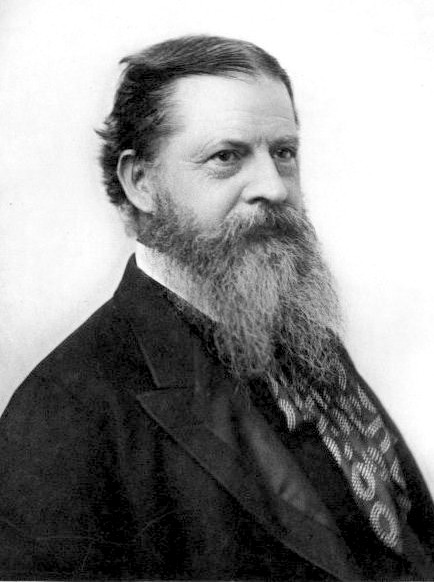
An existential graph is a type of diagrammatic or visual notation for logical expressions, created by Charles Sanders Peirce, who wrote on graphical logic as early as 1882, and continued to develop the method until his death in 1914. They include both a separate graphical notation for logical statements and a logical calculus, a formal system of rules of inference that can be used to derive theorems.
Peirce found the algebraic notation (i.e. symbolic notation) of logic, especially that of predicate logic, which was still very new during his lifetime and which he himself played a major role in developing, to be philosophically unsatisfactory, because the symbols had their meaning by mere convention. In contrast, he strove for a style of writing in which the signs literally carry their meaning within them – in the terminology of his theory of signs: a system of iconic signs that resemble or resemble the represented objects and relations.
Thus, the development of an iconic, graphic and – as he intended – intuitive and easy-to-learn logical system was a project that Peirce worked on throughout his life. After at least one aborted approach – the "Entitative Graphs" – the closed system of "Existential Graphs" finally emerged from 1896 onwards. Although considered by their creator to be a clearly superior and more intuitive system, as a mode of writing and as a calculus, they had no major influence on the history of logic. This has been attributed to the fact(s) that, for one, Peirce published little on this topic, and that the published texts were not written in a very understandable way; and, for two, that the linear formula notation in the hands of experts is actually the less complex tool. Hence, the existential graphs received little attention or were seen as unwieldy. From 1963 onwards, works by Don D. Roberts and J. Jay Zeman, in which Peirce's graphic systems were systematically examined and presented, led to a better understanding; even so, they have today found practical use within only one modern application—the conceptual graphs introduced by John F. Sowa in 1976, which are used in computer science to represent knowledge. However, existential graphs are increasingly reappearing as a subject of research in connection with a growing interest in graphical logic, which is also expressed in attempts to replace the rules of inference given by Peirce with more intuitive ones.
The overall system of existential graphs is composed of three subsystems that build on each other, the alpha graphs, the beta graphs and the gamma graphs. The alpha graphs are a purely propositional logical system. Building on this, the beta graphs are a first order logical calculus. The gamma graphs, which have not yet been fully researched and were not completed by Peirce, are understood as a further development of the alpha and beta graphs. When interpreted appropriately, the gamma graphs cover higher-level predicate logic as well as modal logic. As late as 1903, Peirce began a new approach, the "Tinctured Existential Graphs," with which he wanted to replace the previous systems of alpha, beta and gamma graphs and combine their expressiveness and performance in a single new system. Like the gamma graphs, the "Tinctured Existential Graphs" remained unfinished.
As calculi, the alpha, beta and gamma graphs are sound (i.e., all expressions derived as graphs are semantically valid). The alpha and beta graphs are also complete (i.e., all propositional or predicate-logically semantically valid expressions can be derived as alpha or beta graphs).
Peirce proposed three systems of existential graphs:
Alpha nests in beta and gamma. Beta does not nest in gamma, quantified modal logic being more general than put forth by Peirce.
The syntax is:
Hub AI
Existential graph AI simulator
(@Existential graph_simulator)
Existential graph
An existential graph is a type of diagrammatic or visual notation for logical expressions, created by Charles Sanders Peirce, who wrote on graphical logic as early as 1882, and continued to develop the method until his death in 1914. They include both a separate graphical notation for logical statements and a logical calculus, a formal system of rules of inference that can be used to derive theorems.
Peirce found the algebraic notation (i.e. symbolic notation) of logic, especially that of predicate logic, which was still very new during his lifetime and which he himself played a major role in developing, to be philosophically unsatisfactory, because the symbols had their meaning by mere convention. In contrast, he strove for a style of writing in which the signs literally carry their meaning within them – in the terminology of his theory of signs: a system of iconic signs that resemble or resemble the represented objects and relations.
Thus, the development of an iconic, graphic and – as he intended – intuitive and easy-to-learn logical system was a project that Peirce worked on throughout his life. After at least one aborted approach – the "Entitative Graphs" – the closed system of "Existential Graphs" finally emerged from 1896 onwards. Although considered by their creator to be a clearly superior and more intuitive system, as a mode of writing and as a calculus, they had no major influence on the history of logic. This has been attributed to the fact(s) that, for one, Peirce published little on this topic, and that the published texts were not written in a very understandable way; and, for two, that the linear formula notation in the hands of experts is actually the less complex tool. Hence, the existential graphs received little attention or were seen as unwieldy. From 1963 onwards, works by Don D. Roberts and J. Jay Zeman, in which Peirce's graphic systems were systematically examined and presented, led to a better understanding; even so, they have today found practical use within only one modern application—the conceptual graphs introduced by John F. Sowa in 1976, which are used in computer science to represent knowledge. However, existential graphs are increasingly reappearing as a subject of research in connection with a growing interest in graphical logic, which is also expressed in attempts to replace the rules of inference given by Peirce with more intuitive ones.
The overall system of existential graphs is composed of three subsystems that build on each other, the alpha graphs, the beta graphs and the gamma graphs. The alpha graphs are a purely propositional logical system. Building on this, the beta graphs are a first order logical calculus. The gamma graphs, which have not yet been fully researched and were not completed by Peirce, are understood as a further development of the alpha and beta graphs. When interpreted appropriately, the gamma graphs cover higher-level predicate logic as well as modal logic. As late as 1903, Peirce began a new approach, the "Tinctured Existential Graphs," with which he wanted to replace the previous systems of alpha, beta and gamma graphs and combine their expressiveness and performance in a single new system. Like the gamma graphs, the "Tinctured Existential Graphs" remained unfinished.
As calculi, the alpha, beta and gamma graphs are sound (i.e., all expressions derived as graphs are semantically valid). The alpha and beta graphs are also complete (i.e., all propositional or predicate-logically semantically valid expressions can be derived as alpha or beta graphs).
Peirce proposed three systems of existential graphs:
Alpha nests in beta and gamma. Beta does not nest in gamma, quantified modal logic being more general than put forth by Peirce.
The syntax is:
Recent media