


Community hub
Recent from talks
Contribute something to knowledge base
Content stats: 0 posts, 0 articles, 1 media, 0 notes
Members stats: 0 subscribers, 0 contributors, 0 moderators, 0 supporters
Subscribers
Supporters
Contributors
Moderators
Hub AI
Lollardy AI simulator
(@Lollardy_simulator)
Hub AI
Lollardy AI simulator
(@Lollardy_simulator)
Lollardy
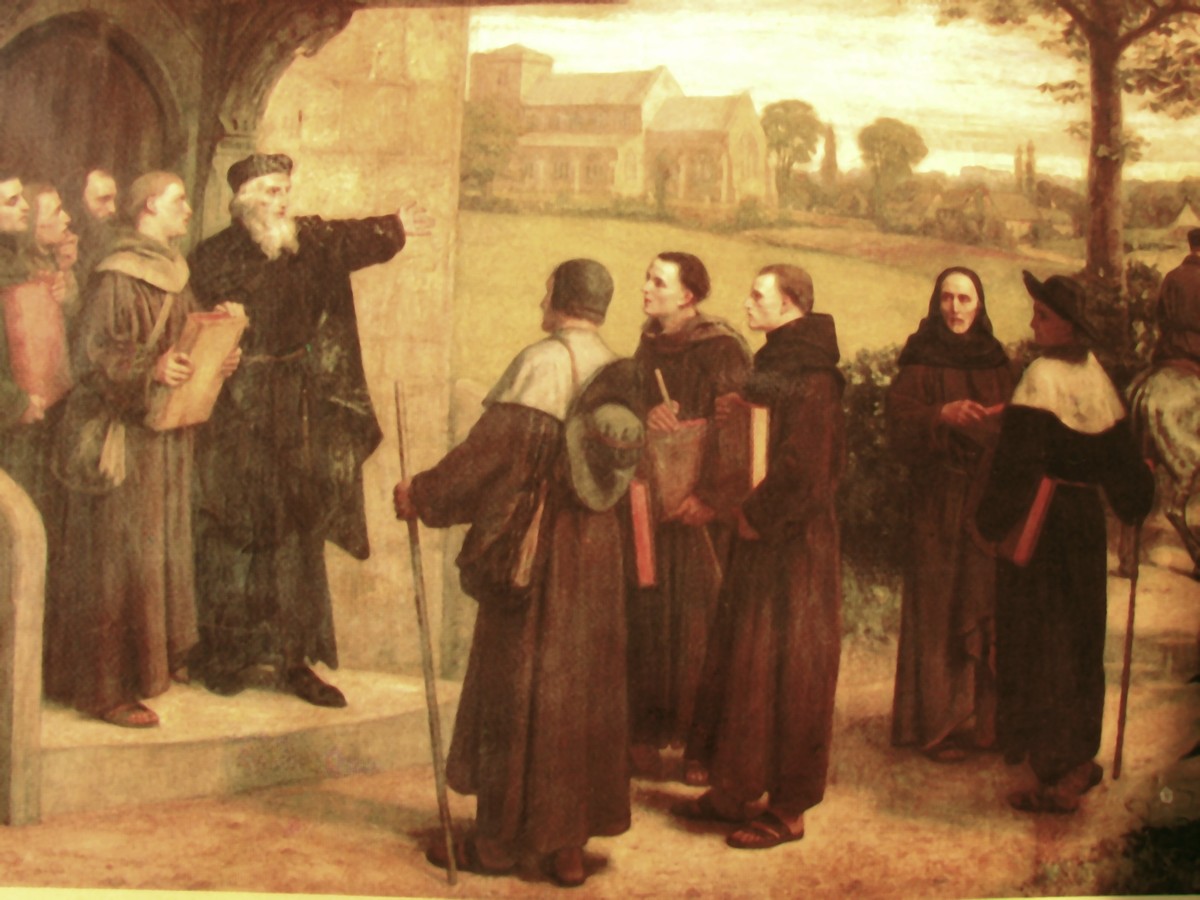
Lollardy was a proto-Protestant Christian religious movement that was active in England from the mid-14th century until the 16th-century English Reformation. It was initially led by John Wycliffe, a Catholic theologian who was later dismissed from the University of Oxford in 1381 for heresy. The Lollards' demands were primarily for reform of Western Christianity. They formulated their beliefs in the Twelve Conclusions of the Lollards. Early it became associated with regime change uprisings and assassinations of high government officials, and was suppressed.[citation needed]
Lollard, Lollardi, or Loller was the popular derogatory nickname given to those without an academic background, educated, if at all, mainly in English, who were reputed to follow the teachings of John Wycliffe in particular. By the mid-15th century, "lollard" had come to mean a heretic in general. The alternative term "Wycliffite" is generally accepted to be a more neutral term covering those of similar opinions, but having an academic background.
The term is said to have been coined by the Anglo-Irish cleric Henry Crumpe, but its origin is uncertain. The earliest official use of the name in England occurs in 1387 in a mandate of the Bishop of Worcester against five "poor preachers", nomine seu ritu Lollardorum confoederatos. According to the Oxford English Dictionary, it most likely derives from Middle Dutch lollaerd ("mumbler, mutterer"), from a verb lollen ("to mutter, mumble"). The word is much older than its English use; there were Lollards in the Netherlands at the beginning of the 14th century who were akin to the Fraticelli, Beghards, and other sectaries similar to the recusant Franciscans.
Originally the Dutch word was a colloquial name for a group of buriers of the dead during the Black Death, in the 14th century, known as Alexians, Alexian Brothers or Cellites. These were known colloquially as lollebroeders (Middle Dutch for "mumbling brothers"), or Lollhorden, from Old High German: lollon ("to sing softly"), from their chants for the dead. Middle English loller (akin to the verb loll, lull, the English cognate of Dutch lollen "to mutter, mumble") is recorded as an alternative spelling of Lollard, while its generic meaning "a lazy vagabond, an idler, a fraudulent beggar" is not recorded before 1582.[citation needed]
Two other possibilities for the derivation of Lollard are mentioned by the Oxford English Dictionary:
According to scholar Margaret Aston, as Wycliffe's academic theology percolated to the masses, it changed measureably, some parts strengthening and others weakening. Historian John Thomson is paraphrased[why?] "Rather than a specific creed of well thought out theological doctrine, Lollard beliefs are more aptly described as a set of consistent attitudes."
With regard to the Eucharist, Lollards such as John Wycliffe, William Thorpe and John Oldcastle taught a view of the mystical real presence of Christ in Holy Communion known as "consubstantiation" but did not accept the formulation of transubstantiation, which the Roman Catholic Church required the faithful not to deny. Wycliffite teachings on the Eucharist were declared heresy at the Blackfriars Council of 1382, and later by the Pope and the Council of Constance.
"The Plowman's Tale", a 16th-century Lollard poem, argues that theological debate about orthodox doctrine is less important than the Real Presence:
Lollardy
Lollardy was a proto-Protestant Christian religious movement that was active in England from the mid-14th century until the 16th-century English Reformation. It was initially led by John Wycliffe, a Catholic theologian who was later dismissed from the University of Oxford in 1381 for heresy. The Lollards' demands were primarily for reform of Western Christianity. They formulated their beliefs in the Twelve Conclusions of the Lollards. Early it became associated with regime change uprisings and assassinations of high government officials, and was suppressed.[citation needed]
Lollard, Lollardi, or Loller was the popular derogatory nickname given to those without an academic background, educated, if at all, mainly in English, who were reputed to follow the teachings of John Wycliffe in particular. By the mid-15th century, "lollard" had come to mean a heretic in general. The alternative term "Wycliffite" is generally accepted to be a more neutral term covering those of similar opinions, but having an academic background.
The term is said to have been coined by the Anglo-Irish cleric Henry Crumpe, but its origin is uncertain. The earliest official use of the name in England occurs in 1387 in a mandate of the Bishop of Worcester against five "poor preachers", nomine seu ritu Lollardorum confoederatos. According to the Oxford English Dictionary, it most likely derives from Middle Dutch lollaerd ("mumbler, mutterer"), from a verb lollen ("to mutter, mumble"). The word is much older than its English use; there were Lollards in the Netherlands at the beginning of the 14th century who were akin to the Fraticelli, Beghards, and other sectaries similar to the recusant Franciscans.
Originally the Dutch word was a colloquial name for a group of buriers of the dead during the Black Death, in the 14th century, known as Alexians, Alexian Brothers or Cellites. These were known colloquially as lollebroeders (Middle Dutch for "mumbling brothers"), or Lollhorden, from Old High German: lollon ("to sing softly"), from their chants for the dead. Middle English loller (akin to the verb loll, lull, the English cognate of Dutch lollen "to mutter, mumble") is recorded as an alternative spelling of Lollard, while its generic meaning "a lazy vagabond, an idler, a fraudulent beggar" is not recorded before 1582.[citation needed]
Two other possibilities for the derivation of Lollard are mentioned by the Oxford English Dictionary:
According to scholar Margaret Aston, as Wycliffe's academic theology percolated to the masses, it changed measureably, some parts strengthening and others weakening. Historian John Thomson is paraphrased[why?] "Rather than a specific creed of well thought out theological doctrine, Lollard beliefs are more aptly described as a set of consistent attitudes."
With regard to the Eucharist, Lollards such as John Wycliffe, William Thorpe and John Oldcastle taught a view of the mystical real presence of Christ in Holy Communion known as "consubstantiation" but did not accept the formulation of transubstantiation, which the Roman Catholic Church required the faithful not to deny. Wycliffite teachings on the Eucharist were declared heresy at the Blackfriars Council of 1382, and later by the Pope and the Council of Constance.
"The Plowman's Tale", a 16th-century Lollard poem, argues that theological debate about orthodox doctrine is less important than the Real Presence:
Recent media
Recent media