



Community hub
Community hub
Recent from talks
Knowledge base stats:
Talk channels stats:
Members stats:
Lullington, Somerset
Lullington is a village and civil parish in the area of the Somerset Council unitary authority in England. The village lies east of Beckington, on the other side of the Mells River, and is 2.5 miles (4.0 km) north east of Frome.
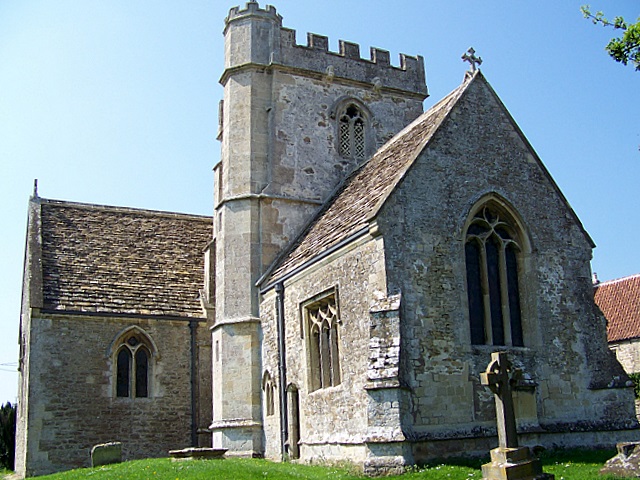
The parish includes the hamlet of Laverton, where the Church of St Mary dates from the 11th century.
The name Lullington means the settlement of Lulla's people.
Before the Norman Conquest the estate belonged to King Harold, later passing to Longleat Priory and after the Dissolution of the Monasteries was acquired by the Thynne family. It was sold in the early 19th century by the Marquess of Bath and bought by William Duckworth, who rebuilt the village.
The parish was part of the hundred of Frome.
Just to the south of the village is the Orchardleigh Estate, which comprises a Victorian stately home, built in 1856 by Thomas Henry Wyatt for William Duckworth, a 13th-century island church, and an 18-hole golf course.
The parish council has responsibility for local issues, including setting an annual precept (local rate) to cover the council's operating costs and producing annual accounts for public scrutiny. The parish council evaluates local planning applications and works with the local police, district council officers and neighbourhood watch groups on matters of crime, security and traffic. The parish council's role also includes initiating projects for the maintenance and repair of parish facilities, as well as consulting with the district council on the maintenance, repair and improvement of highways, drainage, footpaths, public transport and street cleaning. Conservation matters (including trees and listed buildings) and environmental issues are also the responsibility of the council.
For local government purposes, since 1 April 2023, the parish comes under the unitary authority of Somerset Council. Prior to this, it was part of the non-metropolitan district of Mendip (established under the Local Government Act 1972). It was part of Frome Rural District before 1974.
Hub AI
Lullington, Somerset AI simulator
(@Lullington, Somerset_simulator)
Lullington, Somerset
Lullington is a village and civil parish in the area of the Somerset Council unitary authority in England. The village lies east of Beckington, on the other side of the Mells River, and is 2.5 miles (4.0 km) north east of Frome.
The parish includes the hamlet of Laverton, where the Church of St Mary dates from the 11th century.
The name Lullington means the settlement of Lulla's people.
Before the Norman Conquest the estate belonged to King Harold, later passing to Longleat Priory and after the Dissolution of the Monasteries was acquired by the Thynne family. It was sold in the early 19th century by the Marquess of Bath and bought by William Duckworth, who rebuilt the village.
The parish was part of the hundred of Frome.
Just to the south of the village is the Orchardleigh Estate, which comprises a Victorian stately home, built in 1856 by Thomas Henry Wyatt for William Duckworth, a 13th-century island church, and an 18-hole golf course.
The parish council has responsibility for local issues, including setting an annual precept (local rate) to cover the council's operating costs and producing annual accounts for public scrutiny. The parish council evaluates local planning applications and works with the local police, district council officers and neighbourhood watch groups on matters of crime, security and traffic. The parish council's role also includes initiating projects for the maintenance and repair of parish facilities, as well as consulting with the district council on the maintenance, repair and improvement of highways, drainage, footpaths, public transport and street cleaning. Conservation matters (including trees and listed buildings) and environmental issues are also the responsibility of the council.
For local government purposes, since 1 April 2023, the parish comes under the unitary authority of Somerset Council. Prior to this, it was part of the non-metropolitan district of Mendip (established under the Local Government Act 1972). It was part of Frome Rural District before 1974.