



Community hub
Community hub
Recent from talks
Knowledge base stats:
Talk channels stats:
Members stats:
Lunatic asylum
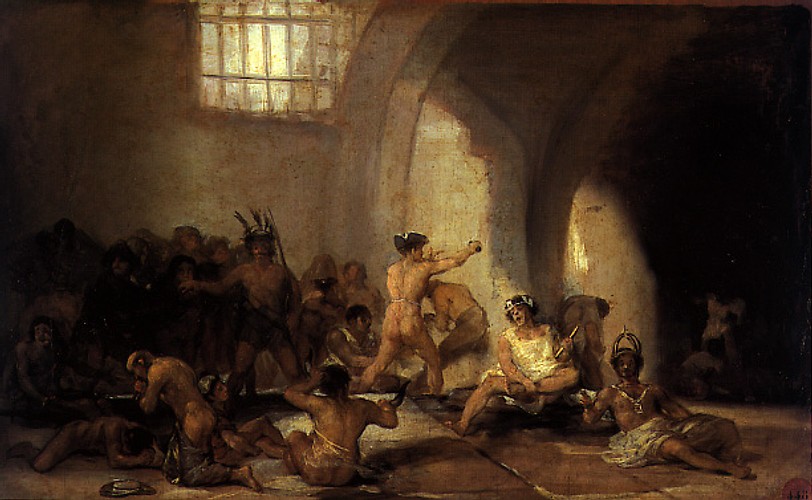
The lunatic asylum, insane asylum or mental asylum was an institution where people with mental illness were confined. It was an early precursor of the modern psychiatric hospital.
Modern psychiatric hospitals evolved from and eventually replaced the older lunatic asylum. The treatment of inmates in early lunatic asylums was sometimes brutal and focused on containment and restraint. The discovery of anti-psychotic drugs and mood-stabilizing drugs resulted in a shift in focus from containment in lunatic asylums to treatment in psychiatric hospitals. Later, there was further and more thorough critique in the form of the deinstitutionalization movement which focuses on treatment at home or in less isolated institutions.
In the Islamic world, the Bimaristans were described by European travellers, who wrote about their wonder at the care and kindness shown to lunatics. In 872, Ahmad ibn Tulun built a hospital in Cairo that provided care to the insane, which included music therapy. Nonetheless, British historian of medicine Roy Porter cautioned against idealising the role of hospitals generally in medieval Islam, stating that "They were a drop in the ocean for the vast population that they had to serve, and their true function lay in highlighting ideals of compassion and bringing together the activities of the medical profession."
In Europe during the medieval era, a small subsection of the population of those considered mad were housed in a variety of institutional settings. Mentally ill people were often held captive in cages or kept up within the city walls, or they were compelled to amuse members of courtly society. Porter gives examples of such locales where some of the insane were cared for, such as in monasteries. A few towns had towers where madmen were kept (called Narrentürme in German, or "fools' towers").[citation needed] The ancient Parisian hospital Hôtel-Dieu also had a small number of cells set aside for lunatics, whilst the town of Elbing boasted a madhouse, the Tollhaus, attached to the Teutonic Knights' hospital. Dave Sheppard's Development of Mental Health Law and Practice begins in 1285 with a case that linked "the instigation of the devil" with being "frantic and mad".
In Spain, other such institutions for the insane were established after the Christian Reconquista; facilities included hospitals in Valencia (1407), Zaragoza (1425), Seville (1436), Barcelona (1481) and Toledo (1483). In London, England, the Priory of Saint Mary of Bethlehem, which later became known more notoriously as Bedlam, was founded in 1247. At the start of the 15th century, it housed six insane men. The former lunatic asylum, Het Dolhuys, established in the 16th century in Haarlem, the Netherlands, has been adapted as a museum of psychiatry, with an overview of treatments from the origins of the building up to the 1990s.
The level of specialist institutional provision for the care and control of the insane remained extremely limited at the turn of the 18th century. Madness was seen principally as a domestic problem, with families and parish authorities in Europe and England central to regimens of care. Various forms of outdoor relief were extended by the parish authorities to families in these circumstances, including financial support, the provision of parish nurses and, where family care was not possible, lunatics might be 'boarded out' to other members of the local community or committed to private madhouses. Exceptionally, if those deemed mad were judged to be particularly disturbing or violent, parish authorities might meet the not inconsiderable costs of their confinement in charitable asylums such as Bethlem, in Houses of Correction or in workhouses.
In the late 17th century, this model began to change, and privately run asylums for the insane began to proliferate and expand in size. Already in 1632 it was recorded that Bethlem Royal Hospital, London had "below stairs a parlor, a kitchen, two larders, a long entry throughout the house, and 21 rooms wherein the poor distracted people lie, and above the stairs eight rooms more for servants and the poor to lie in". Inmates who were deemed dangerous or disturbing were chained, but Bethlem was an otherwise open building. Its inhabitants could roam around its confines and possibly throughout the general neighborhood in which the hospital was situated. In 1676, Bethlem expanded into newly built premises at Moorfields with a capacity for 100 inmates.
A second public charitable institution was opened in 1713. Known as the Bethel in Norwich, it was a small facility which generally housed between twenty and thirty inmates. In 1728 at Guy's Hospital, London, wards were established for chronic lunatics. From the mid-eighteenth century the number of public charitably funded asylums expanded moderately with the opening of St Luke's Hospital in 1751 in Upper Moorfields, London; the establishment in 1765 of the Hospital for Lunatics at Newcastle upon Tyne; the Manchester Lunatic Hospital, which opened in 1766; the York Asylum in 1777 (not to be confused with the York Retreat); the Leicester Lunatic Asylum (1794), and the Liverpool Lunatic Asylum (1797).
Hub AI
Lunatic asylum AI simulator
(@Lunatic asylum_simulator)
Lunatic asylum
The lunatic asylum, insane asylum or mental asylum was an institution where people with mental illness were confined. It was an early precursor of the modern psychiatric hospital.
Modern psychiatric hospitals evolved from and eventually replaced the older lunatic asylum. The treatment of inmates in early lunatic asylums was sometimes brutal and focused on containment and restraint. The discovery of anti-psychotic drugs and mood-stabilizing drugs resulted in a shift in focus from containment in lunatic asylums to treatment in psychiatric hospitals. Later, there was further and more thorough critique in the form of the deinstitutionalization movement which focuses on treatment at home or in less isolated institutions.
In the Islamic world, the Bimaristans were described by European travellers, who wrote about their wonder at the care and kindness shown to lunatics. In 872, Ahmad ibn Tulun built a hospital in Cairo that provided care to the insane, which included music therapy. Nonetheless, British historian of medicine Roy Porter cautioned against idealising the role of hospitals generally in medieval Islam, stating that "They were a drop in the ocean for the vast population that they had to serve, and their true function lay in highlighting ideals of compassion and bringing together the activities of the medical profession."
In Europe during the medieval era, a small subsection of the population of those considered mad were housed in a variety of institutional settings. Mentally ill people were often held captive in cages or kept up within the city walls, or they were compelled to amuse members of courtly society. Porter gives examples of such locales where some of the insane were cared for, such as in monasteries. A few towns had towers where madmen were kept (called Narrentürme in German, or "fools' towers").[citation needed] The ancient Parisian hospital Hôtel-Dieu also had a small number of cells set aside for lunatics, whilst the town of Elbing boasted a madhouse, the Tollhaus, attached to the Teutonic Knights' hospital. Dave Sheppard's Development of Mental Health Law and Practice begins in 1285 with a case that linked "the instigation of the devil" with being "frantic and mad".
In Spain, other such institutions for the insane were established after the Christian Reconquista; facilities included hospitals in Valencia (1407), Zaragoza (1425), Seville (1436), Barcelona (1481) and Toledo (1483). In London, England, the Priory of Saint Mary of Bethlehem, which later became known more notoriously as Bedlam, was founded in 1247. At the start of the 15th century, it housed six insane men. The former lunatic asylum, Het Dolhuys, established in the 16th century in Haarlem, the Netherlands, has been adapted as a museum of psychiatry, with an overview of treatments from the origins of the building up to the 1990s.
The level of specialist institutional provision for the care and control of the insane remained extremely limited at the turn of the 18th century. Madness was seen principally as a domestic problem, with families and parish authorities in Europe and England central to regimens of care. Various forms of outdoor relief were extended by the parish authorities to families in these circumstances, including financial support, the provision of parish nurses and, where family care was not possible, lunatics might be 'boarded out' to other members of the local community or committed to private madhouses. Exceptionally, if those deemed mad were judged to be particularly disturbing or violent, parish authorities might meet the not inconsiderable costs of their confinement in charitable asylums such as Bethlem, in Houses of Correction or in workhouses.
In the late 17th century, this model began to change, and privately run asylums for the insane began to proliferate and expand in size. Already in 1632 it was recorded that Bethlem Royal Hospital, London had "below stairs a parlor, a kitchen, two larders, a long entry throughout the house, and 21 rooms wherein the poor distracted people lie, and above the stairs eight rooms more for servants and the poor to lie in". Inmates who were deemed dangerous or disturbing were chained, but Bethlem was an otherwise open building. Its inhabitants could roam around its confines and possibly throughout the general neighborhood in which the hospital was situated. In 1676, Bethlem expanded into newly built premises at Moorfields with a capacity for 100 inmates.
A second public charitable institution was opened in 1713. Known as the Bethel in Norwich, it was a small facility which generally housed between twenty and thirty inmates. In 1728 at Guy's Hospital, London, wards were established for chronic lunatics. From the mid-eighteenth century the number of public charitably funded asylums expanded moderately with the opening of St Luke's Hospital in 1751 in Upper Moorfields, London; the establishment in 1765 of the Hospital for Lunatics at Newcastle upon Tyne; the Manchester Lunatic Hospital, which opened in 1766; the York Asylum in 1777 (not to be confused with the York Retreat); the Leicester Lunatic Asylum (1794), and the Liverpool Lunatic Asylum (1797).