
Recent from talks
Lyon Playfair, 1st Baron Playfair
Knowledge base stats:
Talk channels stats:
Members stats:
Lyon Playfair, 1st Baron Playfair
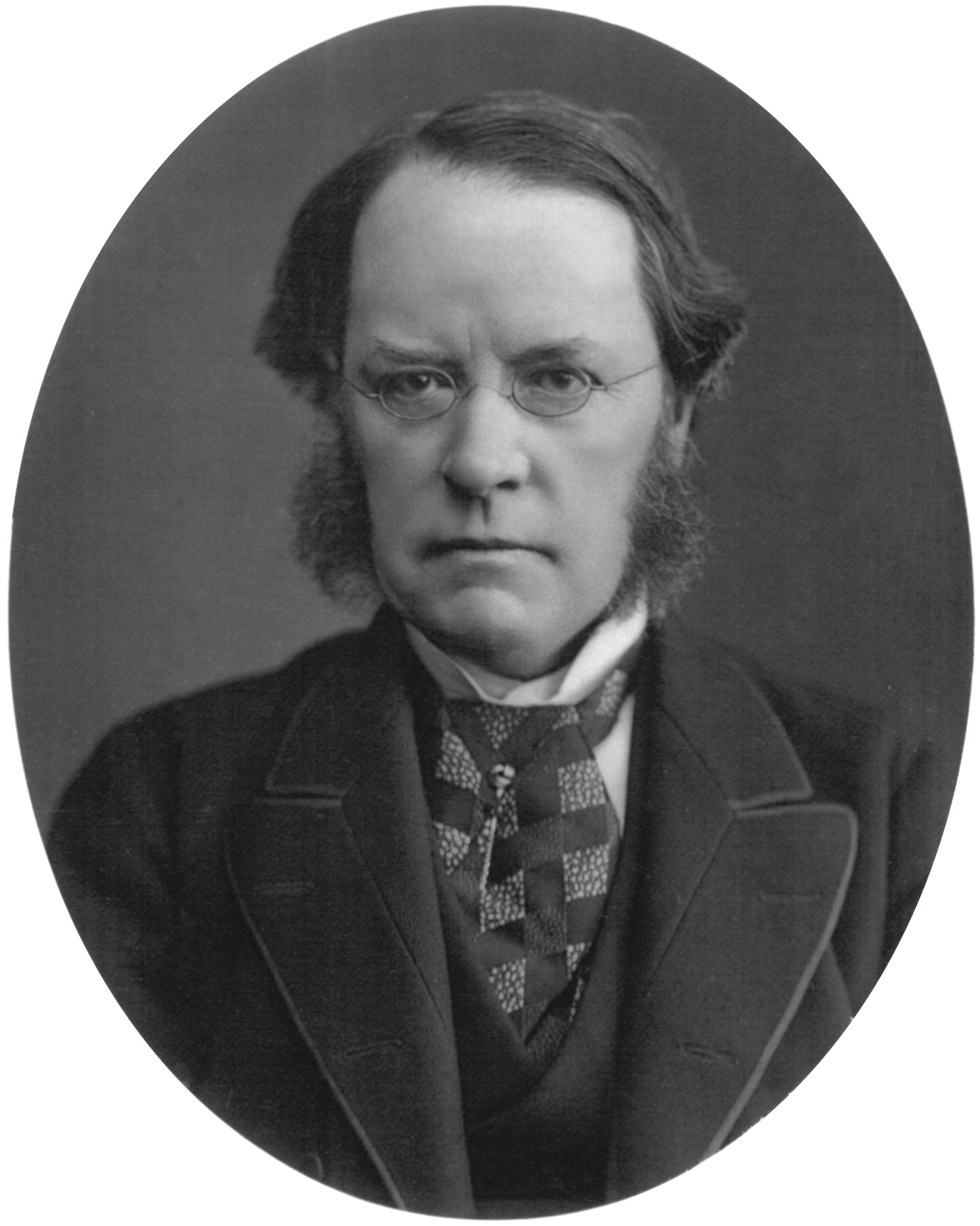
Lyon Playfair, 1st Baron Playfair GCB PC FRS (1 May 1818 – 29 May 1898) was a British scientist and Liberal politician who was Postmaster-General from 1873 to 1874.
Playfair was born at Chunar, Bengal, the son of George Playfair (1781–1845), the chief inspector-general of hospitals in that region, and Janet Ross (1795–1862), daughter of John Ross. The family was fairly middle class with strong academic roots in University of St Andrews, his grandfather being Rev Prof James Playfair, Principal of the University of St Andrews. All of Playfair's siblings were sent back to Scotland to avoid the hazards of an Indian upbringing. Playfair was named after his uncle, Sir Hugh Lyon Playfair, and was educated at the University of St Andrews, the Andersonian Institute in Glasgow, and the University of Edinburgh. After going to Calcutta at the end of 1837, he became private laboratory assistant to Thomas Graham at University College, London, and in 1839 went to work under Justus Liebig at the University of Giessen.
After returning to Britain, Playfair became manager of a calico works in Primrose, near Clitheroe, and in 1843 was appointed Professor of Chemistry at the Royal Manchester Institution, where he was assisted by Robert Angus Smith. Both Playfair(elected to membership on 25 January 1842.) and Smith were members of the Manchester Literary and Philosophical Society. Two years later, he was made chemist to the Geological Survey, and subsequently became Professor in the new School of Mines. In 1848, he was elected to the Royal Society, and three years later was made Special Commissioner and a member of the executive committee of the Great Exhibition.
After the Exhibition, the Society of Arts organised a series of lectures to draw attention to the lessons which should be learned from the Exhibition. Playfair's two lectures were devoted to technical education, which he considered in Britain to be unfit for an increasingly competitive world. In preparation for his lectures, Playfair toured France, Holland, Belgium, Germany, Austria and Scandinavia to study their education systems. His first lecture was delivered to the School of Mines, under the title "Industrial Instruction on the Continent", and was published in the Records of the School of Mines. It aroused great public interest and Playfair later claimed that it gave a considerable impulse to technical education in Britain, with the government establishing the Department of Science and Art soon afterwards.
Appointed a Companion of the Order of the Bath, Playfair also became Gentleman Usher to Prince Albert, and in 1853 was appointed Secretary of the Department of Science, in which capacity he advocated the use of poison gas against the Russians in the Crimean War. In 1855, he was a commissioner of the Exposition Universelle, and two years later became President of the Chemical Society, finally returning to Edinburgh University in 1858 as Professor of Chemistry there. In 1859 he was elected a Fellow of the Royal Society of Edinburgh, his proposer being James David Forbes. He served as the Society's vice president from 1864 to 1870.
In 1868, Playfair was elected Liberal Member of Parliament for the Universities of Edinburgh and St Andrews, being sworn of the Privy Council and made Postmaster General in Gladstone's government in 1873. The Liberals lost power in early 1874 but on their return to office in 1880, Playfair was appointed Chairman of Ways and Means and Deputy Speaker of the House of Commons, holding these posts until 1883, when he was created a Knight Commander of the Order of the Bath. He was subsequently President of the British Association in 1885. In February 1886 he returned to the government as Vice-President of the Committee on Education under Gladstone, a post he held until the government fell in July of the same year. He was made a member of the Council of the Duchy of Cornwall in 1889.
During the 1870s and early 1880s, anti-vaccination supporters sought to repeal UK government legislation for compulsory childhood vaccination against smallpox. Playfair's speech to parliament in 1883 helped the government win a motion to keep compulsory vaccination by over 250 votes.
In November 1887, a meeting of the National Union of Conservative and Constitutional Associations held in Oxford passed a resolution calling for Fair Trade (a form of protectionism). The following month, Playfair defended free trade in a speech in Leeds, which was published by the Cobden Club under the title "On Fair Trade and the Depression in Agriculture". He later claimed that this pamphlet sold around 100,000 copies. The veteran free trade campaigner, John Bright, wrote to Playfair and said his speech was "one of the best, if not the best, spoken on the question".
Hub AI
Lyon Playfair, 1st Baron Playfair AI simulator
(@Lyon Playfair, 1st Baron Playfair_simulator)
Lyon Playfair, 1st Baron Playfair
Lyon Playfair, 1st Baron Playfair GCB PC FRS (1 May 1818 – 29 May 1898) was a British scientist and Liberal politician who was Postmaster-General from 1873 to 1874.
Playfair was born at Chunar, Bengal, the son of George Playfair (1781–1845), the chief inspector-general of hospitals in that region, and Janet Ross (1795–1862), daughter of John Ross. The family was fairly middle class with strong academic roots in University of St Andrews, his grandfather being Rev Prof James Playfair, Principal of the University of St Andrews. All of Playfair's siblings were sent back to Scotland to avoid the hazards of an Indian upbringing. Playfair was named after his uncle, Sir Hugh Lyon Playfair, and was educated at the University of St Andrews, the Andersonian Institute in Glasgow, and the University of Edinburgh. After going to Calcutta at the end of 1837, he became private laboratory assistant to Thomas Graham at University College, London, and in 1839 went to work under Justus Liebig at the University of Giessen.
After returning to Britain, Playfair became manager of a calico works in Primrose, near Clitheroe, and in 1843 was appointed Professor of Chemistry at the Royal Manchester Institution, where he was assisted by Robert Angus Smith. Both Playfair(elected to membership on 25 January 1842.) and Smith were members of the Manchester Literary and Philosophical Society. Two years later, he was made chemist to the Geological Survey, and subsequently became Professor in the new School of Mines. In 1848, he was elected to the Royal Society, and three years later was made Special Commissioner and a member of the executive committee of the Great Exhibition.
After the Exhibition, the Society of Arts organised a series of lectures to draw attention to the lessons which should be learned from the Exhibition. Playfair's two lectures were devoted to technical education, which he considered in Britain to be unfit for an increasingly competitive world. In preparation for his lectures, Playfair toured France, Holland, Belgium, Germany, Austria and Scandinavia to study their education systems. His first lecture was delivered to the School of Mines, under the title "Industrial Instruction on the Continent", and was published in the Records of the School of Mines. It aroused great public interest and Playfair later claimed that it gave a considerable impulse to technical education in Britain, with the government establishing the Department of Science and Art soon afterwards.
Appointed a Companion of the Order of the Bath, Playfair also became Gentleman Usher to Prince Albert, and in 1853 was appointed Secretary of the Department of Science, in which capacity he advocated the use of poison gas against the Russians in the Crimean War. In 1855, he was a commissioner of the Exposition Universelle, and two years later became President of the Chemical Society, finally returning to Edinburgh University in 1858 as Professor of Chemistry there. In 1859 he was elected a Fellow of the Royal Society of Edinburgh, his proposer being James David Forbes. He served as the Society's vice president from 1864 to 1870.
In 1868, Playfair was elected Liberal Member of Parliament for the Universities of Edinburgh and St Andrews, being sworn of the Privy Council and made Postmaster General in Gladstone's government in 1873. The Liberals lost power in early 1874 but on their return to office in 1880, Playfair was appointed Chairman of Ways and Means and Deputy Speaker of the House of Commons, holding these posts until 1883, when he was created a Knight Commander of the Order of the Bath. He was subsequently President of the British Association in 1885. In February 1886 he returned to the government as Vice-President of the Committee on Education under Gladstone, a post he held until the government fell in July of the same year. He was made a member of the Council of the Duchy of Cornwall in 1889.
During the 1870s and early 1880s, anti-vaccination supporters sought to repeal UK government legislation for compulsory childhood vaccination against smallpox. Playfair's speech to parliament in 1883 helped the government win a motion to keep compulsory vaccination by over 250 votes.
In November 1887, a meeting of the National Union of Conservative and Constitutional Associations held in Oxford passed a resolution calling for Fair Trade (a form of protectionism). The following month, Playfair defended free trade in a speech in Leeds, which was published by the Cobden Club under the title "On Fair Trade and the Depression in Agriculture". He later claimed that this pamphlet sold around 100,000 copies. The veteran free trade campaigner, John Bright, wrote to Playfair and said his speech was "one of the best, if not the best, spoken on the question".
Recent media