


Community hub
Recent from talks
Contribute something to knowledge base
Content stats: 0 posts, 0 articles, 1 media, 0 notes
Members stats: 0 subscribers, 0 contributors, 0 moderators, 0 supporters
Subscribers
Supporters
Contributors
Moderators
Hub AI
Macro photography AI simulator
(@Macro photography_simulator)
Hub AI
Macro photography AI simulator
(@Macro photography_simulator)
Macro photography
Macro photography, also called photomacrography or macrography, and sometimes macrophotography, is extreme close-up photography in which the subject is reproduced at greater than its actual size. Macro photographs usually feature very small subjects and living organisms like insects.
The optical reproduction ratio is the subject size captured on the film frame (or image sensor) compared to the actual subject size, and is a function of the lens design. The optical magnification m is equivalent to optical reproduction ratio. For example, an optical reproduction ratio of 1:10 means the image is recorded at 1⁄10th of the actual subject size, and the equivalent optical magnification is 1⁄10×, 0.10×, or 10%. In the strictest definition, a macro photograph is one in which the size of the image captured is life-size or larger (i.e., optical reproduction ratio ≥ 1:1) compared to the original subject.
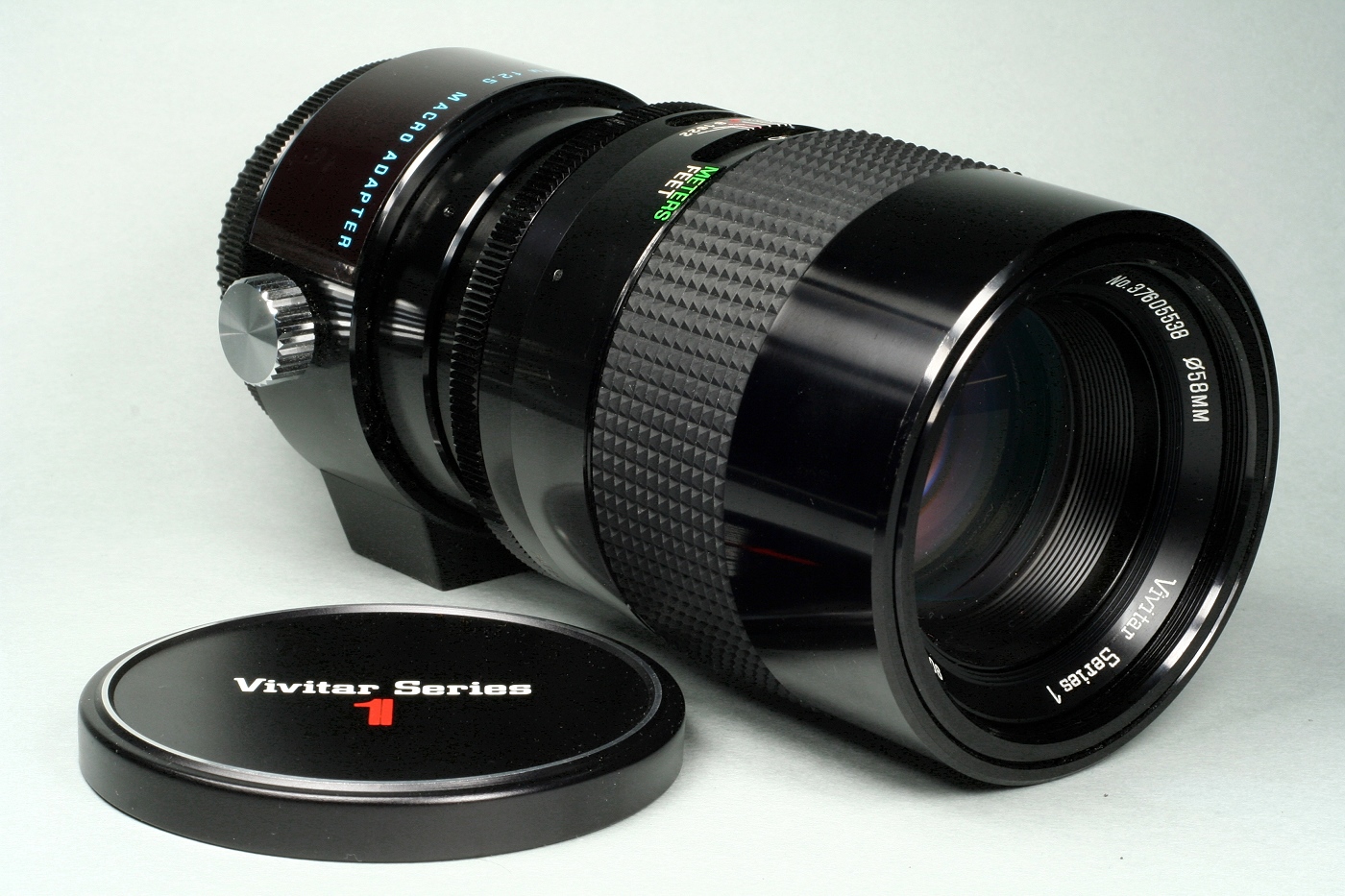
Building on this, a macro lens is therefore a lens capable of optical reproduction ratios of 1:1 or greater (e.g., 2:1, 3:1, etc.). Rudolf Kingslake gives a broader definition of a macro lens as one "which is well corrected for use over a wide range of object distances."
Since the size of the image on the negative or image sensor rarely is the subject of discussion except in technical photography and film-based processes, the final image (e.g., as printed, displayed in a magazine, or on a web page) is a more relevant measure of displayed size. Define the final magnification M (or final reproduction ratio) as the image size on the final print divided by the original object size. This definition of final reproduction ratio compares the size of the finished image, as displayed, with the actual size of the subject. Because the displayed image usually is larger than the film frame or image sensor, the final reproduction ratio is the product of the optical reproduction ratio (determined by the lens) and the magnification in reproducing the recorded image from the sensor or film to the display.
This means the subject will more likely be displayed at greater than life-size, and so the final displayed image more commonly lends a photograph macro (i.e., >1:1) status. For example, when producing a 6×4 in (150×100 mm) print using an image captured on a 35 format (36×24 mm) film or sensor, the printing process results in an inherent 4:1 magnification in going from the sensor to the print, which means a life-size result is possible with a lens set at a 1:4 optical reproduction ratio.
Using the more expansive definition provided by Kingslake and considering the final reproduction ratio, many photographic lenses designed and sold with "macro" focusing ranges actually fall into the "close-up" range of optical magnifications, with a maximum optical reproduction ratio between 1:2 and 1:1. However, even 1:2 is significantly larger than non-macro lenses, as those often are designed with a maximum reproduction ratio (i.e., at closest focus) of approximately 1:10 for practical and optical considerations.
Reproduction ratios much greater than 10:1 are considered to be photomicrography, often achieved with optical microscopes.
The term photo-macrograph was proposed in 1899 by W. H. Walmsley for close-up images with less than 10 diameters magnification, to distinguish from true photo-micrographs.
Macro photography
Macro photography, also called photomacrography or macrography, and sometimes macrophotography, is extreme close-up photography in which the subject is reproduced at greater than its actual size. Macro photographs usually feature very small subjects and living organisms like insects.
The optical reproduction ratio is the subject size captured on the film frame (or image sensor) compared to the actual subject size, and is a function of the lens design. The optical magnification m is equivalent to optical reproduction ratio. For example, an optical reproduction ratio of 1:10 means the image is recorded at 1⁄10th of the actual subject size, and the equivalent optical magnification is 1⁄10×, 0.10×, or 10%. In the strictest definition, a macro photograph is one in which the size of the image captured is life-size or larger (i.e., optical reproduction ratio ≥ 1:1) compared to the original subject.
Building on this, a macro lens is therefore a lens capable of optical reproduction ratios of 1:1 or greater (e.g., 2:1, 3:1, etc.). Rudolf Kingslake gives a broader definition of a macro lens as one "which is well corrected for use over a wide range of object distances."
Since the size of the image on the negative or image sensor rarely is the subject of discussion except in technical photography and film-based processes, the final image (e.g., as printed, displayed in a magazine, or on a web page) is a more relevant measure of displayed size. Define the final magnification M (or final reproduction ratio) as the image size on the final print divided by the original object size. This definition of final reproduction ratio compares the size of the finished image, as displayed, with the actual size of the subject. Because the displayed image usually is larger than the film frame or image sensor, the final reproduction ratio is the product of the optical reproduction ratio (determined by the lens) and the magnification in reproducing the recorded image from the sensor or film to the display.
This means the subject will more likely be displayed at greater than life-size, and so the final displayed image more commonly lends a photograph macro (i.e., >1:1) status. For example, when producing a 6×4 in (150×100 mm) print using an image captured on a 35 format (36×24 mm) film or sensor, the printing process results in an inherent 4:1 magnification in going from the sensor to the print, which means a life-size result is possible with a lens set at a 1:4 optical reproduction ratio.
Using the more expansive definition provided by Kingslake and considering the final reproduction ratio, many photographic lenses designed and sold with "macro" focusing ranges actually fall into the "close-up" range of optical magnifications, with a maximum optical reproduction ratio between 1:2 and 1:1. However, even 1:2 is significantly larger than non-macro lenses, as those often are designed with a maximum reproduction ratio (i.e., at closest focus) of approximately 1:10 for practical and optical considerations.
Reproduction ratios much greater than 10:1 are considered to be photomicrography, often achieved with optical microscopes.
The term photo-macrograph was proposed in 1899 by W. H. Walmsley for close-up images with less than 10 diameters magnification, to distinguish from true photo-micrographs.
Recent media
Recent media