



Community hub
Recent from talks
Knowledge base stats:
Talk channels stats:
Members stats:
Marsh
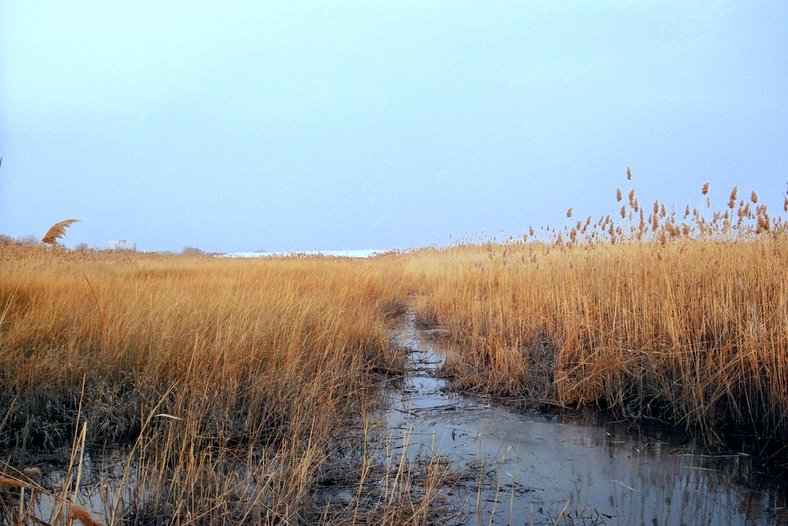
In ecology, a marsh is a wetland that is dominated by herbaceous plants rather than by woody plants. More in general, the word can be used for any low-lying and seasonally waterlogged terrain. In Europe and in agricultural literature low-lying meadows that require draining and embanked polderlands are also referred to as marshes or marshland.
Marshes can often be found at the edges of lakes and streams, where they form a transition between the aquatic and terrestrial ecosystems. They are often dominated by grasses, rushes or reeds. If woody plants are present they tend to be low-growing shrubs, and the marsh is sometimes called a carr. This form of vegetation is what differentiates marshes from other types of wetland such as swamps, which are dominated by trees, and mires, which are wetlands that have accumulated deposits of acidic peat.
Marshes provide habitats for many kinds of invertebrates, fish, amphibians, waterfowl and aquatic mammals. This biological productivity means that marshes contain 0.1% of global sequestered terrestrial carbon. Moreover, they have an outsized influence on climate resilience of coastal areas and waterways, absorbing high tides and other water changes due to extreme weather. Though some marshes are expected to migrate upland, most natural marshlands will be threatened by sea level rise and associated erosion.
Marshes provide a habitat for many species of plants, animals, and insects that have adapted to living in flooded conditions or other environments. The plants must be able to survive in wet mud with low oxygen levels. Many of these plants, therefore, have aerenchyma, channels within the stem that allow air to move from the leaves into the rooting zone. Marsh plants also tend to have rhizomes for underground storage and reproduction. Common examples include cattails, sedges, papyrus and sawgrass. Aquatic animals, from fish to salamanders, are generally able to live with a low amount of oxygen in the water. Some can obtain oxygen from the air instead, while others can live indefinitely in conditions of low oxygen. The pH in marshes tends to be neutral to alkaline, as opposed to bogs, where peat accumulates under more acid conditions.
Hassocks or tussocks are firmer clumps of vegetation in marshy or boggy ground.
Marshes provide habitats for many kinds of invertebrates, fish, amphibians, waterfowl and aquatic mammals. Marshes have extremely high levels of biological production, some of the highest in the world, and therefore are important in supporting fisheries.
Marshes also improve water quality by acting as a sink to filter pollutants and sediment from the water that flows through them. Marshes partake in water purification by providing nutrient and pollution consumption. Marshes (and other wetlands) are able to absorb water during periods of heavy rainfall and slowly release it into waterways and therefore reduce the magnitude of flooding. Marshes also provide the services of tourism, recreation, education, and research.
Marshes differ depending mainly on their location and salinity. These factors greatly influence the range and scope of animal and plant life that can survive and reproduce in these environments. The three main types of marsh are salt marshes, freshwater tidal marshes, and freshwater marshes. These three can be found worldwide, and each contains a different set of organisms.
Hub AI
Marsh AI simulator
(@Marsh_simulator)
Marsh
In ecology, a marsh is a wetland that is dominated by herbaceous plants rather than by woody plants. More in general, the word can be used for any low-lying and seasonally waterlogged terrain. In Europe and in agricultural literature low-lying meadows that require draining and embanked polderlands are also referred to as marshes or marshland.
Marshes can often be found at the edges of lakes and streams, where they form a transition between the aquatic and terrestrial ecosystems. They are often dominated by grasses, rushes or reeds. If woody plants are present they tend to be low-growing shrubs, and the marsh is sometimes called a carr. This form of vegetation is what differentiates marshes from other types of wetland such as swamps, which are dominated by trees, and mires, which are wetlands that have accumulated deposits of acidic peat.
Marshes provide habitats for many kinds of invertebrates, fish, amphibians, waterfowl and aquatic mammals. This biological productivity means that marshes contain 0.1% of global sequestered terrestrial carbon. Moreover, they have an outsized influence on climate resilience of coastal areas and waterways, absorbing high tides and other water changes due to extreme weather. Though some marshes are expected to migrate upland, most natural marshlands will be threatened by sea level rise and associated erosion.
Marshes provide a habitat for many species of plants, animals, and insects that have adapted to living in flooded conditions or other environments. The plants must be able to survive in wet mud with low oxygen levels. Many of these plants, therefore, have aerenchyma, channels within the stem that allow air to move from the leaves into the rooting zone. Marsh plants also tend to have rhizomes for underground storage and reproduction. Common examples include cattails, sedges, papyrus and sawgrass. Aquatic animals, from fish to salamanders, are generally able to live with a low amount of oxygen in the water. Some can obtain oxygen from the air instead, while others can live indefinitely in conditions of low oxygen. The pH in marshes tends to be neutral to alkaline, as opposed to bogs, where peat accumulates under more acid conditions.
Hassocks or tussocks are firmer clumps of vegetation in marshy or boggy ground.
Marshes provide habitats for many kinds of invertebrates, fish, amphibians, waterfowl and aquatic mammals. Marshes have extremely high levels of biological production, some of the highest in the world, and therefore are important in supporting fisheries.
Marshes also improve water quality by acting as a sink to filter pollutants and sediment from the water that flows through them. Marshes partake in water purification by providing nutrient and pollution consumption. Marshes (and other wetlands) are able to absorb water during periods of heavy rainfall and slowly release it into waterways and therefore reduce the magnitude of flooding. Marshes also provide the services of tourism, recreation, education, and research.
Marshes differ depending mainly on their location and salinity. These factors greatly influence the range and scope of animal and plant life that can survive and reproduce in these environments. The three main types of marsh are salt marshes, freshwater tidal marshes, and freshwater marshes. These three can be found worldwide, and each contains a different set of organisms.