
Recent from talks
Mather Air Force Base
Knowledge base stats:
Talk channels stats:
Members stats:
Mather Air Force Base
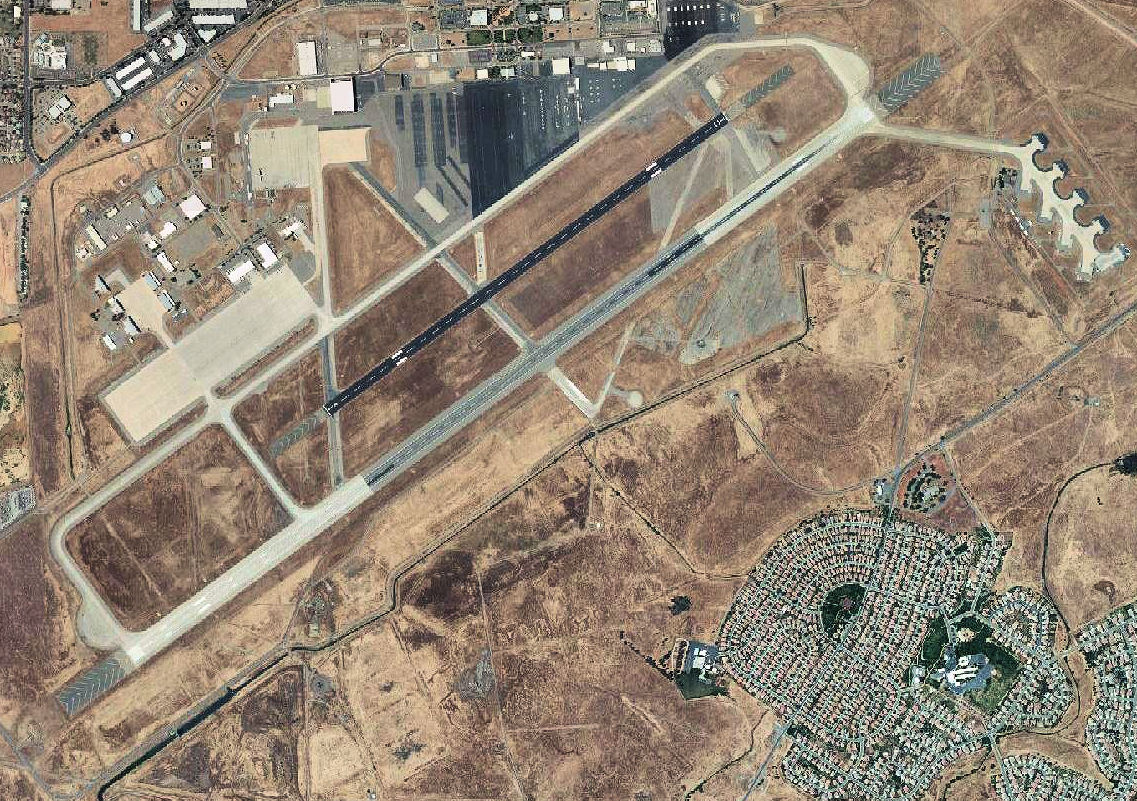
Mather Air Force Base (Mather AFB) was a United States Air Force Base, which was closed in 1993 pursuant to a post-Cold War BRAC decision. It was located 12 miles (19 km) east of Sacramento, on the south side of U.S. Route 50 in Sacramento County, California. Mather Field was one of 32 Air Service training camps established after the United States entry into World War I in April 1917.
The Mather AFB land has various post-military uses including Sacramento Mather Airport, established in 1995. Some of the land was included in the City of Rancho Cordova, when it was incorporated in 2003. Mather Field also now serves as home of the 149th Intelligence Squadron of the 195th Wing, Air National Guard.
Mather Air Force Base was named after Second Lieutenant Carl Spencer Mather, a 25-year-old army pilot killed in a mid-air collision while training at Ellington Field, Texas, on 30 January 1918. Mather learned to fly in 1914 at the Curtiss Flying School in Hammondsport, New York, and became an instructor there at the age of 20. He enlisted as an aviation cadet in August 1917 and as a licensed pilot was commissioned with part of his class as a second lieutenant on 20 January 1918. He continued training to earn a Reserve Military Aviator rating and promotion to first lieutenant but was killed ten days later. The remainder of his class requested that Mills Field be renamed in Mather's honor.
In January 1918, the Department of War sent a cadre of officers to the Sacramento, California, area to survey sites for an aviation school. The group decided on a location about 12 miles southeast of Sacramento called Mills Station. An agreement to lease the land to the Army was concluded, and the construction of some 50 buildings began on 15 March 1918. Mills Field, named after the local community, was opened on 30 April 1918. It covered over 700 acres and could accommodate up to 1,000 personnel. Dozens of wooden buildings served as headquarters, maintenance, and officers' quarters. Enlisted men had to bivouac in tents. Mather Field's first commander was 1st Lieutenant Sam P. Burman, who assumed command on 15 March 1918. The first unit stationed there was the 283d Aero Squadron, which was transferred from Rockwell Field, North Island, California.
Only a few U.S. Army Air Service aircraft arrived with the 283d Aero Squadron; most of the Curtiss JN-4 Jennys to be used for flight training were shipped in wooden crates by rail. Mather Field served as a base for primary flight training with an eight-week course. The maximum student capacity was 300.
In 1917, flight training occurred in two phases: primary and advanced. Primary training consisted of pilots learning basic flight skills under dual and solo instruction. After completion of their primary training at Mather, flight cadets were then transferred to another base for advanced training. Training units assigned to Mather Field:
With the sudden end of World War I in November 1918, the future operational status of Mather Field was unknown. Many local officials speculated that the U.S. government would keep the field open because of the outstanding combat record established by Mather-trained pilots in Europe. Locals also pointed to the optimal weather conditions in the Sacramento area for flight training. Cadets in flight training on 11 November 1918 were allowed to complete their training, however no new cadets were assigned to the base. The separate training squadrons were consolidated into a single Flying School detachment, because many of the personnel at Mather were being demobilized. Flight training activities finally ceased on 8 November 1919.
With the end of World War I, in December 1919 Mather Field was closed as an active airfield. However, a small caretaker unit was assigned to the facility for administration. Nonetheless, on 13 December 1919, the United States House of Representatives passed an appropriations bill for $9.6 million for the purchase of additional land at military camps "which are to be made part of the permanent military establishment". Mather Field was allocated $78,000 of this amount.
Hub AI
Mather Air Force Base AI simulator
(@Mather Air Force Base_simulator)
Mather Air Force Base
Mather Air Force Base (Mather AFB) was a United States Air Force Base, which was closed in 1993 pursuant to a post-Cold War BRAC decision. It was located 12 miles (19 km) east of Sacramento, on the south side of U.S. Route 50 in Sacramento County, California. Mather Field was one of 32 Air Service training camps established after the United States entry into World War I in April 1917.
The Mather AFB land has various post-military uses including Sacramento Mather Airport, established in 1995. Some of the land was included in the City of Rancho Cordova, when it was incorporated in 2003. Mather Field also now serves as home of the 149th Intelligence Squadron of the 195th Wing, Air National Guard.
Mather Air Force Base was named after Second Lieutenant Carl Spencer Mather, a 25-year-old army pilot killed in a mid-air collision while training at Ellington Field, Texas, on 30 January 1918. Mather learned to fly in 1914 at the Curtiss Flying School in Hammondsport, New York, and became an instructor there at the age of 20. He enlisted as an aviation cadet in August 1917 and as a licensed pilot was commissioned with part of his class as a second lieutenant on 20 January 1918. He continued training to earn a Reserve Military Aviator rating and promotion to first lieutenant but was killed ten days later. The remainder of his class requested that Mills Field be renamed in Mather's honor.
In January 1918, the Department of War sent a cadre of officers to the Sacramento, California, area to survey sites for an aviation school. The group decided on a location about 12 miles southeast of Sacramento called Mills Station. An agreement to lease the land to the Army was concluded, and the construction of some 50 buildings began on 15 March 1918. Mills Field, named after the local community, was opened on 30 April 1918. It covered over 700 acres and could accommodate up to 1,000 personnel. Dozens of wooden buildings served as headquarters, maintenance, and officers' quarters. Enlisted men had to bivouac in tents. Mather Field's first commander was 1st Lieutenant Sam P. Burman, who assumed command on 15 March 1918. The first unit stationed there was the 283d Aero Squadron, which was transferred from Rockwell Field, North Island, California.
Only a few U.S. Army Air Service aircraft arrived with the 283d Aero Squadron; most of the Curtiss JN-4 Jennys to be used for flight training were shipped in wooden crates by rail. Mather Field served as a base for primary flight training with an eight-week course. The maximum student capacity was 300.
In 1917, flight training occurred in two phases: primary and advanced. Primary training consisted of pilots learning basic flight skills under dual and solo instruction. After completion of their primary training at Mather, flight cadets were then transferred to another base for advanced training. Training units assigned to Mather Field:
With the sudden end of World War I in November 1918, the future operational status of Mather Field was unknown. Many local officials speculated that the U.S. government would keep the field open because of the outstanding combat record established by Mather-trained pilots in Europe. Locals also pointed to the optimal weather conditions in the Sacramento area for flight training. Cadets in flight training on 11 November 1918 were allowed to complete their training, however no new cadets were assigned to the base. The separate training squadrons were consolidated into a single Flying School detachment, because many of the personnel at Mather were being demobilized. Flight training activities finally ceased on 8 November 1919.
With the end of World War I, in December 1919 Mather Field was closed as an active airfield. However, a small caretaker unit was assigned to the facility for administration. Nonetheless, on 13 December 1919, the United States House of Representatives passed an appropriations bill for $9.6 million for the purchase of additional land at military camps "which are to be made part of the permanent military establishment". Mather Field was allocated $78,000 of this amount.
Recent media