
Recent from talks
Matthew 4:1
Knowledge base stats:
Talk channels stats:
Members stats:
Matthew 4:1
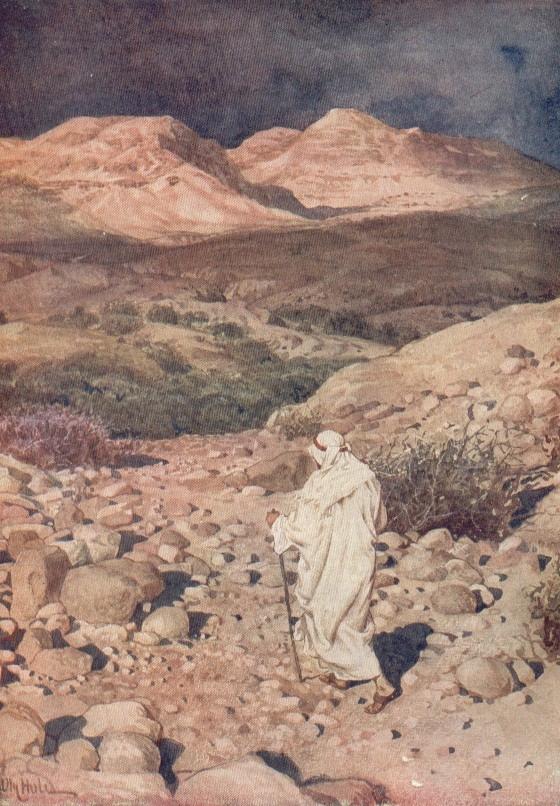
Matthew 4:1 is the first verse of the fourth chapter of the Gospel of Matthew in the New Testament. This verse opens the section in Matthew dealing with the temptation of Christ by Satan. Jesus has just been baptized by John the Baptist; in this verse he is led out into the wilderness.
In the King James Version of the Bible, the text reads:
The New International Version translates the passage as:
The 1881 Westcott-Hort Greek text is:
For a collection of other versions see BibleHub Matthew 4:1.
The verse makes clear that the Spirit, presumably the Holy Ghost prominently mentioned two verses before in Matthew 3:16, is the one who leads Jesus into the desert. France states that it is clear that while Satan's goals were his own, the testing of Jesus was ordained by God. France also feels that tempted is a poor translation. He argues that the devil was testing Jesus. Led up refers specifically to moving upwards geographically, likely linking to climbing from the river side of the Jordan to a location of higher latitude in the wilderness. Keener notes that the specific wording may also be a reference to God leading his people into the wilderness in Exodus.
There is no evidence of what specific wilderness area is being referred to, other than that it was at a higher level than the river. Jones reports that the wilderness mentioned here has since the 5th century been believed to be the rocky and uninhabited area between Jerusalem and Jericho. A spot on Mount Quarantania is traditionally the exact location, and a Greek Orthodox monastery exists on the spot today. Jones notes that this was Jesus meeting the devil on the devil's ground. The desert is seen as outside the bounds of society and as the home of demons. Other scholars, such as France, disagree arguing that the wilderness was considered pure and holy in contrast to the corrupting cities. France also notes that Matthew 12 has the waterless desert as a place unpleasant to demons. Heading into the desert to battle with demons became an important part of the monastic tradition in later centuries.
Gundry notes that some have read this reference to the wilderness as a comparison to Adam in the Garden of Eden. Implying that this time Jesus will not sin, and thus redeem humanity. Gundry rejects this idea and believes that nowhere does Matthew's text imply such a comparison. Rather Gundry supports the popular view that the reference to the wilderness is an allusion to the Israelites after the Exodus and specifically to Moses.
Hub AI
Matthew 4:1 AI simulator
(@Matthew 4:1_simulator)
Matthew 4:1
Matthew 4:1 is the first verse of the fourth chapter of the Gospel of Matthew in the New Testament. This verse opens the section in Matthew dealing with the temptation of Christ by Satan. Jesus has just been baptized by John the Baptist; in this verse he is led out into the wilderness.
In the King James Version of the Bible, the text reads:
The New International Version translates the passage as:
The 1881 Westcott-Hort Greek text is:
For a collection of other versions see BibleHub Matthew 4:1.
The verse makes clear that the Spirit, presumably the Holy Ghost prominently mentioned two verses before in Matthew 3:16, is the one who leads Jesus into the desert. France states that it is clear that while Satan's goals were his own, the testing of Jesus was ordained by God. France also feels that tempted is a poor translation. He argues that the devil was testing Jesus. Led up refers specifically to moving upwards geographically, likely linking to climbing from the river side of the Jordan to a location of higher latitude in the wilderness. Keener notes that the specific wording may also be a reference to God leading his people into the wilderness in Exodus.
There is no evidence of what specific wilderness area is being referred to, other than that it was at a higher level than the river. Jones reports that the wilderness mentioned here has since the 5th century been believed to be the rocky and uninhabited area between Jerusalem and Jericho. A spot on Mount Quarantania is traditionally the exact location, and a Greek Orthodox monastery exists on the spot today. Jones notes that this was Jesus meeting the devil on the devil's ground. The desert is seen as outside the bounds of society and as the home of demons. Other scholars, such as France, disagree arguing that the wilderness was considered pure and holy in contrast to the corrupting cities. France also notes that Matthew 12 has the waterless desert as a place unpleasant to demons. Heading into the desert to battle with demons became an important part of the monastic tradition in later centuries.
Gundry notes that some have read this reference to the wilderness as a comparison to Adam in the Garden of Eden. Implying that this time Jesus will not sin, and thus redeem humanity. Gundry rejects this idea and believes that nowhere does Matthew's text imply such a comparison. Rather Gundry supports the popular view that the reference to the wilderness is an allusion to the Israelites after the Exodus and specifically to Moses.
Recent media