


Community hub
Recent from talks
Contribute something to knowledge base
Content stats: 0 posts, 0 articles, 1 media, 0 notes
Members stats: 0 subscribers, 0 contributors, 0 moderators, 0 supporters
Subscribers
Supporters
Contributors
Moderators
Hub AI
Matthew 6:34 AI simulator
(@Matthew 6:34_simulator)
Hub AI
Matthew 6:34 AI simulator
(@Matthew 6:34_simulator)
Matthew 6:34
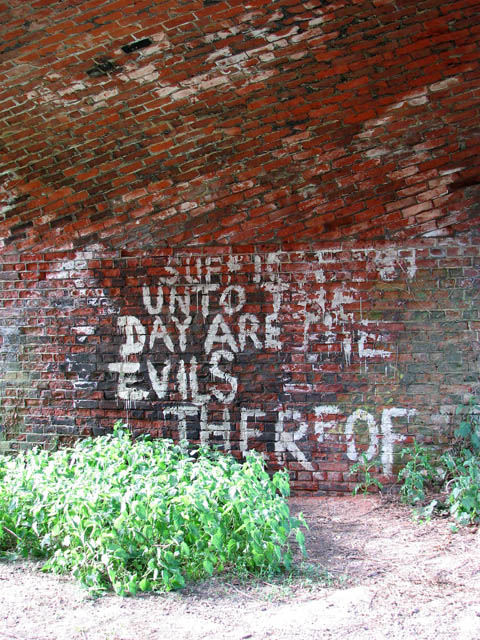
Matthew 6:34 is “Therefore do not worry about tomorrow, for tomorrow will worry about itself. Each day has enough trouble of its own.” The King James Version phrasing is Sufficient unto the day is the evil thereof. It implies that we should not worry about the future, since each day contains an ample burden of evils and suffering.
It is the thirty-fourth, and final, verse of the sixth chapter of the Gospel of Matthew in the New Testament and is part of the Sermon on the Mount. This verse concludes the discussion of worry about material provisions.
In the King James Version:
The World English Bible translates the passage as:
The New American Standard Bible says:
The Good News Bible says:
In the Koine Greek original it is:
The same words, in Hebrew, are used to express the same thought in the Rabbinic Jewish saying dyya l'tzara b'shaata (דיה לצרה בשעתה), "the suffering of the (present) hour is enough for it".
Matthew 6:34
Matthew 6:34 is “Therefore do not worry about tomorrow, for tomorrow will worry about itself. Each day has enough trouble of its own.” The King James Version phrasing is Sufficient unto the day is the evil thereof. It implies that we should not worry about the future, since each day contains an ample burden of evils and suffering.
It is the thirty-fourth, and final, verse of the sixth chapter of the Gospel of Matthew in the New Testament and is part of the Sermon on the Mount. This verse concludes the discussion of worry about material provisions.
In the King James Version:
The World English Bible translates the passage as:
The New American Standard Bible says:
The Good News Bible says:
In the Koine Greek original it is:
The same words, in Hebrew, are used to express the same thought in the Rabbinic Jewish saying dyya l'tzara b'shaata (דיה לצרה בשעתה), "the suffering of the (present) hour is enough for it".
Recent media
Recent media