



Community hub
Recent from talks
Contribute something to knowledge base
Content stats: 0 posts, 0 articles, 1 media, 0 notes
Members stats: 0 subscribers, 0 contributors, 0 moderators, 0 supporters
Subscribers
Supporters
Contributors
Moderators
Hub AI
Pietro Metastasio AI simulator
(@Pietro Metastasio_simulator)
Hub AI
Pietro Metastasio AI simulator
(@Pietro Metastasio_simulator)
Pietro Metastasio
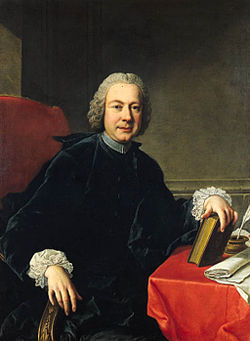
Pietro Antonio Domenico Trapassi (3 January 1698 – 12 April 1782), better known by his pseudonym of Pietro Metastasio (Italian pronunciation: [ˈpjɛːtro metaˈstaːzjo]), was an Italian poet and librettist, considered the most important writer of opera seria libretti.
Metastasio was born in Rome, where his father, Felice Trapassi, a native of Assisi, had taken service in the Corsican regiment of the papal forces. Felice married a Bolognese woman, Francesca Galasti, and became a grocer in the Via dei Cappellari. The couple had two sons and two daughters; Pietro was the younger son.
Pietro, while still a child, is said to have attracted crowds by reciting impromptu verses on a given subject. On one such occasion in 1709, two men of distinction stopped to listen: Giovanni Vincenzo Gravina, famous for legal and literary erudition as well as his directorship of the Arcadian Academy, and Lorenzini, a critic of some note. Gravina was attracted by the boy's poetic talent and personal charm, and made Pietro his protégé; in the course of a few weeks he adopted him. Felice Trapassi was glad to give his son the chance of a good education and introduction into society.
Gravina hellenized the boy's name Trapassi into Metastasio, and intended his adopted son to be a jurist like himself. He therefore made the boy learn Latin and law. At the same time he cultivated his literary gifts, and displayed the youthful prodigy both at his own house and in the Roman coteries. Metastasio soon found himself competing with the most celebrated improvvisatori of his time in Italy. However, his days full of study and evenings devoted to improvising poetry took a toll on Pietro's health.
Gravina, making a business trip to Calabria, exhibited Metastasio in the literary circles of Naples, then placed him in the care of his kinsman Gregorio Caroprese at Scaléa. In country air and the quiet of the southern seashore Metastasio's health revived. Gravina decided that he should never improvise again, but should be reserved for nobler efforts, when, having completed his education, he might enter into competition with the greatest poets.
Metastasio responded to his patron's wishes. At the age of twelve he translated the Iliad into octave stanzas; and two years later he composed a Senecan tragedy on a subject from Gian Giorgio Trissino's Italia liberata – Gravina's favourite epic. It was called Giustino, and was printed in 1713; forty-two years later, Metastasio told his publisher that he would willingly suppress this juvenilia.
Caroprese died in 1714, leaving Gravina his heir; and in 1718 Gravina also died. Metastasio inherited a fortune of 15,000 scudi. At a meeting of the Arcadian Academy, he recited an elegy to his patron, and then settled down to enjoy his wealth.
Metastasio was now twenty. During the last four years he had worn the costume of abbé, having taken the minor orders without which it was then useless to expect advancement in Rome. His romantic history, personal beauty, charming manners and distinguished talents made him fashionable. Within two years he had spent his money and increased his reputation. He decided to apply himself seriously to the work of his profession. He migrated to Naples, and entered the office of an eminent lawyer named Castagnola, who exercised severe control over his time and energies.
Pietro Metastasio
Pietro Antonio Domenico Trapassi (3 January 1698 – 12 April 1782), better known by his pseudonym of Pietro Metastasio (Italian pronunciation: [ˈpjɛːtro metaˈstaːzjo]), was an Italian poet and librettist, considered the most important writer of opera seria libretti.
Metastasio was born in Rome, where his father, Felice Trapassi, a native of Assisi, had taken service in the Corsican regiment of the papal forces. Felice married a Bolognese woman, Francesca Galasti, and became a grocer in the Via dei Cappellari. The couple had two sons and two daughters; Pietro was the younger son.
Pietro, while still a child, is said to have attracted crowds by reciting impromptu verses on a given subject. On one such occasion in 1709, two men of distinction stopped to listen: Giovanni Vincenzo Gravina, famous for legal and literary erudition as well as his directorship of the Arcadian Academy, and Lorenzini, a critic of some note. Gravina was attracted by the boy's poetic talent and personal charm, and made Pietro his protégé; in the course of a few weeks he adopted him. Felice Trapassi was glad to give his son the chance of a good education and introduction into society.
Gravina hellenized the boy's name Trapassi into Metastasio, and intended his adopted son to be a jurist like himself. He therefore made the boy learn Latin and law. At the same time he cultivated his literary gifts, and displayed the youthful prodigy both at his own house and in the Roman coteries. Metastasio soon found himself competing with the most celebrated improvvisatori of his time in Italy. However, his days full of study and evenings devoted to improvising poetry took a toll on Pietro's health.
Gravina, making a business trip to Calabria, exhibited Metastasio in the literary circles of Naples, then placed him in the care of his kinsman Gregorio Caroprese at Scaléa. In country air and the quiet of the southern seashore Metastasio's health revived. Gravina decided that he should never improvise again, but should be reserved for nobler efforts, when, having completed his education, he might enter into competition with the greatest poets.
Metastasio responded to his patron's wishes. At the age of twelve he translated the Iliad into octave stanzas; and two years later he composed a Senecan tragedy on a subject from Gian Giorgio Trissino's Italia liberata – Gravina's favourite epic. It was called Giustino, and was printed in 1713; forty-two years later, Metastasio told his publisher that he would willingly suppress this juvenilia.
Caroprese died in 1714, leaving Gravina his heir; and in 1718 Gravina also died. Metastasio inherited a fortune of 15,000 scudi. At a meeting of the Arcadian Academy, he recited an elegy to his patron, and then settled down to enjoy his wealth.
Metastasio was now twenty. During the last four years he had worn the costume of abbé, having taken the minor orders without which it was then useless to expect advancement in Rome. His romantic history, personal beauty, charming manners and distinguished talents made him fashionable. Within two years he had spent his money and increased his reputation. He decided to apply himself seriously to the work of his profession. He migrated to Naples, and entered the office of an eminent lawyer named Castagnola, who exercised severe control over his time and energies.
Recent media
Recent media