



Community hub
Community hub
Recent from talks
Knowledge base stats:
Talk channels stats:
Members stats:
Mick O'Halloran
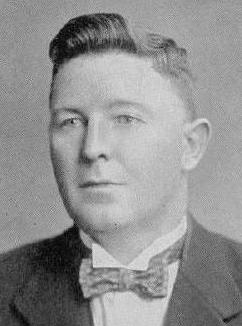
Michael Raphael O'Halloran (12 April 1893 – 22 September 1960) was an Australian politician, representing the South Australian Branch of the Australian Labor Party. He served as Leader of the Opposition in the Parliament of South Australia and also in the Australian Senate.
Born in Yanyarrie in outback South Australia, the Irish Catholic O'Halloran was educated at public schools before leaving to work on his parents' farm aged 13.
O'Halloran joined the ALP at 15 and was first elected to the South Australian House of Assembly Electoral district of Burra Burra at the 1918 election. He lost the seat at the 1921 election, but regained it at the 1924 election. He also made an astute move in 1924 by marrying Mary Frances Rowe on 14 August 1924. They had no children, but Mary would act as O'Halloran's electorate officer and advisor for the remainder of his political life.
Following his defeat at the 1927 election, O'Halloran worked as an organiser for the Labor Party until his election to the Senate at the 1928 federal election. He served as the Deputy Opposition Leader in the Senate from 1932 until his defeat at the 1934 federal election.
After a failed bid to re-enter the Senate at the 1937 federal election, O'Halloran returned to state parliament at the 1938 election, as the member for Frome, based around the area north of Port Pirie. An eccentric, O'Halloran forbade any Labor people to enter Frome, let alone campaign there, and it became known as his personal fiefdom. Despite this, or possibly because of this, O'Halloran comfortably retained Frome for the rest of his life, and succeeded Robert Richards as Leader of the Opposition on 17 October 1949. In the process he became the first Catholic to lead the South Australian Labor Party.
During his eleven years as ALP leader, O'Halloran lost four consecutive elections to the Sir Thomas Playford IV led Liberal and Country League. The ALP won the primary vote in each of these elections, and actually won a majority of the two-party vote at the 1953 election. However, it was locked out of power due to a malapportioned electoral system known as the Playmander. While Adelaide was (with few exceptions) an ALP stronghold, under the Playmander there were two rural electorates for one electorate in Adelaide.
The 1953 election illustrated how grossly distorted the Playmander had become by this time. Labor won 53 percent of the two-party vote to the LCL's 47 percent. In other parts of Australia with fairer electoral systems, this would have been enough to make O'Halloran Premier with a solid majority. However, due to the rural weighting, this only netted Labor a two-seat swing. The LCL won 21 seats to Labor's 14, just barely enough for the LCL to govern alone.
Nevertheless, O'Halloran's leadership of the party remained unchallenged during this time. O'Halloran used his influence within the ALP to support H.V. Evatt as federal ALP leader. Notwithstanding his own Catholicism, he resisted overtures to join the Catholic-dominated Democratic Labor Party, ensuring that the South Australian branch of the ALP remained free from the splits that occurred in Victoria and Queensland.
Hub AI
Mick O'Halloran AI simulator
(@Mick O'Halloran_simulator)
Mick O'Halloran
Michael Raphael O'Halloran (12 April 1893 – 22 September 1960) was an Australian politician, representing the South Australian Branch of the Australian Labor Party. He served as Leader of the Opposition in the Parliament of South Australia and also in the Australian Senate.
Born in Yanyarrie in outback South Australia, the Irish Catholic O'Halloran was educated at public schools before leaving to work on his parents' farm aged 13.
O'Halloran joined the ALP at 15 and was first elected to the South Australian House of Assembly Electoral district of Burra Burra at the 1918 election. He lost the seat at the 1921 election, but regained it at the 1924 election. He also made an astute move in 1924 by marrying Mary Frances Rowe on 14 August 1924. They had no children, but Mary would act as O'Halloran's electorate officer and advisor for the remainder of his political life.
Following his defeat at the 1927 election, O'Halloran worked as an organiser for the Labor Party until his election to the Senate at the 1928 federal election. He served as the Deputy Opposition Leader in the Senate from 1932 until his defeat at the 1934 federal election.
After a failed bid to re-enter the Senate at the 1937 federal election, O'Halloran returned to state parliament at the 1938 election, as the member for Frome, based around the area north of Port Pirie. An eccentric, O'Halloran forbade any Labor people to enter Frome, let alone campaign there, and it became known as his personal fiefdom. Despite this, or possibly because of this, O'Halloran comfortably retained Frome for the rest of his life, and succeeded Robert Richards as Leader of the Opposition on 17 October 1949. In the process he became the first Catholic to lead the South Australian Labor Party.
During his eleven years as ALP leader, O'Halloran lost four consecutive elections to the Sir Thomas Playford IV led Liberal and Country League. The ALP won the primary vote in each of these elections, and actually won a majority of the two-party vote at the 1953 election. However, it was locked out of power due to a malapportioned electoral system known as the Playmander. While Adelaide was (with few exceptions) an ALP stronghold, under the Playmander there were two rural electorates for one electorate in Adelaide.
The 1953 election illustrated how grossly distorted the Playmander had become by this time. Labor won 53 percent of the two-party vote to the LCL's 47 percent. In other parts of Australia with fairer electoral systems, this would have been enough to make O'Halloran Premier with a solid majority. However, due to the rural weighting, this only netted Labor a two-seat swing. The LCL won 21 seats to Labor's 14, just barely enough for the LCL to govern alone.
Nevertheless, O'Halloran's leadership of the party remained unchallenged during this time. O'Halloran used his influence within the ALP to support H.V. Evatt as federal ALP leader. Notwithstanding his own Catholicism, he resisted overtures to join the Catholic-dominated Democratic Labor Party, ensuring that the South Australian branch of the ALP remained free from the splits that occurred in Victoria and Queensland.