


Community hub
Recent from talks
Contribute something to knowledge base
Content stats: 0 posts, 0 articles, 1 media, 0 notes
Members stats: 0 subscribers, 0 contributors, 0 moderators, 0 supporters
Subscribers
Supporters
Contributors
Moderators
Hub AI
Mikoyan-Gurevich MiG-19 AI simulator
(@Mikoyan-Gurevich MiG-19_simulator)
Hub AI
Mikoyan-Gurevich MiG-19 AI simulator
(@Mikoyan-Gurevich MiG-19_simulator)
Mikoyan-Gurevich MiG-19
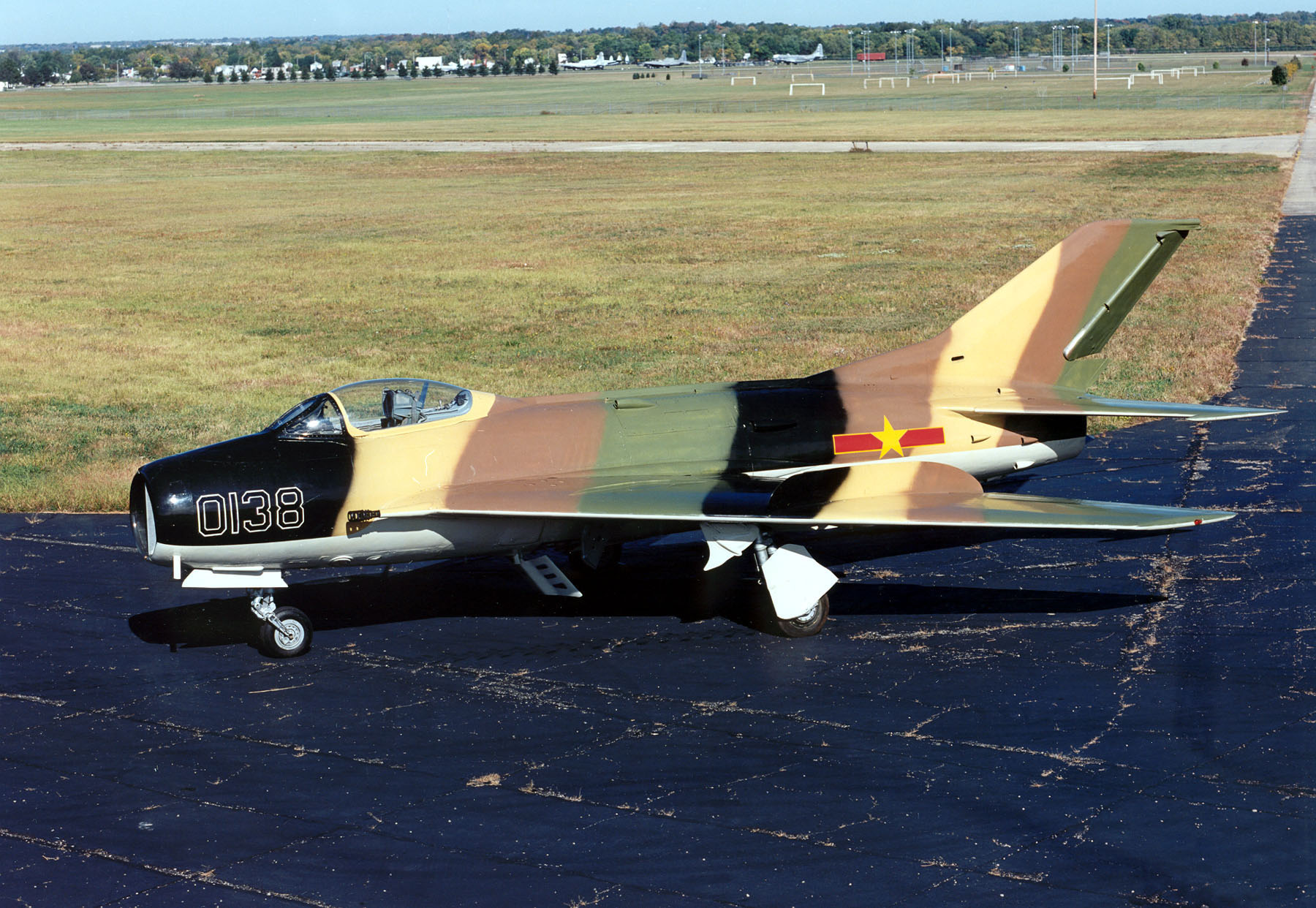
The Mikoyan-Gurevich MiG-19 (Russian: Микоян и Гуревич МиГ-19; NATO reporting name: Farmer) is a Soviet second generation, single-seat, twinjet fighter aircraft. It was the first Soviet production aircraft capable of supersonic speeds in level flight. A comparable U.S. "Century Series" fighter was the North American F-100 Super Sabre, although the MiG-19 primarily fought against the more modern McDonnell Douglas F-4 Phantom II and Republic F-105 Thunderchief over North Vietnam. This aircraft was originally used by the Soviet Union but it was later used by the People's Liberation Army Air Force of China.
In 1950 the Mikoyan-Gurevich (MiG) design bureau (also known as OKB-155) began work on a new fighter aircraft, intended to have a greater range than the existing MiG-15 and MiG-17 aircraft, and capable of reaching supersonic speeds in level flight. MiG chose to use two of the new Mikulin AM-5 axial jet engines (a scaled-down version of the Mikulin AM-3 that powered the Tupolev Tu-16 bomber) for its new fighter. As a test bed for the new engine, OKB-155 was authorised on 20 April 1951 to convert one of the prototype MiG-17s, replacing the single Klimov VK-1 engine with two 19.60 kN (4,410 lbf) AM-5s (later replaced by 21.08 kN (4,740 lbf) AM-5As), with the testbed, designated SM-1 (or I-340), flying late in 1951. While the SM-1 was a useful testbed, its performance was less than expected, and first resulted in an afterburner being designed for the AM-5, resulting in the AM-5F (reaching 26.45 kN (5,950 lbf) with afterburner).
While the SM-1 was a test bed, the SM-2 (or I-360) was intended as the required supersonic escort fighter, with work authorised on 10 August 1951. The SM-2 was a twin-engined, mid-winged aircraft. Its thin wings, which had been designed at TsAGI, the Soviet Central Aerohydrodynamic Institute, for supersonic flight were swept back at an angle of 55 degrees and had a single wing fence on each side. Unusually, a T-tail was fitted. Armament was two Nudelman N-37 37-mm cannon located in the leading edge of the aircraft's wings, near the wing roots – the guns had been moved compared to those in the MiG-15 and -17 to avoid ingestion of gun blast gases causing surging of the aircraft's engines. The first SM-2, the SM-2/1 was sent to the Letno-Issledovatel'skiy Institut (en:flight research institute) (LII) in April 1952 for testing, and was flown for the first time on 24 May 1952, with test pilot G. A. Sedov at the aircraft's controls. With the AM-5A engines without an afterburner the SM-2 could not exceed the speed of sound in level flight. To solve this, AM-5F engines with afterburners were substituted. While the new engines improved performance, the aircraft was found to have handling problems, particularly at high angles of attack, where the aircraft was prone to spinning. To solve these problems the aircraft's horizontal tail was lowered, with other changes including moving the aircraft's airbrakes and deepening the wing fences, with the modifications causing the aircraft to be redesignated SM-2A and then SM-2B.
The AM-5F still generated inadequate thrust and so the Mikulin engine design bureau developed a new engine to replace it, the AM-9B (later re-designed the Tumansky RD-9), rated at 25.5 kN (5,700 lbf) dry and 31.87 kN (7,160 lbf) with afterburner. When fitted with the new engines, the SM-2B became the SM-9, first flying in this form on 5 January 1954. The SM-9's performance impressed the Soviet authorities, and it was ordered into production as the MiG-19 on 17 February 1954, despite the fact that factory testing had only just started.
The rush to get the MiG-19 into service resulted in initial production aircraft having a number of serious problems. The type suffered a number of in-flight explosions, eventually traced to poor insulation between the aircraft's engines and fuel tanks in the rear fuselage - overheating of these tanks could cause fuel explosions. This was eventually partly solved by fitting a metal heat shield between the engines and the tanks. The aircraft's elevators proved ineffective at supersonic speeds, and an all-moving slab tail was tested by the second and third SM-9 prototypes, and later included in the major production type, the MiG-19S, which also featured an improved armament.
At the same time that the daylight escort fighter was developed from the SM-2 and SM-9 into the MiG-19 and MiG-19S, work went on in parallel to design and build a radar-equipped all-weather fighter, with the first prototype SM-7/1 flying for the first time on 28 August 1954. This prototype had a similar airframe to the first SM-9, including the conventional fixed horizontal tail, with the second and third SM-7s introducing similar changes to those tested on the SM-9 prototypes, including the slab tail. The all weather fighter entered production as the MiG-19P in 1955. Major differences from the MiG-19S included RP-1 Izumrud radar in the aircraft's nose, with small radomes in the centre and on the top lip of the air intake and an armament of two cannon in the aircraft's wing roots. From 1957, production of all weather fighters switched to the missile equipped MiG-19PM, with an armament of four K-5M air-to-air missiles, with the cannon removed.
In 1955, following American introduction of high-altitude reconnaissance balloons and overflights by British Canberra aircraft, which could not be intercepted by existing aircraft, together with intelligence reports of the development of the Lockheed U-2 with an even greater ceiling, development began on a specialist high-altitude version of the MiG-19, the MiG-19SV, which entered limited production. This had more powerful engines and was lightened, with seatback armour and one of the guns removed, while flap settings were adjusted to give greater lift at higher altitudes and a new pressure suit was introduced. These changes increased the aircraft's ceiling from 17,500 m (57,400 ft) to 18,500 m (60,700 ft). The prototype MiG-19SV was further modified (as the MiG-19SVK) with increased wingspan, giving a ceiling of 19,100 m (62,700 ft), but this was still inadequate to deal with the U-2, and effort was switched to adding rocket boosters.
Deliveries of the new fighter to the Soviet Air Forces (VVS) began in June 1955, with the type being publicly unveiled on 3 July that year, when 48 MiG-19s took part in a flypast during an airshow at Tushino Airfield, Moscow.
Mikoyan-Gurevich MiG-19
The Mikoyan-Gurevich MiG-19 (Russian: Микоян и Гуревич МиГ-19; NATO reporting name: Farmer) is a Soviet second generation, single-seat, twinjet fighter aircraft. It was the first Soviet production aircraft capable of supersonic speeds in level flight. A comparable U.S. "Century Series" fighter was the North American F-100 Super Sabre, although the MiG-19 primarily fought against the more modern McDonnell Douglas F-4 Phantom II and Republic F-105 Thunderchief over North Vietnam. This aircraft was originally used by the Soviet Union but it was later used by the People's Liberation Army Air Force of China.
In 1950 the Mikoyan-Gurevich (MiG) design bureau (also known as OKB-155) began work on a new fighter aircraft, intended to have a greater range than the existing MiG-15 and MiG-17 aircraft, and capable of reaching supersonic speeds in level flight. MiG chose to use two of the new Mikulin AM-5 axial jet engines (a scaled-down version of the Mikulin AM-3 that powered the Tupolev Tu-16 bomber) for its new fighter. As a test bed for the new engine, OKB-155 was authorised on 20 April 1951 to convert one of the prototype MiG-17s, replacing the single Klimov VK-1 engine with two 19.60 kN (4,410 lbf) AM-5s (later replaced by 21.08 kN (4,740 lbf) AM-5As), with the testbed, designated SM-1 (or I-340), flying late in 1951. While the SM-1 was a useful testbed, its performance was less than expected, and first resulted in an afterburner being designed for the AM-5, resulting in the AM-5F (reaching 26.45 kN (5,950 lbf) with afterburner).
While the SM-1 was a test bed, the SM-2 (or I-360) was intended as the required supersonic escort fighter, with work authorised on 10 August 1951. The SM-2 was a twin-engined, mid-winged aircraft. Its thin wings, which had been designed at TsAGI, the Soviet Central Aerohydrodynamic Institute, for supersonic flight were swept back at an angle of 55 degrees and had a single wing fence on each side. Unusually, a T-tail was fitted. Armament was two Nudelman N-37 37-mm cannon located in the leading edge of the aircraft's wings, near the wing roots – the guns had been moved compared to those in the MiG-15 and -17 to avoid ingestion of gun blast gases causing surging of the aircraft's engines. The first SM-2, the SM-2/1 was sent to the Letno-Issledovatel'skiy Institut (en:flight research institute) (LII) in April 1952 for testing, and was flown for the first time on 24 May 1952, with test pilot G. A. Sedov at the aircraft's controls. With the AM-5A engines without an afterburner the SM-2 could not exceed the speed of sound in level flight. To solve this, AM-5F engines with afterburners were substituted. While the new engines improved performance, the aircraft was found to have handling problems, particularly at high angles of attack, where the aircraft was prone to spinning. To solve these problems the aircraft's horizontal tail was lowered, with other changes including moving the aircraft's airbrakes and deepening the wing fences, with the modifications causing the aircraft to be redesignated SM-2A and then SM-2B.
The AM-5F still generated inadequate thrust and so the Mikulin engine design bureau developed a new engine to replace it, the AM-9B (later re-designed the Tumansky RD-9), rated at 25.5 kN (5,700 lbf) dry and 31.87 kN (7,160 lbf) with afterburner. When fitted with the new engines, the SM-2B became the SM-9, first flying in this form on 5 January 1954. The SM-9's performance impressed the Soviet authorities, and it was ordered into production as the MiG-19 on 17 February 1954, despite the fact that factory testing had only just started.
The rush to get the MiG-19 into service resulted in initial production aircraft having a number of serious problems. The type suffered a number of in-flight explosions, eventually traced to poor insulation between the aircraft's engines and fuel tanks in the rear fuselage - overheating of these tanks could cause fuel explosions. This was eventually partly solved by fitting a metal heat shield between the engines and the tanks. The aircraft's elevators proved ineffective at supersonic speeds, and an all-moving slab tail was tested by the second and third SM-9 prototypes, and later included in the major production type, the MiG-19S, which also featured an improved armament.
At the same time that the daylight escort fighter was developed from the SM-2 and SM-9 into the MiG-19 and MiG-19S, work went on in parallel to design and build a radar-equipped all-weather fighter, with the first prototype SM-7/1 flying for the first time on 28 August 1954. This prototype had a similar airframe to the first SM-9, including the conventional fixed horizontal tail, with the second and third SM-7s introducing similar changes to those tested on the SM-9 prototypes, including the slab tail. The all weather fighter entered production as the MiG-19P in 1955. Major differences from the MiG-19S included RP-1 Izumrud radar in the aircraft's nose, with small radomes in the centre and on the top lip of the air intake and an armament of two cannon in the aircraft's wing roots. From 1957, production of all weather fighters switched to the missile equipped MiG-19PM, with an armament of four K-5M air-to-air missiles, with the cannon removed.
In 1955, following American introduction of high-altitude reconnaissance balloons and overflights by British Canberra aircraft, which could not be intercepted by existing aircraft, together with intelligence reports of the development of the Lockheed U-2 with an even greater ceiling, development began on a specialist high-altitude version of the MiG-19, the MiG-19SV, which entered limited production. This had more powerful engines and was lightened, with seatback armour and one of the guns removed, while flap settings were adjusted to give greater lift at higher altitudes and a new pressure suit was introduced. These changes increased the aircraft's ceiling from 17,500 m (57,400 ft) to 18,500 m (60,700 ft). The prototype MiG-19SV was further modified (as the MiG-19SVK) with increased wingspan, giving a ceiling of 19,100 m (62,700 ft), but this was still inadequate to deal with the U-2, and effort was switched to adding rocket boosters.
Deliveries of the new fighter to the Soviet Air Forces (VVS) began in June 1955, with the type being publicly unveiled on 3 July that year, when 48 MiG-19s took part in a flypast during an airshow at Tushino Airfield, Moscow.
Recent media
Recent media