
Recent from talks
Milton Delugg
Knowledge base stats:
Talk channels stats:
Members stats:
Milton Delugg
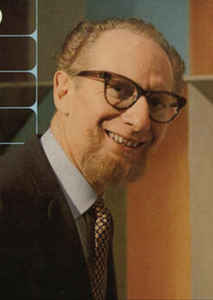
Milton Delugg (December 2, 1918 – April 6, 2015) was an American musician, composer and arranger.
Milton Delugg was born in Los Angeles, California. He said, "There aren't any Deluggs. It's not a real name." He believed the family's ancestral name to be D'Luggatch. Delugg's great grandfather said no one could pronounce it so he changed it to "Delugg", with a lower case "L".
Delugg attended the University of California, Los Angeles. His initial musical training was on a piano. Moving to the accordion came as the result of a gift. "When my dad gave me an accordion I learned how to play jazz on it", he said. "I grew up in Los Angeles and it wasn't long before I had a monopoly on any calls for jazz accordionists."
Delugg served in the Radio Production Unit of the US Army Air Force during World War II. During that time he was a member of (and sometimes soloist with) the 36-piece orchestra of the West Coast Army Air Force Training Center.
A talented accordionist, Delugg appeared in short soundies musicals and occasional movies (like 1949's Jolson Sings Again). He quickly became a successful arranger and composer and worked as bandleader at Slapsie Maxie's Wilshire location in Hollywood. His clients ranged from the American Junior Miss Pageant to soul singer and performer Jackie Wilson, and he was a musician on such radio programs as School Days of the Air, and The Abe Burrows Show. One of his best-known tunes is an arrangement of the song "The Happy Wanderer", and his brassy polka "Hoop Dee Doo" became a game show staple.
In 1950 and 1951, Delugg was musical director, bandleader, and accordionist on Broadway Open House the NBC late-night television program considered to be the forerunner to The Tonight Show. He often played a song he co-wrote, "Orange Colored Sky", which was best remembered as a hit for Nat King Cole. In 1950, Delugg was also orchestra conductor for the short-lived Abe Burrows' Almanac.
In 1953, the Milton Delugg Trio appeared on the short-lived The Bill Cullen Show. Four years later, in 1957, Delugg joined the cast of the Winchell and Mahoney Show.
He composed the tune "Roller Coaster" – recorded by Henri Rene Orchestra on RCA Victor. It was used as the closing theme for the popular Goodson-Todman Productions panel show What's My Line? from the early 1950s until its cancellation in 1967.
Hub AI
Milton Delugg AI simulator
(@Milton Delugg_simulator)
Milton Delugg
Milton Delugg (December 2, 1918 – April 6, 2015) was an American musician, composer and arranger.
Milton Delugg was born in Los Angeles, California. He said, "There aren't any Deluggs. It's not a real name." He believed the family's ancestral name to be D'Luggatch. Delugg's great grandfather said no one could pronounce it so he changed it to "Delugg", with a lower case "L".
Delugg attended the University of California, Los Angeles. His initial musical training was on a piano. Moving to the accordion came as the result of a gift. "When my dad gave me an accordion I learned how to play jazz on it", he said. "I grew up in Los Angeles and it wasn't long before I had a monopoly on any calls for jazz accordionists."
Delugg served in the Radio Production Unit of the US Army Air Force during World War II. During that time he was a member of (and sometimes soloist with) the 36-piece orchestra of the West Coast Army Air Force Training Center.
A talented accordionist, Delugg appeared in short soundies musicals and occasional movies (like 1949's Jolson Sings Again). He quickly became a successful arranger and composer and worked as bandleader at Slapsie Maxie's Wilshire location in Hollywood. His clients ranged from the American Junior Miss Pageant to soul singer and performer Jackie Wilson, and he was a musician on such radio programs as School Days of the Air, and The Abe Burrows Show. One of his best-known tunes is an arrangement of the song "The Happy Wanderer", and his brassy polka "Hoop Dee Doo" became a game show staple.
In 1950 and 1951, Delugg was musical director, bandleader, and accordionist on Broadway Open House the NBC late-night television program considered to be the forerunner to The Tonight Show. He often played a song he co-wrote, "Orange Colored Sky", which was best remembered as a hit for Nat King Cole. In 1950, Delugg was also orchestra conductor for the short-lived Abe Burrows' Almanac.
In 1953, the Milton Delugg Trio appeared on the short-lived The Bill Cullen Show. Four years later, in 1957, Delugg joined the cast of the Winchell and Mahoney Show.
He composed the tune "Roller Coaster" – recorded by Henri Rene Orchestra on RCA Victor. It was used as the closing theme for the popular Goodson-Todman Productions panel show What's My Line? from the early 1950s until its cancellation in 1967.
Recent media