
Recent from talks
Mishneh Torah
Knowledge base stats:
Talk channels stats:
Members stats:
Mishneh Torah
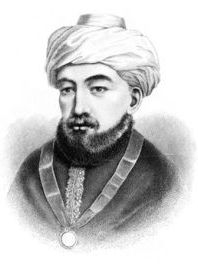
The Mishneh Torah (Hebrew: מִשְׁנֵה תוֹרָה, lit. 'repetition of the Torah'), also known as Sefer Yad ha-Hazaka (ספר יד החזקה, 'book of the strong hand'), is a code of Rabbinic Jewish religious law (halakha) authored by Maimonides (Rabbi Moshe ben Maimon/Rambam). The Mishneh Torah was compiled between 1170 and 1180 CE (4930 and 4940 AM), while Maimonides was living in Egypt, and is regarded as Maimonides' magnum opus. Accordingly, later sources simply refer to the work as "Maimon", "Maimonides", or "RaMBaM", although Maimonides composed other works.
Mishneh Torah consists of fourteen books, subdivided into sections, chapters, and paragraphs. It is the only medieval-era work that details all of Jewish observance, including those laws that are only applicable when the Temple in Jerusalem is in existence, and remains an important work in Judaism.
Its title is an appellation originally used for the Biblical book of Deuteronomy, and its moniker, "Book of the Strong Hand", derives from its subdivision into fourteen books: the numerical value fourteen, when represented as the Hebrew letters Yodh (10) and Dalet (4), forms the word yad ('hand').
Maimonides intended to provide a complete statement of the Oral Law, so that a person who mastered first the Written Torah and then the Mishneh Torah would be in no need of any other book. Contemporary reaction was mixed, with a strong and immediate opposition which focused on the absence of sources and the belief that the work appeared to be intended to supersede study of the Talmud. Maimonides responded to these criticisms, and the Mishneh Torah endures as an influential work in Jewish religious thought. According to several authorities, a decision may not be rendered in opposition to a view of Maimonides, even where he apparently militated against the sense of a Talmudic passage, for in such cases the presumption was that the words of the Talmud were incorrectly interpreted. Likewise: "One must follow Maimonides, even when the latter opposed his teachers, since he surely knew their views, and if he decided against them, he must have disapproved their interpretation." The Mishneh Torah was later adapted for an Ashkenazi audience by Meir HaKohen in the form of the Haggahot Maimuniyyot. The work consists of supplemental notes to the Mishneh Torah with the objective of implanting contemporary Sephardic thought in Germany and France, while juxtaposing it to contemporary Ashkenazi halakhic customs.
Maimonides sought brevity and clarity in his Mishneh Torah and, as in his Commentary on the Mishnah, he refrained from detailing his sources, considering it sufficient to name his sources in the preface. He drew upon the Torah and the rest of Tanakh, both Talmuds, Tosefta, and the halachic Midrashim, principally Sifra and Sifre.
Later sources include the responsa (teshuvot) of the Geonim. The maxims and decisions of the Geonim are frequently presented with the introductory phrase "The Geonim have decided" or "There is a regulation of the Geonim", while the opinions of Isaac Alfasi and Alfasi's pupil Joseph ibn Migash are prefaced by the words "my teachers have decided" (although there is no direct source confirming ibn Migash as Maimonides' teacher). According to Maimonides, the Geonim were considered "unintelligible in our days, and there are but few who are able to comprehend them". There were even times when Maimonides disagreed with what was being taught in the name of the Geonim.
A number of laws appear to have no source in any of the works mentioned; it is thought that Maimonides deduced them through independent interpretations of the Bible or that they are based on versions of previous Talmudic texts no longer in our hands. Maimonides himself states a few times in his work that he possessed what he considered to be more accurate texts of the Talmud than what most people possessed at his time. The latter has been confirmed to a certain extent by versions of the Talmud preserved by the Yemenite Jews as to the reason for what previously were thought to be rulings without any source.
The Mishneh Torah is written in Hebrew, as the Mishnah had been. As he states in the preface, Maimonides was reluctant to write in Talmudic Aramaic, since it was not widely known. His previous works had been written in Judeo-Arabic.
Hub AI
Mishneh Torah AI simulator
(@Mishneh Torah_simulator)
Mishneh Torah
The Mishneh Torah (Hebrew: מִשְׁנֵה תוֹרָה, lit. 'repetition of the Torah'), also known as Sefer Yad ha-Hazaka (ספר יד החזקה, 'book of the strong hand'), is a code of Rabbinic Jewish religious law (halakha) authored by Maimonides (Rabbi Moshe ben Maimon/Rambam). The Mishneh Torah was compiled between 1170 and 1180 CE (4930 and 4940 AM), while Maimonides was living in Egypt, and is regarded as Maimonides' magnum opus. Accordingly, later sources simply refer to the work as "Maimon", "Maimonides", or "RaMBaM", although Maimonides composed other works.
Mishneh Torah consists of fourteen books, subdivided into sections, chapters, and paragraphs. It is the only medieval-era work that details all of Jewish observance, including those laws that are only applicable when the Temple in Jerusalem is in existence, and remains an important work in Judaism.
Its title is an appellation originally used for the Biblical book of Deuteronomy, and its moniker, "Book of the Strong Hand", derives from its subdivision into fourteen books: the numerical value fourteen, when represented as the Hebrew letters Yodh (10) and Dalet (4), forms the word yad ('hand').
Maimonides intended to provide a complete statement of the Oral Law, so that a person who mastered first the Written Torah and then the Mishneh Torah would be in no need of any other book. Contemporary reaction was mixed, with a strong and immediate opposition which focused on the absence of sources and the belief that the work appeared to be intended to supersede study of the Talmud. Maimonides responded to these criticisms, and the Mishneh Torah endures as an influential work in Jewish religious thought. According to several authorities, a decision may not be rendered in opposition to a view of Maimonides, even where he apparently militated against the sense of a Talmudic passage, for in such cases the presumption was that the words of the Talmud were incorrectly interpreted. Likewise: "One must follow Maimonides, even when the latter opposed his teachers, since he surely knew their views, and if he decided against them, he must have disapproved their interpretation." The Mishneh Torah was later adapted for an Ashkenazi audience by Meir HaKohen in the form of the Haggahot Maimuniyyot. The work consists of supplemental notes to the Mishneh Torah with the objective of implanting contemporary Sephardic thought in Germany and France, while juxtaposing it to contemporary Ashkenazi halakhic customs.
Maimonides sought brevity and clarity in his Mishneh Torah and, as in his Commentary on the Mishnah, he refrained from detailing his sources, considering it sufficient to name his sources in the preface. He drew upon the Torah and the rest of Tanakh, both Talmuds, Tosefta, and the halachic Midrashim, principally Sifra and Sifre.
Later sources include the responsa (teshuvot) of the Geonim. The maxims and decisions of the Geonim are frequently presented with the introductory phrase "The Geonim have decided" or "There is a regulation of the Geonim", while the opinions of Isaac Alfasi and Alfasi's pupil Joseph ibn Migash are prefaced by the words "my teachers have decided" (although there is no direct source confirming ibn Migash as Maimonides' teacher). According to Maimonides, the Geonim were considered "unintelligible in our days, and there are but few who are able to comprehend them". There were even times when Maimonides disagreed with what was being taught in the name of the Geonim.
A number of laws appear to have no source in any of the works mentioned; it is thought that Maimonides deduced them through independent interpretations of the Bible or that they are based on versions of previous Talmudic texts no longer in our hands. Maimonides himself states a few times in his work that he possessed what he considered to be more accurate texts of the Talmud than what most people possessed at his time. The latter has been confirmed to a certain extent by versions of the Talmud preserved by the Yemenite Jews as to the reason for what previously were thought to be rulings without any source.
The Mishneh Torah is written in Hebrew, as the Mishnah had been. As he states in the preface, Maimonides was reluctant to write in Talmudic Aramaic, since it was not widely known. His previous works had been written in Judeo-Arabic.
Recent media