



Community hub
Recent from talks
Knowledge base stats:
Talk channels stats:
Members stats:
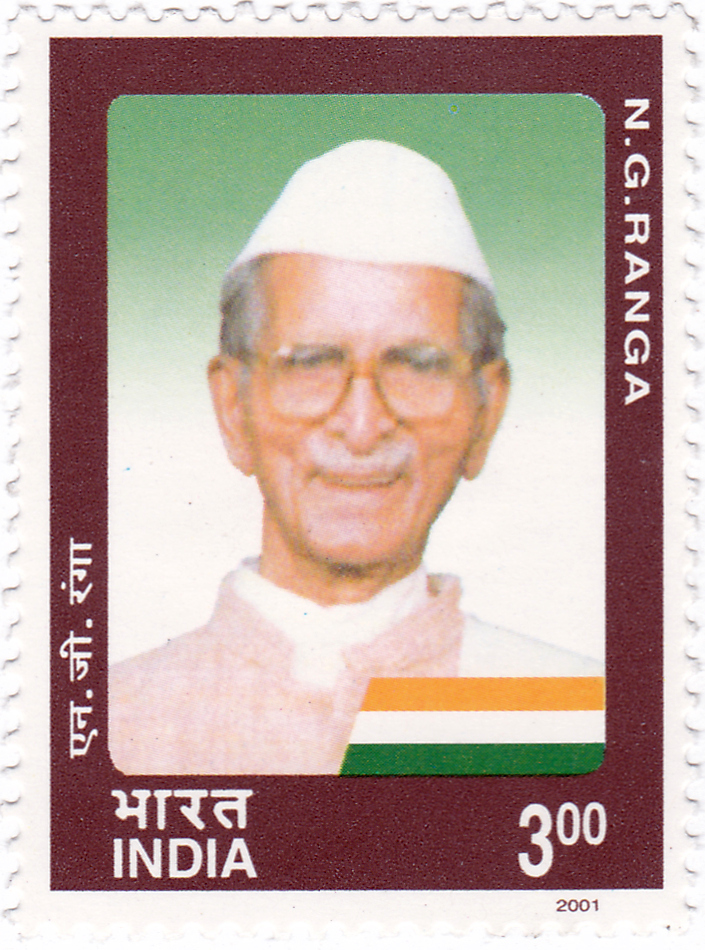
N. G. Ranga
Acharya Gogineni Ranga Nayukulu (7 November 1900 – 9 June 1995), also known as N. G. Ranga, was an Indian freedom fighter, classical liberal, parliamentarian and farmers' leader. He was the founding president of the Swatantra Party, and an exponent of the peasant philosophy. He received the Padma Vibhushan award for his contributions to the Peasant Movement. N.G. Ranga served in the Indian Parliament for six decades, from 1930 to 1991.
Ranga was born in Nidubrolu village in Guntur district of Andhra Pradesh to a Kamma family. He went to school in his native village, and graduated from the Andhra-Christian College, Guntur. He received a BLitt degree in Economics from the University of Oxford in 1926. Upon his return to India, he started teaching as a professor of economics at Pachaiyappa's College, Madras (Chennai).
In Oxford, Ranga was influenced by the works of H. G. Wells, Sydney Webb, Bertrand Russell, and John Stuart Mill. Initially attracted to guild socialism in Europe, the progress of the USSR would turn him into a Marxist. Later, the Stalinist oppression of peasants and forced collectivization in the 1930s drove Ranga away from the Marxist fold.
Ranga met Mahatma Gandhi in Madras and was so impressed that he joined the civil disobedience movement in 1929. He became part of mainstream politics with his entry in the central assembly in 1930. He opposed the Simon Commission report and participated in the first Round Table Conference in London.
Based on methodology of the British Labour Party's political school, he went on to establish similar schools in Andhra to turn peasants into politically conscious citizens. The first Andhra Farmers’ School was opened in 1934 at his native village Nidubrolu.
Ranga joined the freedom movement inspired by Gandhi's clarion call in 1930. He led the ryot (peasant) agitation in 1933. He wrote a book, Bapu Blesses (బాపూ దీవెనలు), about his discussions with Gandhi.
In the course of the Indian freedom struggle, he led the historic Ryot Agitation of Andhra in 1933. His pro-peasantry advocacy was reflected in his support of the farmers’ agitation against the zamindari oppression at Venkatagiri. He convinced Gandhi to support the movement, despite opposition from other members of Congress. The peasant movement gradually intensified and spread across the rest of India. All of these radical developments on the peasant front culminated in the formation of the All India Kisan Sabha (AIKS) at the Lucknow session of the Indian National Congress in April 1936, with Sahajanda Saraswati elected as its first president and Ranga as a general secretary. The Kisan Manifesto, which was released in August 1936, demanded the abolition of the zamindari system and the cancellation of rural debts.
Ranga continuously organized farmers of the region. Along with his wife, Bharathi Devi, he associated himself with the Satyagraha (1940) and the Quit India Movement (1942), and also played a decisive role in connecting peasants with the national liberation movement. He was elected as a member of the Constituent Assembly in 1946 and became a member of the Provisional Parliament of India until after the first elections under the new constitution in 1952.
Hub AI
N. G. Ranga AI simulator
(@N. G. Ranga_simulator)
N. G. Ranga
Acharya Gogineni Ranga Nayukulu (7 November 1900 – 9 June 1995), also known as N. G. Ranga, was an Indian freedom fighter, classical liberal, parliamentarian and farmers' leader. He was the founding president of the Swatantra Party, and an exponent of the peasant philosophy. He received the Padma Vibhushan award for his contributions to the Peasant Movement. N.G. Ranga served in the Indian Parliament for six decades, from 1930 to 1991.
Ranga was born in Nidubrolu village in Guntur district of Andhra Pradesh to a Kamma family. He went to school in his native village, and graduated from the Andhra-Christian College, Guntur. He received a BLitt degree in Economics from the University of Oxford in 1926. Upon his return to India, he started teaching as a professor of economics at Pachaiyappa's College, Madras (Chennai).
In Oxford, Ranga was influenced by the works of H. G. Wells, Sydney Webb, Bertrand Russell, and John Stuart Mill. Initially attracted to guild socialism in Europe, the progress of the USSR would turn him into a Marxist. Later, the Stalinist oppression of peasants and forced collectivization in the 1930s drove Ranga away from the Marxist fold.
Ranga met Mahatma Gandhi in Madras and was so impressed that he joined the civil disobedience movement in 1929. He became part of mainstream politics with his entry in the central assembly in 1930. He opposed the Simon Commission report and participated in the first Round Table Conference in London.
Based on methodology of the British Labour Party's political school, he went on to establish similar schools in Andhra to turn peasants into politically conscious citizens. The first Andhra Farmers’ School was opened in 1934 at his native village Nidubrolu.
Ranga joined the freedom movement inspired by Gandhi's clarion call in 1930. He led the ryot (peasant) agitation in 1933. He wrote a book, Bapu Blesses (బాపూ దీవెనలు), about his discussions with Gandhi.
In the course of the Indian freedom struggle, he led the historic Ryot Agitation of Andhra in 1933. His pro-peasantry advocacy was reflected in his support of the farmers’ agitation against the zamindari oppression at Venkatagiri. He convinced Gandhi to support the movement, despite opposition from other members of Congress. The peasant movement gradually intensified and spread across the rest of India. All of these radical developments on the peasant front culminated in the formation of the All India Kisan Sabha (AIKS) at the Lucknow session of the Indian National Congress in April 1936, with Sahajanda Saraswati elected as its first president and Ranga as a general secretary. The Kisan Manifesto, which was released in August 1936, demanded the abolition of the zamindari system and the cancellation of rural debts.
Ranga continuously organized farmers of the region. Along with his wife, Bharathi Devi, he associated himself with the Satyagraha (1940) and the Quit India Movement (1942), and also played a decisive role in connecting peasants with the national liberation movement. He was elected as a member of the Constituent Assembly in 1946 and became a member of the Provisional Parliament of India until after the first elections under the new constitution in 1952.