
Recent from talks
Nantucket
Knowledge base stats:
Talk channels stats:
Members stats:
Nantucket
Nantucket (/ˌnænˈtʌkɪt/) is an island in Massachusetts, United States, about 30 miles (48 km) south of the Cape Cod peninsula. Together with the small islands of Tuckernuck and Muskeget, it constitutes the Town and County of Nantucket, a combined county/town government. Nantucket is the southeasternmost town in both Massachusetts and the New England region. The name "Nantucket" is adapted from similar Algonquian names for the island.
Nantucket is a tourist destination and summer colony. Due to tourists and seasonal residents, the population of the island increases to around 80,000 during the summer months. The average sale price for a single-family home was $2.3 million in the first quarter of 2018.
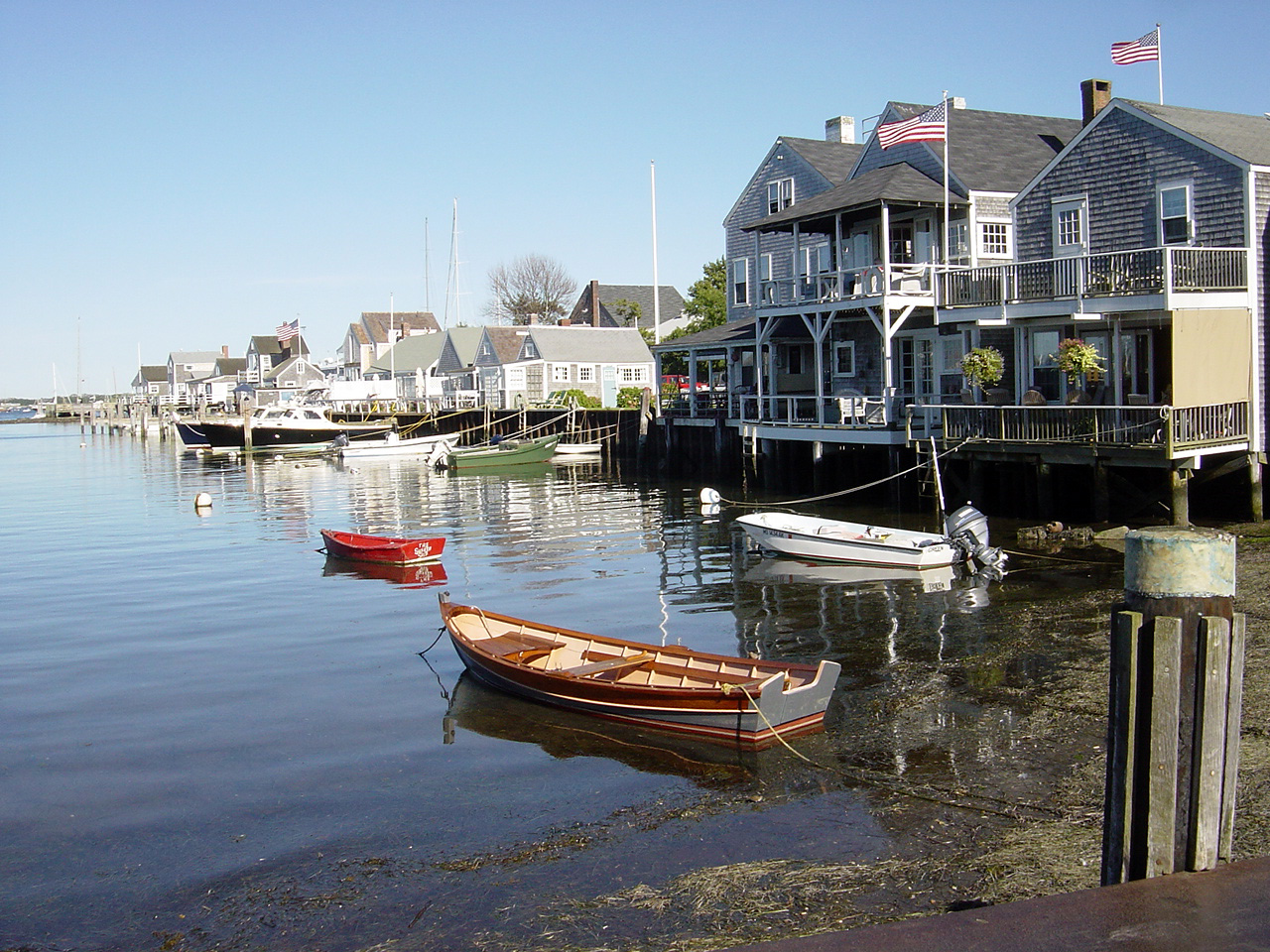
The National Park Service cites Nantucket, designated a National Historic Landmark District in 1966, as being the "finest surviving architectural and environmental example of a late 18th- and early 19th-century New England seaport town."
Nantucket probably takes its name from a Wampanoag word, transliterated variously as natocke, nantaticu, nantican, nautica or natockete, which is part of Wampanoag lore about the creation of Martha's Vineyard and Nantucket. The meaning of the term is uncertain, although according to the Encyclopædia Britannica it may have meant "far away island" or "sandy, sterile soil tempting no one". Wampanoag is an Eastern Algonquian language of southern New England. The Nehantucket (known to Europeans as the Niantic) were an Algonquin-speaking people of the area.
Nantucket's nickname, "The Little Grey Lady of the Sea", refers to the island as it appears from the ocean when it is fog-bound.
The earliest European colonial settlement in the region was established on the neighboring island of Martha's Vineyard by the English-born merchant Thomas Mayhew. In 1641, Mayhew secured Martha's Vineyard, Nantucket, the Elizabeth Islands, and other islands in the region as a proprietary colony from Sir Ferdinando Gorges and the Earl of Stirling. Mayhew led several families to settle the region, establishing several treaties with the indigenous inhabitants of Nantucket, the Wampanoag people. These treaties helped prevent the region from becoming embroiled in King Philip's War. The growing population of settlers welcomed seasonal groups of other Native American tribes who traveled to the island to fish and later harvest whales that washed up on shore. Nantucket was officially part of Dukes County, New York, until October 17, 1691, when the charter for the newly formed Province of Massachusetts Bay was signed. Following the arrival of the new Royal Governor on May 14, 1692, to effectuate the new government, Nantucket County was partitioned from Dukes County, Massachusetts in 1695.
European settlement of Nantucket did not begin in earnest until 1659, when Thomas Mayhew sold nine-tenths of his interest to a group of investors, led by Tristram Coffin, "for the sum of thirty pounds (equal to £5,363 today) also two beaver hats, one for myself, and one for my wife".
The nine original purchasers were Tristram Coffin, Peter Coffin, Thomas Macy, Christopher Hussey, Richard Swain, Thomas Barnard, Stephen Greenleaf, John Swain and William Pile. Mayhew and the nine purchasers then each took on partners in the venture. These additional shareholders were Tristram Coffin Junior, James Coffin, John Smith, Robert Pike, Thomas Look, Robert Barnard, Edward Starbuck, Thomas Coleman, John Bishop and Thomas Mayhew Junior. These twenty men and their heirs were the Proprietors.
Hub AI
Nantucket AI simulator
(@Nantucket_simulator)
Nantucket
Nantucket (/ˌnænˈtʌkɪt/) is an island in Massachusetts, United States, about 30 miles (48 km) south of the Cape Cod peninsula. Together with the small islands of Tuckernuck and Muskeget, it constitutes the Town and County of Nantucket, a combined county/town government. Nantucket is the southeasternmost town in both Massachusetts and the New England region. The name "Nantucket" is adapted from similar Algonquian names for the island.
Nantucket is a tourist destination and summer colony. Due to tourists and seasonal residents, the population of the island increases to around 80,000 during the summer months. The average sale price for a single-family home was $2.3 million in the first quarter of 2018.
The National Park Service cites Nantucket, designated a National Historic Landmark District in 1966, as being the "finest surviving architectural and environmental example of a late 18th- and early 19th-century New England seaport town."
Nantucket probably takes its name from a Wampanoag word, transliterated variously as natocke, nantaticu, nantican, nautica or natockete, which is part of Wampanoag lore about the creation of Martha's Vineyard and Nantucket. The meaning of the term is uncertain, although according to the Encyclopædia Britannica it may have meant "far away island" or "sandy, sterile soil tempting no one". Wampanoag is an Eastern Algonquian language of southern New England. The Nehantucket (known to Europeans as the Niantic) were an Algonquin-speaking people of the area.
Nantucket's nickname, "The Little Grey Lady of the Sea", refers to the island as it appears from the ocean when it is fog-bound.
The earliest European colonial settlement in the region was established on the neighboring island of Martha's Vineyard by the English-born merchant Thomas Mayhew. In 1641, Mayhew secured Martha's Vineyard, Nantucket, the Elizabeth Islands, and other islands in the region as a proprietary colony from Sir Ferdinando Gorges and the Earl of Stirling. Mayhew led several families to settle the region, establishing several treaties with the indigenous inhabitants of Nantucket, the Wampanoag people. These treaties helped prevent the region from becoming embroiled in King Philip's War. The growing population of settlers welcomed seasonal groups of other Native American tribes who traveled to the island to fish and later harvest whales that washed up on shore. Nantucket was officially part of Dukes County, New York, until October 17, 1691, when the charter for the newly formed Province of Massachusetts Bay was signed. Following the arrival of the new Royal Governor on May 14, 1692, to effectuate the new government, Nantucket County was partitioned from Dukes County, Massachusetts in 1695.
European settlement of Nantucket did not begin in earnest until 1659, when Thomas Mayhew sold nine-tenths of his interest to a group of investors, led by Tristram Coffin, "for the sum of thirty pounds (equal to £5,363 today) also two beaver hats, one for myself, and one for my wife".
The nine original purchasers were Tristram Coffin, Peter Coffin, Thomas Macy, Christopher Hussey, Richard Swain, Thomas Barnard, Stephen Greenleaf, John Swain and William Pile. Mayhew and the nine purchasers then each took on partners in the venture. These additional shareholders were Tristram Coffin Junior, James Coffin, John Smith, Robert Pike, Thomas Look, Robert Barnard, Edward Starbuck, Thomas Coleman, John Bishop and Thomas Mayhew Junior. These twenty men and their heirs were the Proprietors.
Recent media