
Recent from talks
Killing of Osama bin Laden
Knowledge base stats:
Talk channels stats:
Members stats:
Killing of Osama bin Laden
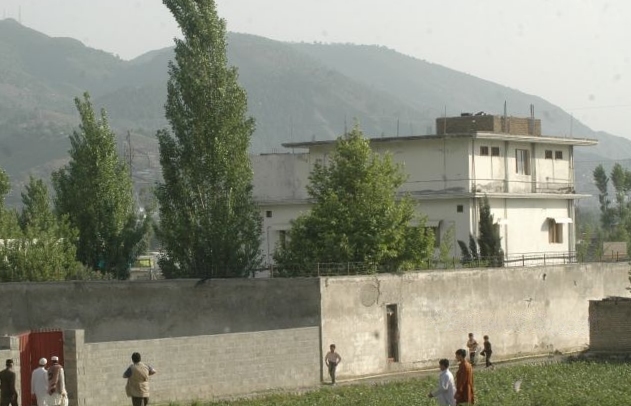
On May 2, 2011, the United States conducted Operation Neptune Spear, in which SEAL Team Six shot and killed Osama bin Laden at his "Waziristan Haveli" in Abbottabad, Pakistan. Bin Laden, who founded al-Qaeda and orchestrated the September 11 attacks, had been the subject of a United States military manhunt since the beginning of the war in Afghanistan, but escaped to Pakistan—allegedly with Pakistani support—during or after the Battle of Tora Bora in December 2001. The mission was part of an effort led by the Central Intelligence Agency (CIA), with the Joint Special Operations Command (JSOC) coordinating the special mission units involved in the raid. In addition to SEAL Team Six, participating units under JSOC included the 160th Special Operations Aviation Regiment (Airborne) and the CIA's Special Activities Division, which recruits heavily from among former JSOC Special Mission Units.
Approved by American president Barack Obama and involving two dozen Navy SEALs in two Black Hawks, Operation Neptune Spear was launched from about 120 miles (190 km) away, near the Afghan city of Jalalabad. The raid took 40 minutes, and bin Laden was killed shortly before 1:00 a.m. Pakistan Standard Time (20:00 UTC, May 1). Three other men, including one of bin Laden's sons, and a woman in the compound were also killed. After the raid, the operatives returned to Afghanistan with bin Laden's corpse for identification and then flew over 850 miles (1,370 km) to the Arabian Sea, where he was buried for a mix of political, practical, and religious reasons.
Al-Qaeda confirmed bin Laden's death through posts made on militant websites on May 6, and vowed to avenge his killing. Additionally, Pakistani militant organizations, including the Tehrik-i-Taliban Pakistan (TTP), vowed retaliation against the United States and against Pakistan for failing to prevent the American raid. The raid, which was supported by over 90% of the American public, was also welcomed by the United Nations, the European Union, and NATO, as well as a large number of international organizations and governments. However, it was condemned by two-thirds of the Pakistani public. Legal and ethical aspects of the killing, such as the failure to capture him alive in spite of him being unarmed, were questioned by Amnesty International. Also controversial was the decision to classify any photographic or DNA evidence of bin Laden's death. There was widespread discontent among Pakistanis with regard to how effectively the country's defences were breached by the United States, and how the Pakistan Air Force failed to detect and intercept any incoming American aircraft.
After the killing of bin Laden, Pakistani prime minister Yusuf Raza Gilani formed a commission led by Senior Justice Javed Iqbal to investigate the circumstances of the assault. The resulting Abbottabad Commission Report reported that the "collective failure" of Pakistan's military and intelligence agencies had enabled bin Laden to hide in the country for nine years. The report was classified by the Pakistani government but was later leaked to and published by Al Jazeera Media Network on July 8, 2013.
Accounts of how bin Laden was located by U.S. intelligence differ. The White House and CIA director John Brennan stated that the process began with a fragment of information unearthed in 2002, resulting in years of investigation. This account states that by September 2010, these leads followed a courier to the Abbottabad compound, where the U.S. began intensive surveillance.
Identification of al-Qaeda couriers was an early priority for interrogators at CIA black sites and the Guantanamo Bay detention camp, because bin Laden was believed to communicate through such couriers while concealing his whereabouts from al-Qaeda foot soldiers and top commanders. Bin Laden was known not to use phones after 1998, when the U.S. had launched missile strikes against his bases in Afghanistan in August of that year by tracking an associate's satellite phone.
The U.S. official had stated that by 2002, interrogators had heard uncorroborated claims about an al-Qaeda courier with the kunya Abu Ahmed al-Kuwaiti (sometimes referred to as Sheikh Abu Ahmed from Kuwait). One of those claims came from Mohammed al-Qahtani, a detainee who told interrogators about a man known as Abu Ahmed al-Kuwaiti who was part of the inner circle of al-Qaeda. Later in 2003, Khalid Sheikh Mohammed, the alleged operational chief of al-Qaeda, said he was acquainted with al-Kuwaiti but that the man was not active in al-Qaeda, according to a U.S. official.
According to a U.S. official, in 2004 a prisoner named Hassan Ghul revealed that bin Laden relied on a trusted courier known as al-Kuwaiti. Ghul said al-Kuwaiti was close to bin Laden as well as Khalid Sheikh Mohammed and Mohammed's successor Abu Faraj al-Libbi. Ghul revealed that al-Kuwaiti had not been seen in some time, which led U.S. officials to suspect he was traveling with bin Laden. When confronted with Ghul's account, Mohammed maintained his original story. Abu Faraj al-Libbi was captured in 2005 and transferred to Guantánamo in September 2006. He told CIA interrogators that bin Laden's courier was a man named Maulawi Abd al-Khaliq Jan and denied knowing al-Kuwaiti. Because both Mohammed and al-Libbi had minimized al-Kuwaiti's importance, officials speculated that he was part of bin Laden's inner circle.
Hub AI
Killing of Osama bin Laden AI simulator
(@Killing of Osama bin Laden_simulator)
Killing of Osama bin Laden
On May 2, 2011, the United States conducted Operation Neptune Spear, in which SEAL Team Six shot and killed Osama bin Laden at his "Waziristan Haveli" in Abbottabad, Pakistan. Bin Laden, who founded al-Qaeda and orchestrated the September 11 attacks, had been the subject of a United States military manhunt since the beginning of the war in Afghanistan, but escaped to Pakistan—allegedly with Pakistani support—during or after the Battle of Tora Bora in December 2001. The mission was part of an effort led by the Central Intelligence Agency (CIA), with the Joint Special Operations Command (JSOC) coordinating the special mission units involved in the raid. In addition to SEAL Team Six, participating units under JSOC included the 160th Special Operations Aviation Regiment (Airborne) and the CIA's Special Activities Division, which recruits heavily from among former JSOC Special Mission Units.
Approved by American president Barack Obama and involving two dozen Navy SEALs in two Black Hawks, Operation Neptune Spear was launched from about 120 miles (190 km) away, near the Afghan city of Jalalabad. The raid took 40 minutes, and bin Laden was killed shortly before 1:00 a.m. Pakistan Standard Time (20:00 UTC, May 1). Three other men, including one of bin Laden's sons, and a woman in the compound were also killed. After the raid, the operatives returned to Afghanistan with bin Laden's corpse for identification and then flew over 850 miles (1,370 km) to the Arabian Sea, where he was buried for a mix of political, practical, and religious reasons.
Al-Qaeda confirmed bin Laden's death through posts made on militant websites on May 6, and vowed to avenge his killing. Additionally, Pakistani militant organizations, including the Tehrik-i-Taliban Pakistan (TTP), vowed retaliation against the United States and against Pakistan for failing to prevent the American raid. The raid, which was supported by over 90% of the American public, was also welcomed by the United Nations, the European Union, and NATO, as well as a large number of international organizations and governments. However, it was condemned by two-thirds of the Pakistani public. Legal and ethical aspects of the killing, such as the failure to capture him alive in spite of him being unarmed, were questioned by Amnesty International. Also controversial was the decision to classify any photographic or DNA evidence of bin Laden's death. There was widespread discontent among Pakistanis with regard to how effectively the country's defences were breached by the United States, and how the Pakistan Air Force failed to detect and intercept any incoming American aircraft.
After the killing of bin Laden, Pakistani prime minister Yusuf Raza Gilani formed a commission led by Senior Justice Javed Iqbal to investigate the circumstances of the assault. The resulting Abbottabad Commission Report reported that the "collective failure" of Pakistan's military and intelligence agencies had enabled bin Laden to hide in the country for nine years. The report was classified by the Pakistani government but was later leaked to and published by Al Jazeera Media Network on July 8, 2013.
Accounts of how bin Laden was located by U.S. intelligence differ. The White House and CIA director John Brennan stated that the process began with a fragment of information unearthed in 2002, resulting in years of investigation. This account states that by September 2010, these leads followed a courier to the Abbottabad compound, where the U.S. began intensive surveillance.
Identification of al-Qaeda couriers was an early priority for interrogators at CIA black sites and the Guantanamo Bay detention camp, because bin Laden was believed to communicate through such couriers while concealing his whereabouts from al-Qaeda foot soldiers and top commanders. Bin Laden was known not to use phones after 1998, when the U.S. had launched missile strikes against his bases in Afghanistan in August of that year by tracking an associate's satellite phone.
The U.S. official had stated that by 2002, interrogators had heard uncorroborated claims about an al-Qaeda courier with the kunya Abu Ahmed al-Kuwaiti (sometimes referred to as Sheikh Abu Ahmed from Kuwait). One of those claims came from Mohammed al-Qahtani, a detainee who told interrogators about a man known as Abu Ahmed al-Kuwaiti who was part of the inner circle of al-Qaeda. Later in 2003, Khalid Sheikh Mohammed, the alleged operational chief of al-Qaeda, said he was acquainted with al-Kuwaiti but that the man was not active in al-Qaeda, according to a U.S. official.
According to a U.S. official, in 2004 a prisoner named Hassan Ghul revealed that bin Laden relied on a trusted courier known as al-Kuwaiti. Ghul said al-Kuwaiti was close to bin Laden as well as Khalid Sheikh Mohammed and Mohammed's successor Abu Faraj al-Libbi. Ghul revealed that al-Kuwaiti had not been seen in some time, which led U.S. officials to suspect he was traveling with bin Laden. When confronted with Ghul's account, Mohammed maintained his original story. Abu Faraj al-Libbi was captured in 2005 and transferred to Guantánamo in September 2006. He told CIA interrogators that bin Laden's courier was a man named Maulawi Abd al-Khaliq Jan and denied knowing al-Kuwaiti. Because both Mohammed and al-Libbi had minimized al-Kuwaiti's importance, officials speculated that he was part of bin Laden's inner circle.
Recent media